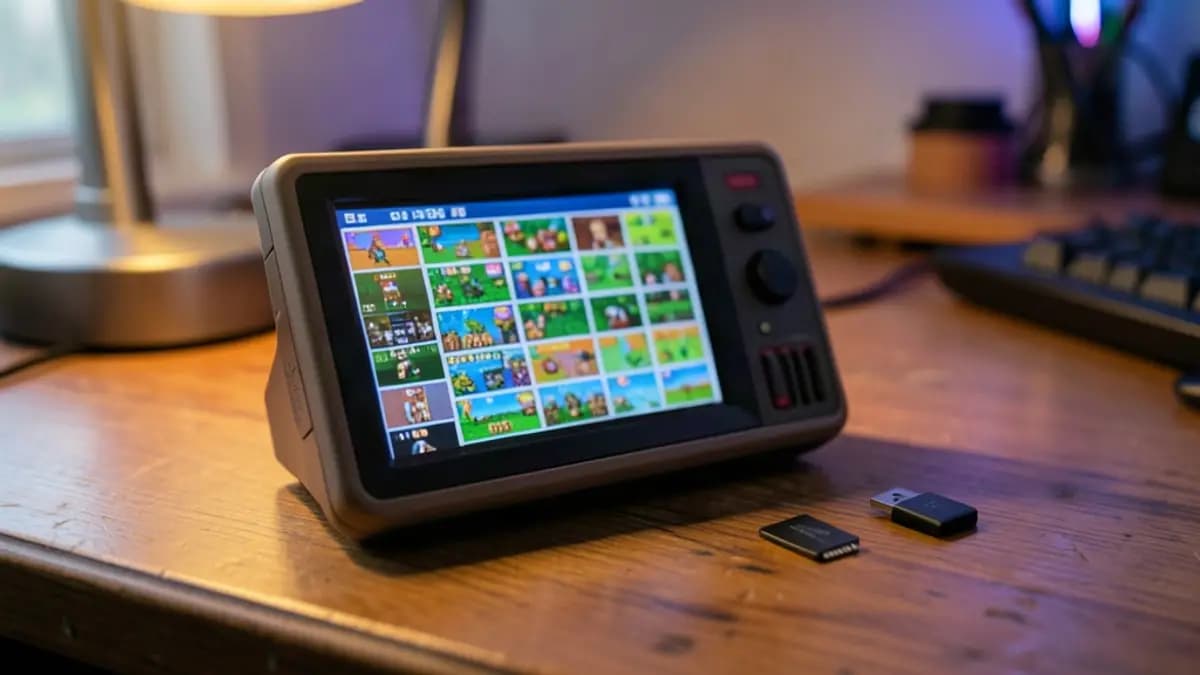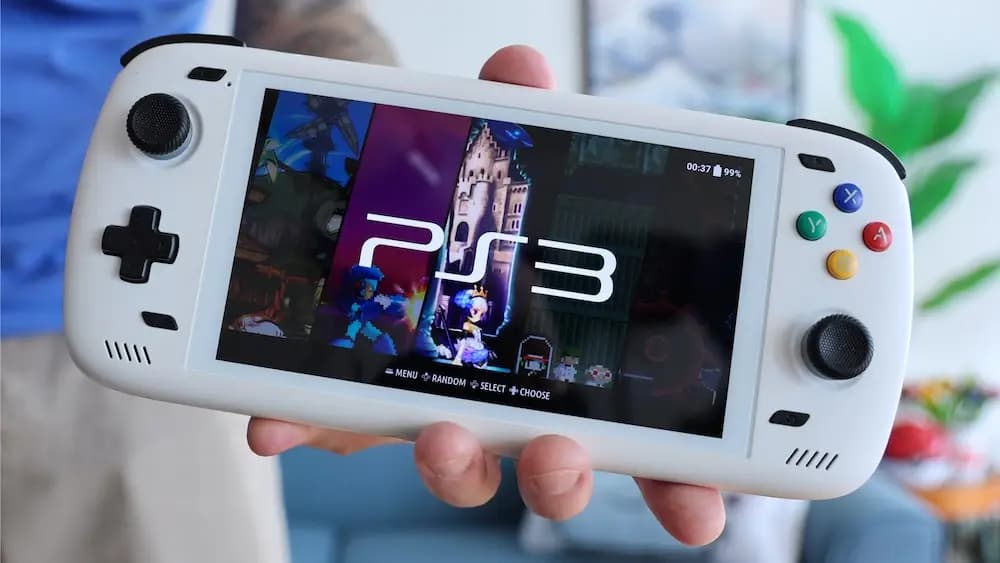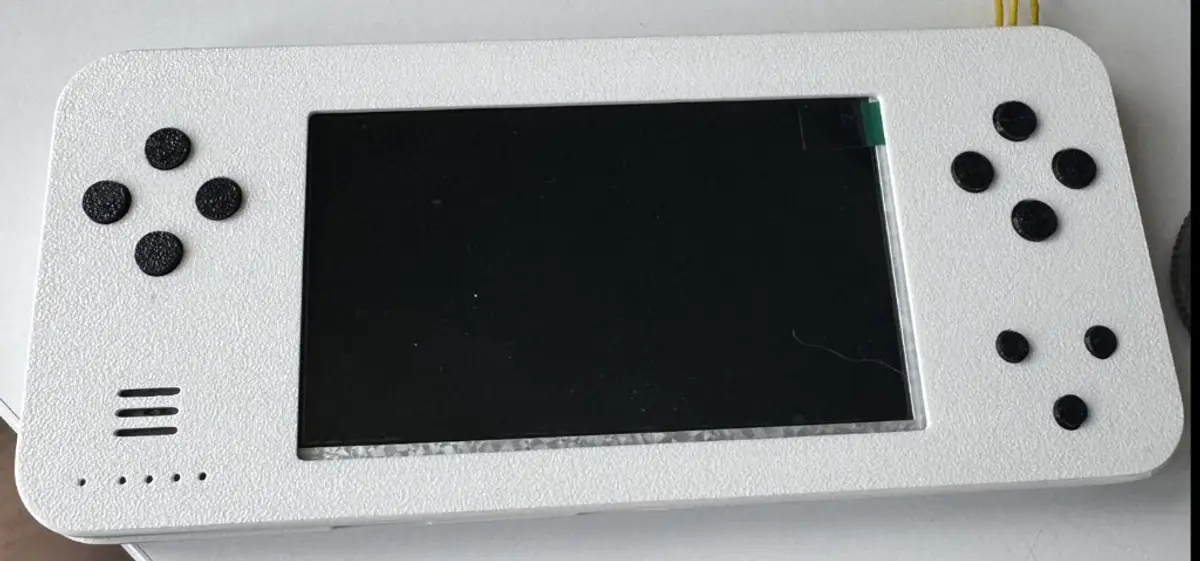
The candy-bar handheld still has room for a new twist. F1GameStation, an open project by Kami4ka, puts an Allwinner F1C200s, a custom circuit board and a 4.3-inch screen inside a 3D-printable shell. The project appeared on November 20, with working first-revision hardware and an estimated parts cost of about $25 per unit.
That estimate covers a share of the circuit-board cost, components, LCD, battery and printing filament. Making one requires ordering the four-layer PCB, completing the electronics, printing the enclosure and assembling the software. The project provides KiCad files, fabrication documents, a parts list, Fusion 360 sources and printable models.
F1GameStation keeps the component budget small and leaves the soldering adventure to you.
Compact hardware, familiar controls
At its heart, the F1C200s combines an ARM926EJ-S processor with 64MB of memory. The rest of the specification is deliberately straightforward:
• 480-by-272 RGB display
• MicroSD storage and a speaker
• USB-C charging for a single lithium-ion cell
• D-pad, four face buttons, Start, Select, Menu and shoulder buttons
The PETG enclosure measures 186 by 80mm, with heat-set inserts securing the case. It’s a familiar handheld shape, but one designed around a build-it-yourself circuit board and enclosure.
MiyooCFW under the hood
MiyooCFW 2.0 provides the software foundation, adapted with a display driver, a resized gmenu2x interface and a cover-flow launcher. Developers can also use a QEMU model to boot the same card image on a Mac before building the hardware.
The creator reports working displays, audio, controls, battery monitoring and USB, with core hardware tested on two boards. Revision one does have a few documented quirks: the shoulder and Menu inputs rely on a firmware workaround for missing pull-ups, while the trigger switches need their locating pegs trimmed.
Why MiyooCFW matters
MiyooCFW is community-developed firmware used as the software base for several budget handheld projects. Here, the project adapts it to new hardware, including a custom display driver and a modified launcher interface.
F1GameStation joins the growing world of open handheld builds, offering a modest parts estimate and a complete set of design files. The trade-off is hands-on: builders will need to source the parts, handle assembly and work through the documented revision-one fixes.
Source: Retro Handhelds