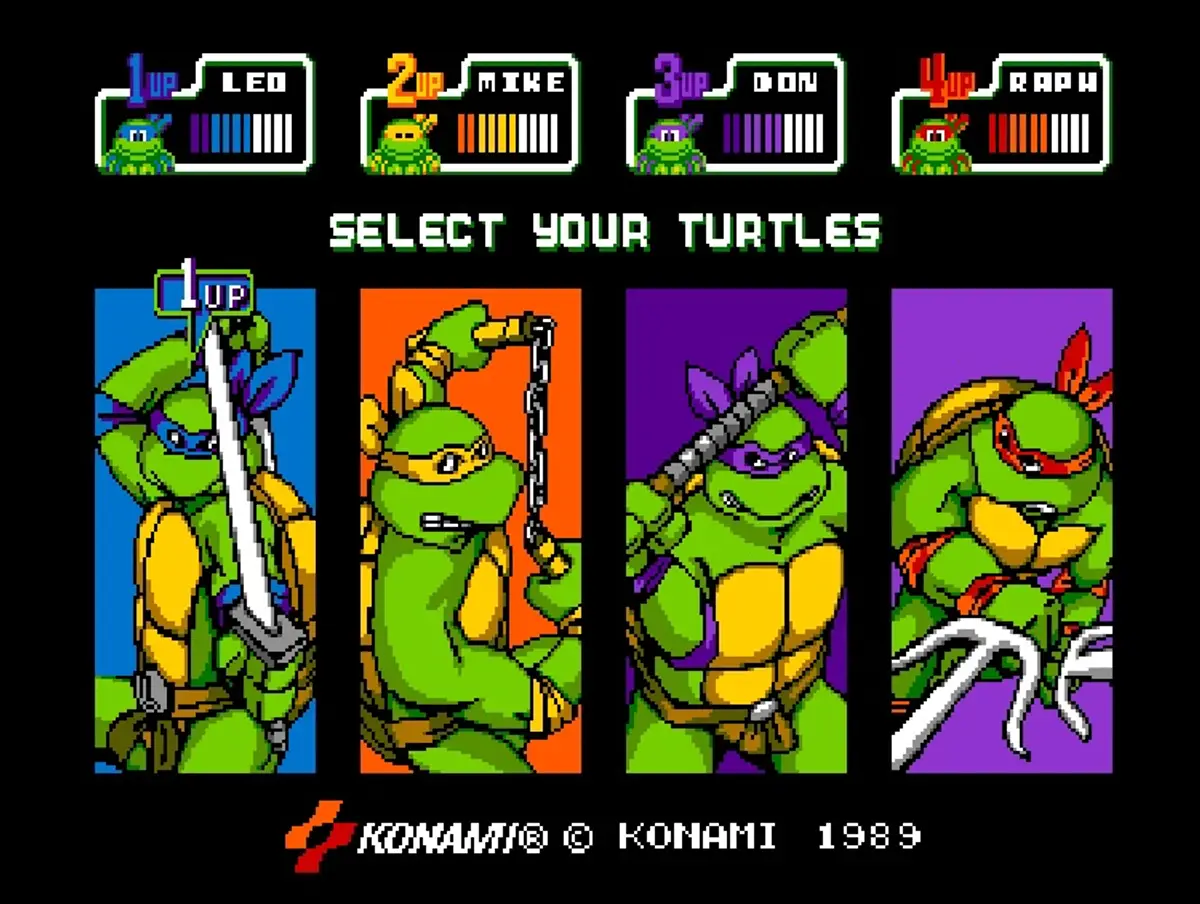
In the late 1980s, Teenage Mutant Ninja Turtles were everywhere, and video games were an obvious part of the phenomenon. Konami brought the heroes to arcades and home systems, but Sega’s 8-bit console missed out. Genesis owners eventually got The Hyperstone Heist, while the arcade game’s direct sequel, Turtles in Time, went to the SNES.
A new take on the arcade classic
Now homebrew developer Gustavo Valenzuela, known as slash_bytes, is building a new Mega Drive version of the original arcade beat ’em up. The project, titled Teenage Mutant Ninja Turtles Genesis or Teenage Mutant Ninja Turtles Arcade: Mega Drive Port, is written from scratch in C with SGDK. It does not use Konami’s source code or simply modify an existing Genesis game.
“It’s a great port of the arcade game, and really shows what the Genesis/Mega Drive hardware is capable of.”
Development began in early 2026 with experiments in recreating the title screen, character portraits and opening stage. The technical challenge was fitting large sprites, detailed scrolling backgrounds and animated scenery within the Mega Drive’s video memory and sprite limits.
From one playable stage to a broader port
By July 19, version 0.1.0 offered a fully playable first level. Players could choose any of the four Turtles and fight through the opening stage, with animated effects, coordinated Foot Soldiers, attack combinations and two-player co-op. Later updates added bosses and more scenes. Composer SanSenpai35 contributed music arranged for the console’s YM2612 FM sound hardware.
Work expanded beyond the opening level in September. Artist Robson Ricardo reworked backgrounds and graphics to better evoke the arcade original while making careful use of the Mega Drive’s limited palette. The first level’s background was redrawn with 15 colors, freeing about 127 graphics tiles for other elements.
More stages, modes and arcade details
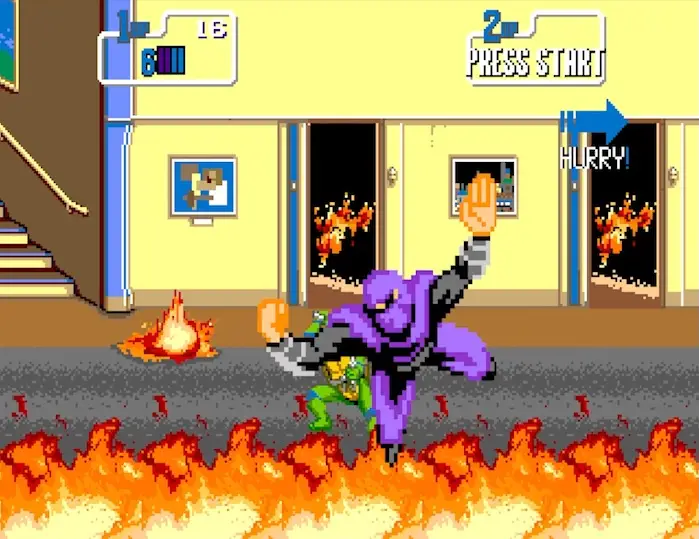
The project grew to include street stages, manhole interactions, more bosses and improved speech samples. An unlockable four-player mode also supports compatible controller adapters. October updates added combat and presentation touches, including four-hit combos, throws, spinning attacks, difficulty settings, customizable controls and a sound test.
Stage work has covered the sewer, garage, freeway, skateboard sequence and parts of the Technodrome. The Dojo features parallax scrolling, tiger hazards and a Shogun boss encounter, while the Technodrome has gained laser barriers, weapons and entrance sequences. Version 0.5.5, identified as the latest in the review, adds wall flips, more screen-directed throws, voice samples and Technodrome design adjustments.
Two ways to play
The game offers two modes:
• Arcade: Aiming for a direct recreation of Konami’s original.
• Mega: Adds extra scenes and gameplay features, including screen-directed throws inspired by Turtles in Time.
In the latter mode, throwing the last Foot Soldier on screen sends the enemy toward the player, scaling up as it appears to hit the screen. It’s a playful nod to the sequel, folded into a project that continues to grow in scope.
The review’s verdict is enthusiastic: short of playing the arcade game through emulation, this is presented as the closest way to experience the title on original retro hardware. The port is praised as a strong recreation and a showcase for what the Genesis/Mega Drive can do.
Source: Old School Gamer Magazine