Metro City comes home
When Final Fight arrived in arcades in 1989, Capcom pushed the side-scrolling beat ’em up into a more physical, readable and spectacular direction. Its Metro City was a world of gangs, subway stations, dirty alleys and weapons grabbed from the street.
In 1992, the game made its way to the Sharp X68000, one of Japan’s most fascinating home computers. The conversion doesn’t try to reinvent the arcade formula: it brings its characters, stages and street-fight energy into the home with impressive fidelity.
On the X68000, Final Fight comes remarkably close to bringing the arcade experience home.
Cody, Guy and Haggar fight together
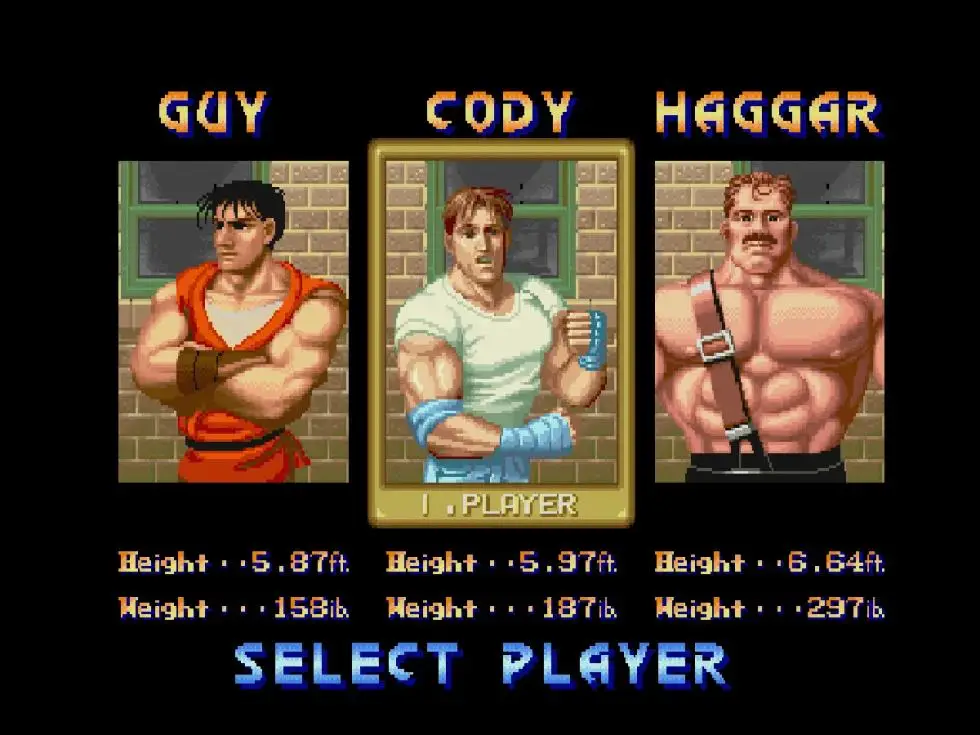
When the Mad Gear gang kidnaps Jessica, Mayor Mike Haggar joins her boyfriend Cody and the agile Guy to take the fight into Metro City. It’s a simple setup, straight from an ’80s action film, and exactly right for the genre.
The three fighters are easy to tell apart, with distinct strengths that make choosing a character feel meaningful from the first few minutes:
• Cody is the balanced all-rounder: quick, powerful and a personal favorite.
• Guy is faster and more agile, rewarding a more technical style.
• Haggar is slow and heavy, but devastating when he gets hold of an enemy.
Final Fight’s structure is classic: move from left to right, fight waves of opponents, pick up weapons and food, then face a stage boss. Its punches feel weighty, throws disrupt the rhythm, and weapons briefly change how you approach a brawl. Special moves can clear space, but they cost energy. The combat is rougher than Capcom’s later one-on-one fighters, yet its physicality still lands.
The Sharp X68000 conversion
Built around a Motorola 68000 CPU, Sharp’s X68000 earned a reputation for arcade conversions, particularly Capcom games. Final Fight makes a strong case for that reputation. It is not a perfect replica of the coin-op, but its overall impact comes remarkably close.
The conversion keeps the large, recognizable sprites and much of the arcade game’s grimy urban atmosphere. It also offers several video options, including different resolution modes. The clearest compromise is enemy density: fewer opponents can appear at once than in the arcade, so some encounters feel less crowded. Even so, the colors, character scale and punchy visual rhythm remain convincing.
Hardware note: the X68000
Sharp’s X68000 was a Japanese home computer known for its arcade-style graphics and strong ports of arcade games. Its Motorola 68000 processor helped make it an appealing platform for conversions that demanded more than many home machines could deliver.
Sound, pace and co-op
The soundtrack keeps the action moving, while players can choose between the X68000’s internal sound and supported MIDI options. Some editions also included a CD of remixed music, reflecting the enthusiast audience around the release. Punches, screams and breaking objects are dry and direct—just the right sound for Metro City.
Most importantly, this is a game to play, not merely a technical showcase. The controls respond well, the pace stays brisk and two-player co-op is present. Playing with a partner changes the experience, just as it did in the arcade.
The difficulty is severe. Enemies surround the player, attack from behind and use their numbers to punish careless movement. Managing space, throws and special attacks takes attention and practice. The formula can feel repetitive to modern players, but its clear character roles and changing stages make it a standout example of beat ’em up design from its era.
Other versions and the homebrew revival
Other home versions made different compromises. The Super Nintendo release was important, but its first edition omitted co-op, Guy and a stage. Final Fight CD for Sega Mega-CD included all three main characters and co-op, while European computer ports often struggled to reproduce the arcade game’s scale and physicality.
Modern homebrew projects have taken another look at what those machines might do. On Amiga, Prototron’s Final Fight: Enhanced is a new interpretation designed for ECS/AGA systems, with the Amiga 600 ECS as its stated base. It uses 2 MB of RAM, adds Maki from Final Fight 2 and supplies music absent from the old Creative Materials conversion.
On Mega Drive, Mauro Xavier’s Final Fight MD is being developed from scratch, without the original arcade source code. It remains a work in progress. These efforts show how time, tools and a better understanding of hardware can change what a home conversion can achieve.
Final Fight X68000 today
The X68000 version remains one of the strongest ways to experience Capcom’s classic on period home hardware. It also captures what the computer represented in early-1990s Japan: an expensive, niche machine with the power to bring arcade-style games unusually close to home.
It isn’t identical to the arcade, but it preserves the characters, co-op, pace and street-level impact that define Final Fight.
Verdict: 9.0/10. The Sharp X68000 conversion is one of the best home versions of Final Fight, perhaps the best of its time. It loses some of the arcade’s enemy density, but keeps the huge characters, cooperative play and much of the coin-op’s spirit. The harsh difficulty and repetitive structure are still there—and are part of its identity.
Ratings
• Graphics: 9.0
• Sound: 9.0
• Gameplay: 9.0
• Longevity: 8.5
• Total: 9.0
Pros
• Very faithful to the arcade spirit
• All three main characters are included
• Two-player co-op is essential
Cons
• Fewer enemies appear on screen than in the arcade
• The formula can feel repetitive today
• Harsh difficulty reflects its coin-op roots
Source: Retro-Gamers.it