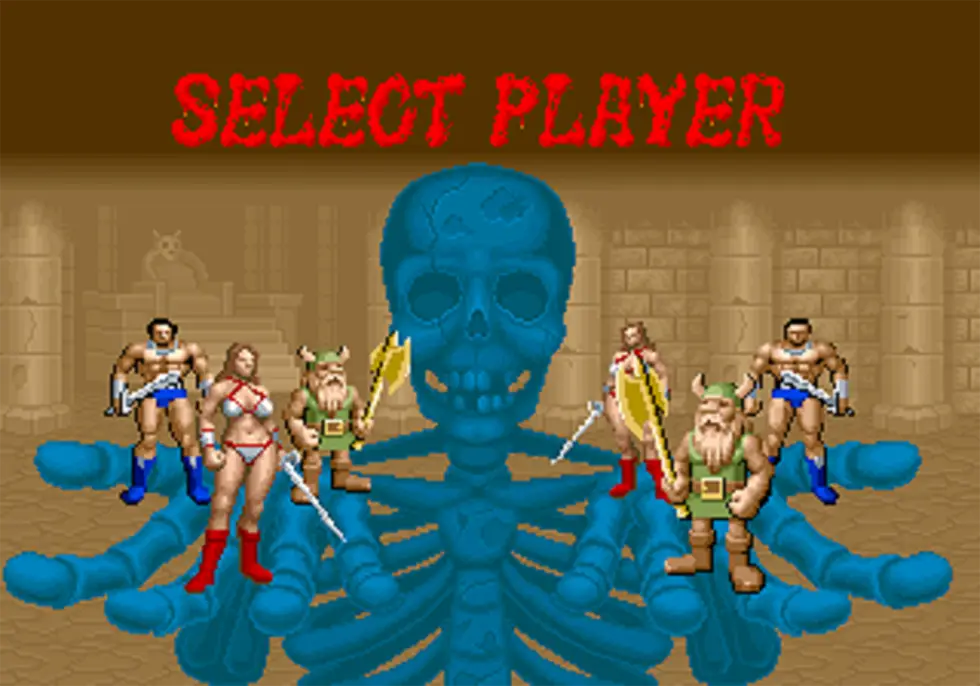
In 1989, arcade cabinets had seconds to make an impression. Golden Axe did it with three heroes, barbarian fantasy, devastating magic and rideable beasts—all wrapped around a simple promise: move forward, strike and survive.
SEGA shifted the beat ’em up away from city streets and into the kingdom of Yuria, where warriors face skeletons, dragons and the evil Death Adder. Its world drew on the sword-and-sorcery imagery of 1980s fantasy films, comics and album art, offering spectacle without a lengthy introduction.
Three heroes, one clear mission
Each of the three playable heroes has a personal reason to confront Death Adder, and each brings a slightly different balance of strength and magic:
• Ax Battler: A sword-wielding barbarian with a balanced mix of combat and magic.
• Tyris Flare: A fast amazon whose powerful magic includes a memorable screen-filling dragon attack.
• Gilius Thunderhead: A dwarf warrior with weaker magic but strong close-range effectiveness.
The differences are not deep enough to make the game a technical character study, but they give each run its own flavor. Magic is central to the spectacle: collect pots from small thieves between sections, then spend them on increasingly destructive attacks.
Golden Axe is less about surgical precision than the feeling of impact—and the images that stay with you.
Impact over refinement
The action is immediate: move from left to right, fight groups of enemies, jump, charge, use close attacks and save magic for dangerous moments. Enemies attack from different directions, so positioning and movement along the vertical axis matter. Collision detection can be uneven, but the combat keeps a solid rhythm and delivers a satisfyingly rough arcade punch.
Two-player mode brings out the game’s strongest side. Partners can split enemies, coordinate their movement and decide when to use magic, while trying not to obstruct one another. Alone, Golden Axe is enjoyable; with a friend, it becomes memorable.
Beasts, stages and arcade spectacle
Some stages let players knock enemies off rideable creatures and take control of them. The roster includes the Chicken Leg, a creature from SEGA’s wider universe, and fire-breathing dragons. These mounts offer a temporary advantage, but players can be knocked off or lose them if they fail to use their reach carefully.
The journey passes through ruined villages, forests, enemy territory, fortresses and battlefields. There is no exploration or deep storytelling, yet the visual progression gives the short adventure a clear sense of moving toward the heart of evil.
Hardware note: SEGA System 16
The arcade game runs on SEGA System 16 hardware, a versatile platform behind several recognizable SEGA coin-ops. Golden Axe is not the board’s smoothest or most advanced game, but its large, colorful sprites and strong artistic direction give it a distinct presence.
A concise adventure with a lasting identity
The sprites are easy to read, the heroes have clear silhouettes, and the backgrounds sell the barbarian setting. Animation looks limited beside the beat ’em ups that followed in the early 1990s, but the visual impact remains strong. Epic music and sharp, functional effects complete the cabinet’s imposing atmosphere.
The game is short, and repetition becomes apparent once its stages are familiar. Some enemies return with only small changes, while difficulty often comes from the number of attackers rather than intricate design. Its replay value instead rests on co-op, trying different characters, managing magic more carefully and attempting a cleaner run.
From the arcade to the living room
The Mega Drive conversion brought Golden Axe into many homes and helped make it a symbol of the connection between SEGA’s arcade roots and its console identity. The coin-op remains the definitive expression of its color, sound, sprite scale and immediacy.
It is not the deepest beat ’em up, and its rough edges are clear today. But its distinct characters, theatrical magic, memorable enemies and barbarian atmosphere still make it an essential SEGA arcade classic: simple, physical and built to capture attention in seconds.
Final verdict
Total score: 9.0/10. The ratings are Graphics 9.0, Sound 8.5, Gameplay 9.0 and Longevity 8.5. The verdict: a direct, spectacular fantasy beat ’em up with enormous impact, even if its collision quirks, repetition and short length show through today.
Source: Retro-Gamers.it