In a noisy arcade, beating the computer was only the beginning. While the next round played on screen, a stranger might appear beside the player, ready to issue a challenge. Instead of a prewritten sequence of opponents, there was a duel against someone who saw the same attacks, knew the same rules, and could change tactics on the fly. This combination of accessible controls, asymmetrical characters, and live rivalry explains why World Warrior mattered so much to the industry.
Six buttons gave every player the same basic tools, but not the same capabilities. Ryu’s light attack, Dhalsim’s long-range strike, and Zangief’s throw served different purposes. Winning required more than memorizing joystick motions: players had to understand distance, attack timing, and their opponent’s habits. The arcade cabinet became more than a machine to beat; it became a place people wanted to return to.
After the First Game: Why Capcom Returned to Street Fighting
The first Street Fighter appeared in 1987. It already featured Ryu and Ken, famous special moves, and the idea of one-on-one combat. Some cabinets had two pressure-sensitive pads, while others used six ordinary buttons. However, special attacks were awkward to perform, and the roster was extremely limited: players controlled Ryu and Ken. The sequel had a foundation to build on, but not yet a formula for mass success.
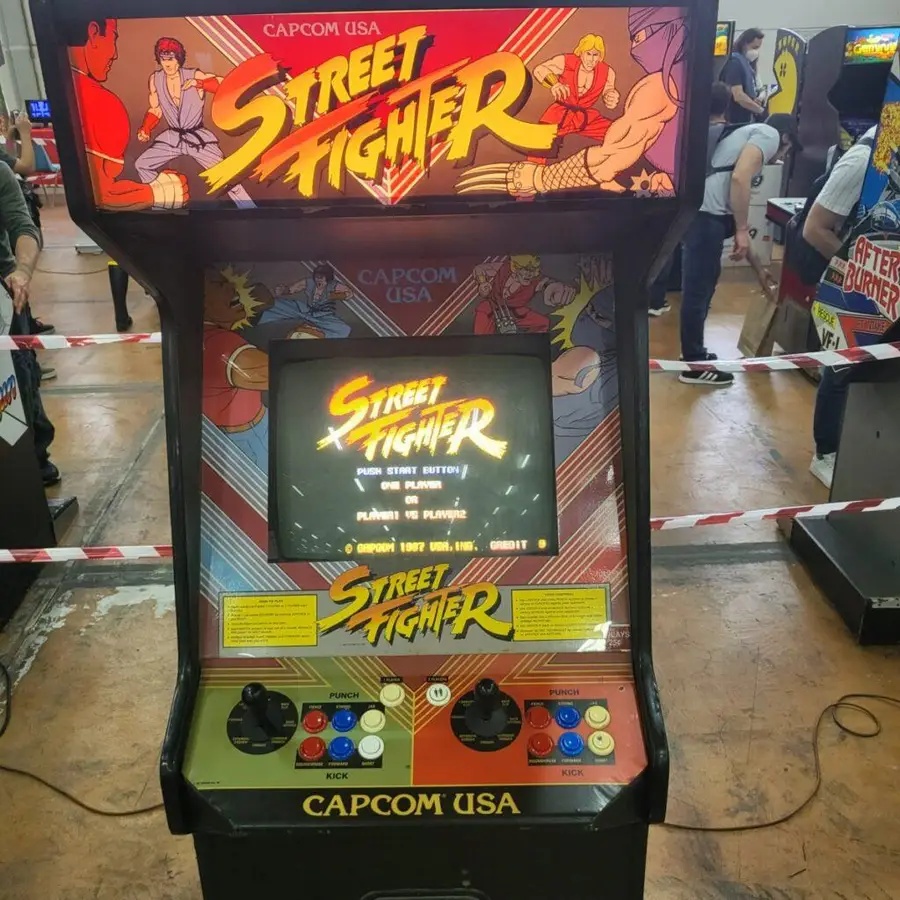
The road to a sequel took a winding course. Final Fight, released in 1989, was shown at an early stage under the title Street Fighter 89. It was a different kind of fighting game: its heroes moved through streets and battled groups of enemies. In a 1991 interview with Japanese magazine Gamest, Yoshiki Okamoto recalled that visitors to a trade show did not accept this interpretation of Street Fighter. The project was given its own name, and Capcom returned to the idea of a direct sequel.
Akira Nishitani (also known as Nin-Nin) was responsible for game design and led development. Akira Yasuda (Akiman) played a key role in the characters’ visual appearance and art design. Okamoto led Capcom’s arcade division and served as the project’s producer in a broad sense; that is no reason to credit him with authorship of every mechanic. Other team members handled programming and sound, including composer Yoko Shimomura.
In a 1991 interview, Nishitani said management wanted a recognizable continuation of the first game, although he himself had much more unusual ideas. The constraint proved productive: rather than adding dozens of modes, the team focused on making every match more interesting. The eight playable characters and four computer-controlled bosses were part of the concept from an early stage. Choosing a fighter was meant to determine not just a character’s appearance, but how the player would engage with an opponent.
Developers’ recollections are also interesting because they show that Capcom did not speak with a single voice. The artist wanted expressive animation, the designer wanted useful and distinct attacks, and the programmer wanted the system to behave predictably. Even a good idea could disappear if it could not be reconciled with the other rules. Nishitani, for example, recalled a cut maneuver for Chun-Li that proved too powerful. Finding each fighter’s personality went hand in hand with testing how the characters worked together in one game.
The Japanese trade publication Game Machine, in its January 1, 1993 issue, dates the start of Street Fighter II shipments in Japan to February 1991. Capcom’s historical notes in its Street Fighter IV guide, by contrast, give March. This is not necessarily a contradiction: board shipments, test installations, and a broad commercial launch do not always happen at the same time. It is therefore more accurate to say that World Warrior came out in February–March 1991, rather than treating the date of one software revision as a universal release day.
CPS-1 Hardware: How the Arcade Brought Fighters to Life
World Warrior ran on the Capcom CP System, later known as CPS-1. This arcade hardware platform had previously powered Forgotten Worlds and Final Fight. Unlike a general-purpose home computer, it was built around the 2D graphics, sound, and control tasks Capcom games needed. Developers could rely on familiar tools and reuse engineering solutions.
For the specific World 910522 revision, the MAME archive lists a 10 MHz Motorola MC68000 processor and a visible raster area of 384 × 224 pixels. The sound system used a Z80, a Yamaha YM2151 synthesizer, and an OKI MSM6295 chip for playing digitized sounds. These specifications describe the classic arcade configuration, not later accelerated versions or home ports.
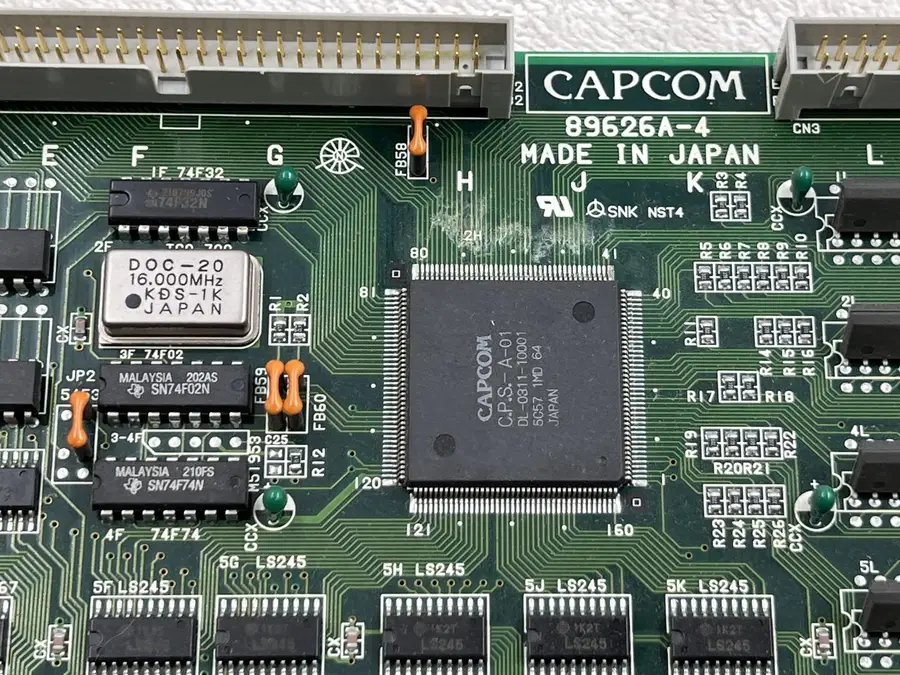
The main processor tracked the logic of the match: where the fighters stood, what inputs the players made, whether attacks collided, and how much health remained. Specialized graphics hardware helped render background layers and sprites—small graphical objects used to assemble moving characters. Tiles, or reusable image fragments, made it possible to build large scenes without storing every screen in its entirety.
This division of labor matters just as much in a fighting game as it does in an impressive title screen. Players need to distinguish a strike’s preparation from its follow-through, recognize the position of a fighter’s arms and legs, and see the start of a jump. Animation is both decoration and interface: experienced opponents read the action through it. Arenas with moving spectators, street details, and expressive color schemes created the feeling of traveling the world without changing the basic rules of combat.
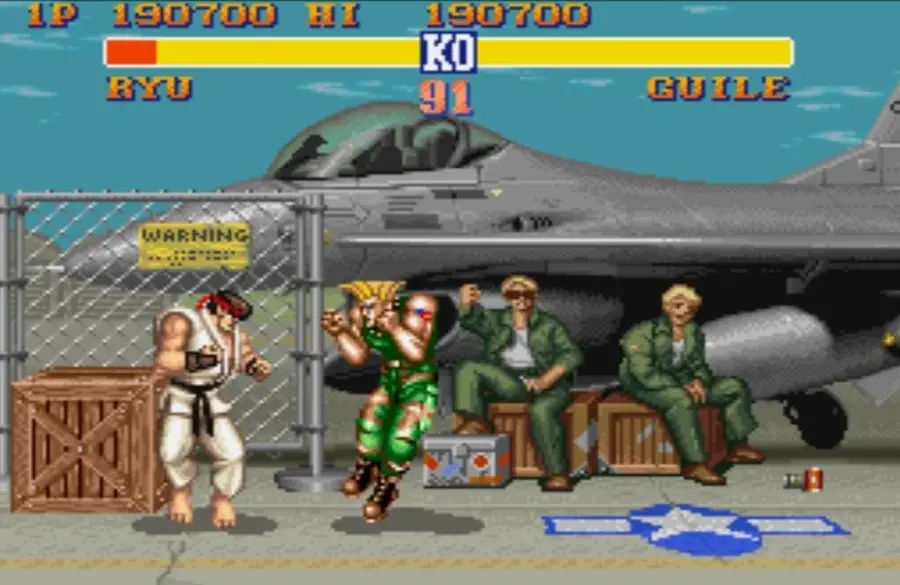
Sound served a similar purpose. The stage theme set the mood, a special-move shout helped identify an attack, and the impact sound confirmed that a hit had connected. Shimomura’s music made the fighters recognizable even away from the screen: Guile’s and Ken’s themes live in cultural memory apart from any particular match. Still, individual sound effects, audio programming, and composition were collaborative work, not the product of one person alone.
The hardware platform also shaped installation requirements. Capcom’s American manual for the Street Fighter II kit specifies a horizontal monitor, power, and wiring requirements. The JAMMA standard (a unified arcade-cabinet connector) made it easier to convert existing cabinets, but the usual control lines were not enough for all six attacks per player. The extra buttons had to be connected separately. Operators did not necessarily have to buy a new cabinet, but they did have to check the monitor and power and modify the control panel.
Combos: When a Mistake Became Part of Mastery
One of World Warrior’s most famous discoveries was the combo—a sequence of attacks in which the opponent, caught by a hit, cannot recover and defend before the next one lands. It is not simply a string of quick button presses. For a sequence to work, players need to account for the animation’s duration, the opponent’s state, and the moment when the game allows the next move.
Broadly speaking, any normal attack can be divided into three stages. First, the character prepares to attack; then comes a brief window in which the attack can hit; finally, there is a recovery period. These stages are commonly called startup, active, and recovery. After being hit, an opponent is temporarily in hitstun, unable to act. If the next attack connects before that state ends, the result is a continuous combo.
There is another mechanic, though: a cancel, or cutting short part of one move’s animation by transitioning into another. For example, an appropriate normal attack can flow into a special move without waiting for the attacker’s full recovery. A cancel alone does not guarantee a combo: if the first attack misses or the new attack cannot reach the opponent in time, the sequence is not inescapable. It is the combination of these rules that creates room for experimentation.
In a 1991 interview, Nishitani said directly that the well-known transition from a crouching strike into a Shoryuken (rising uppercut) was not planned in advance. It emerged after changes to the game’s parameters and surprised the designer himself. Another story comes from Noritaka Funamizu: in a 2002 interview with Edge, later recounted by Game Informer, he recalled noticing the potential for successive hits while testing the bonus car-smashing stage. These accounts describe different observations, so it would be inaccurate to name one person as the undisputed inventor of every combo.
The feature stayed in the game. What mattered was that players could discover patterns for themselves and then show them to others. In the arcade, spectators could see an experienced player land several hits where a beginner managed only one. Reproducing what they saw took practice. A new layer of skill had appeared, one that could not be bought with extra coins.
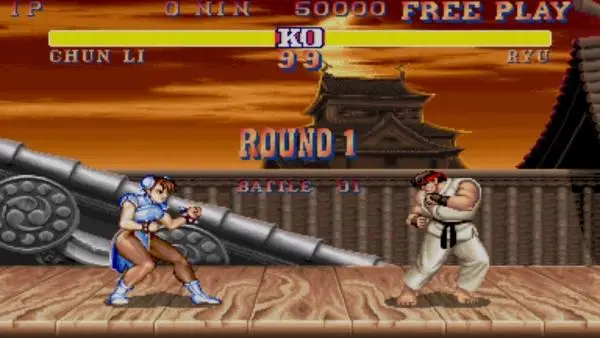
However, it is important not to project the habits of modern fighting games onto World Warrior. The original has no Super Combo meter, universal training mode, or detailed on-screen frame counter. Not every attack can be canceled into a special move, and a particular combo depends on the fighter, position, and revision. That is why the original is interesting as a system in its own right, not as an incomplete version of modern Street Fighter.
Eight Fighters, Six Buttons, and Imperfect Balance
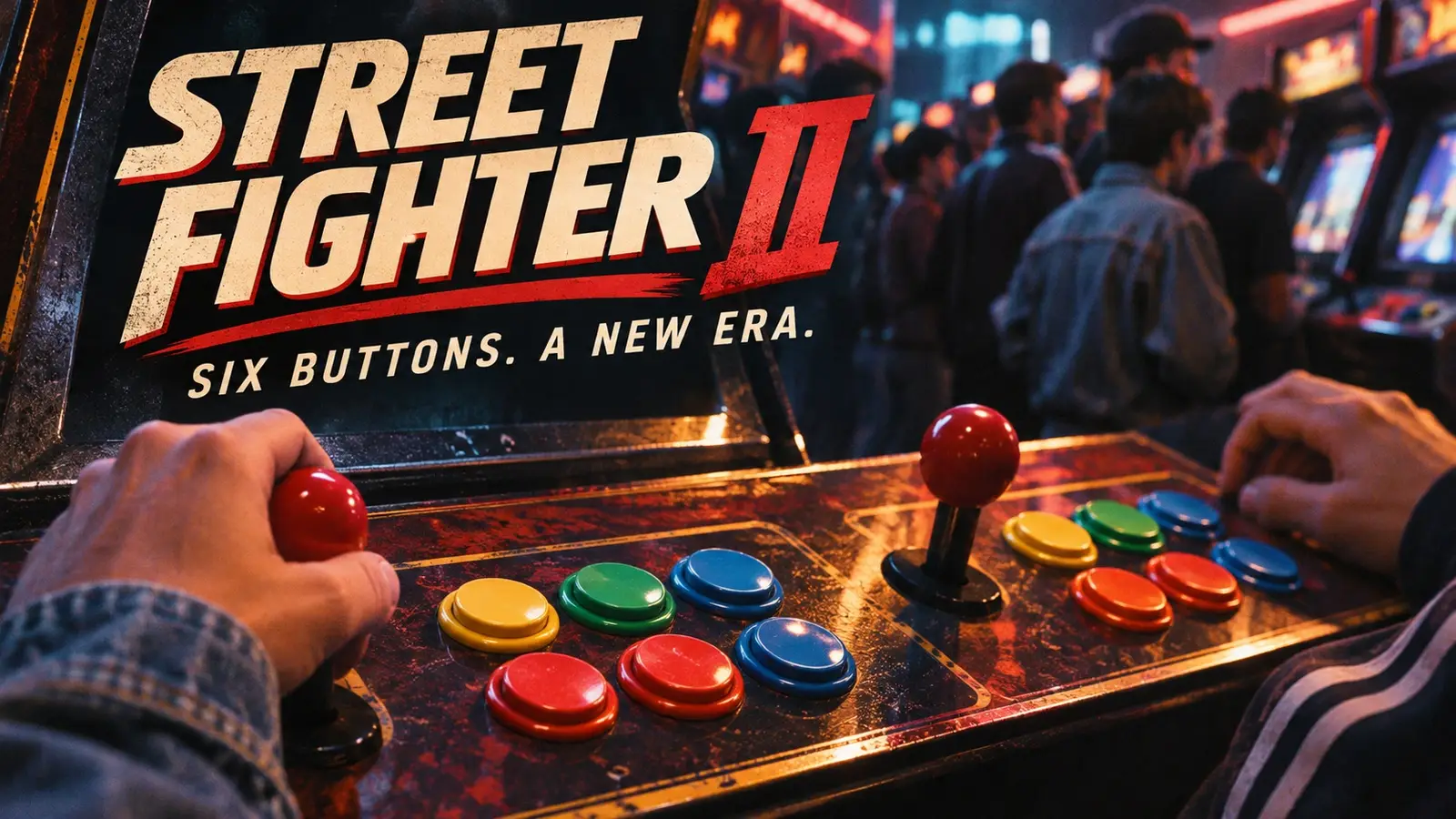
The arcade panel gave each player a joystick and two rows of three buttons: light, medium, and heavy punches; light, medium, and heavy kicks. Direction relative to the opponent determined movement and defense, while directional and button combinations triggered special techniques. The interface was compact enough for players to start immediately, yet flexible enough to keep a match from boiling down to one best attack.
The original let players choose Ryu, Ken, Chun-Li, E. Honda, Blanka, Guile, Zangief, and Dhalsim. The four bosses—Balrog, Vega, Sagat, and M. Bison in the Western localization—remained under computer control. Three bosses have different names in the Japanese version, so it is important to check the region of an edition when reading guides from other countries.
Ryu and Ken introduced players to the fireball-like Hadouken and rising Shoryuken. Guile offered a different approach: to perform a Sonic Boom, players first had to hold back, then move the joystick forward and press punch. Zangief aimed to get within throwing range, while Dhalsim could threaten opponents with stretching limbs from far beyond the reach of an ordinary attack. Chun-Li benefited from her mobility and ability to change position quickly.
This is where the strategic concept of a matchup comes in: the pairing of two specific characters. Maintaining a comfortable distance against Zangief and against Dhalsim means solving different problems. If an opponent uses long-range attacks, an ill-considered jump can run into a counterattack. If an opponent tends to retreat, pressure and control of space can limit their freedom. Choosing a fighter changes not just the available commands, but also what the player needs to watch out for.
The strength of each button matters too. Light attacks are usually faster and useful for testing an opponent’s reaction; heavy attacks can deal more damage but often take longer. Medium attacks offer a compromise. These differences cannot be reduced to one universal formula for every fighter: individual moves have their own properties. That is the point of six separate buttons instead of a single attack button.
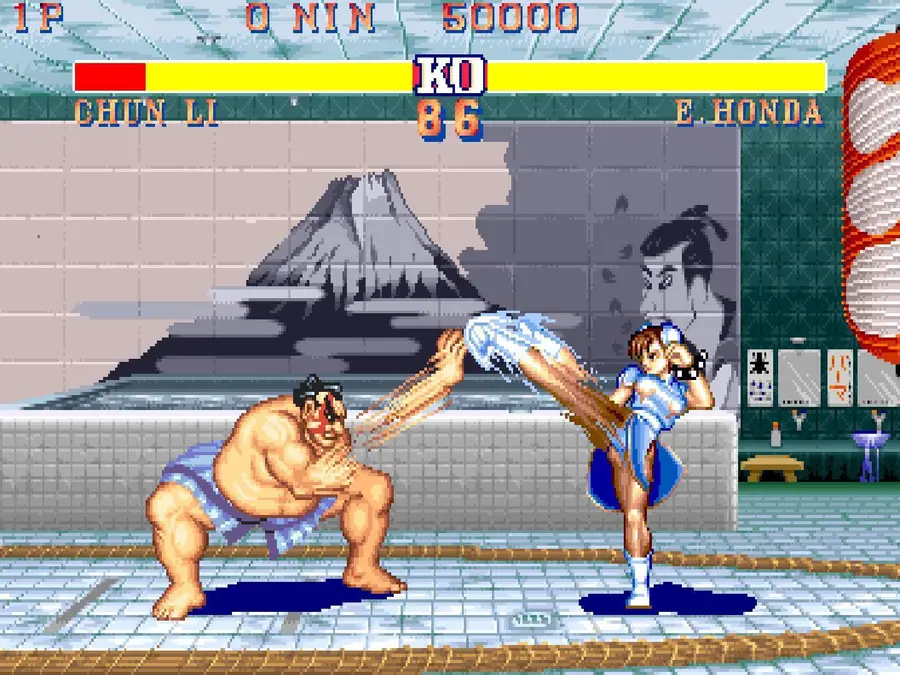
The original’s balance was not perfect. In an interview that same year, Nishitani described the huge volume of interdependent checks and the need to keep bringing in people unfamiliar with the project to test it. Experienced arcade-goers quickly found strong and weak character matchups, vulnerabilities, and ways to exploit the game’s quirks. But World Warrior’s success does not depend on considering it balanced by modern standards. What mattered more was that it gave players a shared set of rules around which competitive play could develop.
Lines, Coins, and the Home Revolution
In a typical arcade of the era, a coin bought a limited chance to play. A player who beat a computer-controlled opponent continued; a new person could join and start a match against them. Informal competitions often followed a “winner stays on” principle, with the loser giving up their place in line. This was a player custom, not a required programmed mode on every cabinet. People watched from behind, picked up useful moves, debated the rules, and waited for their chance.
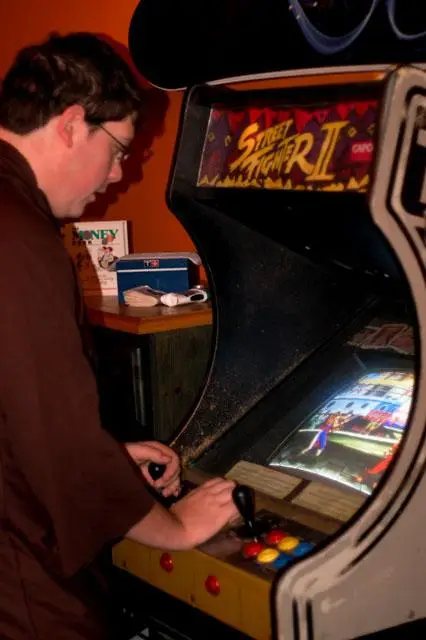
The model was especially appealing to operators: interest in the game no longer depended on how quickly visitors mastered the computer-controlled enemies. A new person brought a new challenge. The same cabinet could remain popular for a long time, and watching other people’s matches became entertainment in its own right. In Game Machine’s annual rankings, based on revenue from installed games, Street Fighter II took first place among conversion kits in both 1991 and 1992. This is more substantive evidence of its popularity than unverified worldwide revenue figures.
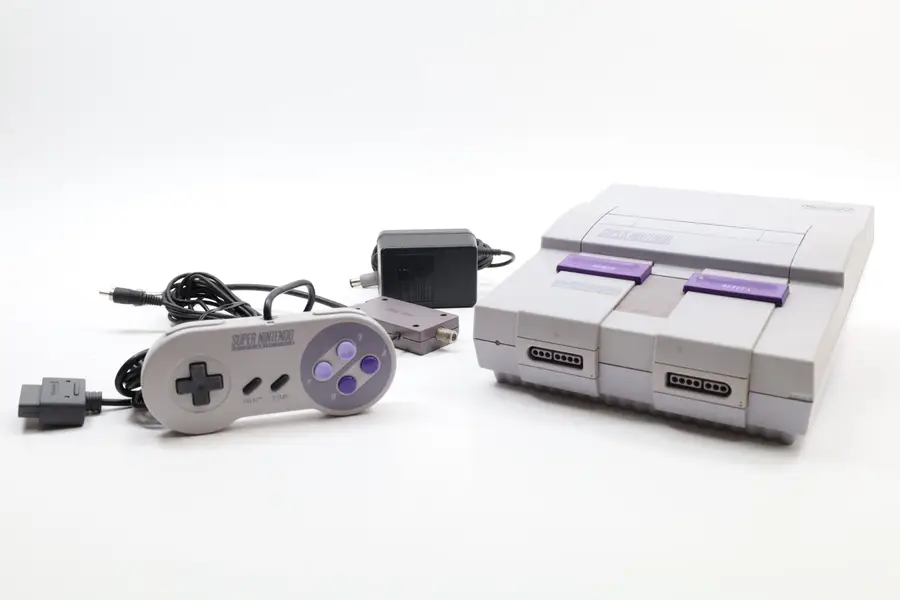
In 1992, the game came to the Super Nintendo Entertainment System (SNES). The controller’s four face buttons and two shoulder buttons made it possible to retain all six attack types, although the grip and finger positions differed from those of the arcade panel. The image and sound were adapted for home hardware, so the port should not be considered a bit-for-bit copy of CPS-1. On the other hand, new ways to practice became possible: players could face a friend as long as they wanted, without waiting in line or paying for each match. According to Capcom’s official Platinum Titles list, the SNES version of Street Fighter II, released in June 1992, sold 6.30 million copies. This is not the combined sales of every edition.
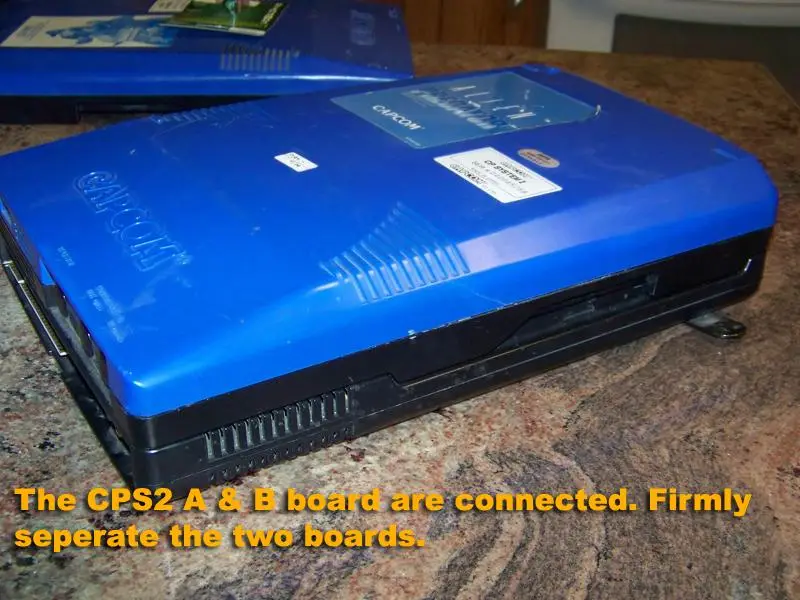
Arcade versions continued to evolve in parallel. The 1992 Champion Edition made the four bosses playable and allowed opponents to choose the same fighter. Hyper Fighting, released later that year, increased the pace and added some special moves. Super Street Fighter II: The New Challengers moved to CPS-2 in 1993 and expanded the roster to sixteen characters; Super Street Fighter II Turbo added a Super Combo system in 1994. In other words, the series’ familiar features accumulated gradually rather than all being present in the first World Warrior.
Competitive culture also took on a more formal structure. Evo organizers trace their event’s history to Battle by the Bay in 1996, when 40 players gathered in Sunnyvale, California. They competed in Super Street Fighter II Turbo and Street Fighter Alpha 2, not World Warrior. This example illustrates the continuity: skills that emerged in arcades at the start of the decade became the foundation of regional tournaments, knowledge-sharing, and future major championships.
Ultimately, World Warrior’s main contribution was not that it made every operator install exactly six buttons. It showed that a single screen, clear rules, and distinct characters could build a community. Improving at the game became just as interesting as discovering new levels. And the stranger at the second joystick might be the reason to come back to the arcade tomorrow.
Reference
• Developer and publisher: Capcom; the first Japanese shipments of World Warrior date to February 1991, while Capcom’s reference gives March.
• Arcade platform: CP System (CPS-1); in World 910522, the Motorola 68000 main processor runs at 10 MHz.
• Original roster: eight playable fighters and four computer-controlled bosses; controls include six attack buttons per player.
• Lead game designer and director: Akira Nishitani; one of the key artists: Akira Yasuda; composer: Yoko Shimomura.
• The SNES port of Street Fighter II came out in 1992; Capcom lists sales of 6.30 million copies.
• Champion Edition and Hyper Fighting came out in 1992; Super Street Fighter II moved to CPS-2 in 1993.