Space Invaders and the Myth of the Japanese 100-Yen Coin Shortage
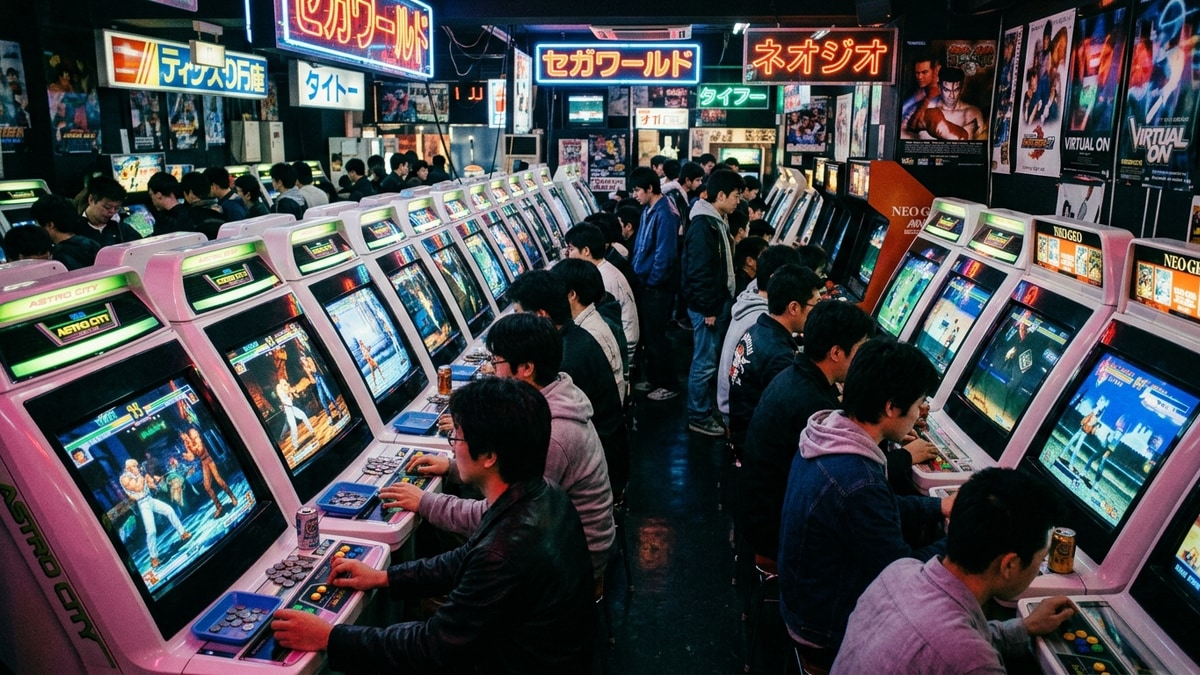
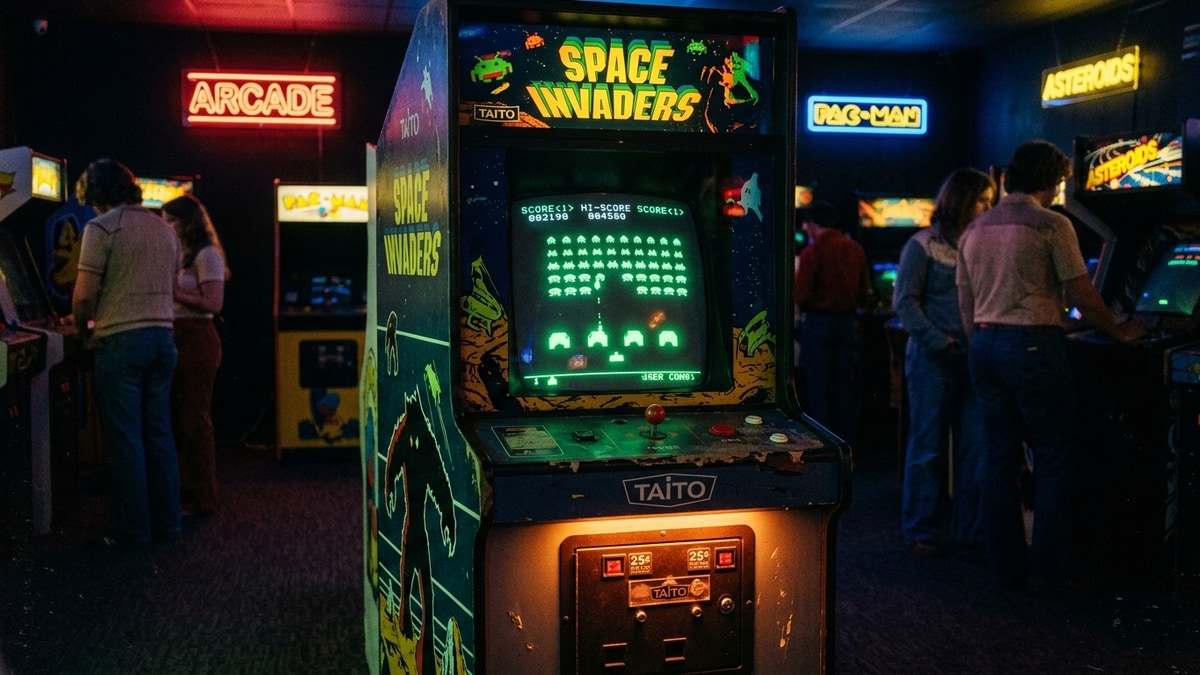
In summer 1978, Taito engineer Tomohiro Nishikado introduced Space Invaders. It was gaming's first confrontation with an encroaching alien horde, precipitating a nationwide craze in Japan: dedicated 'Invader Houses' sprouted across Tokyo packed solely with rows of monotone CRT monitors.
The craze birthed the enduring urban myth that Japan's mint suffered a severe 100-yen coin shortage. In reality, currency velocity simply stalled because millions of physical coins accumulated directly inside the cashboxes of arcade operators.
«The arcade was far more than an amusement center; it was a secular cathedral where respect was commanded on a single square foot of carpet». (Nolan Bushnell, Founder of Atari)
1991: How Street Fighter II Turned Amusement Parks into Arenas
While the 1980s celebrated the solitary pursuit of the high-score leaderboard, March 1991 transformed interactive competition forever. Capcom launched Street Fighter II: The World Warrior running on its heavyweight CP System (CPS-1) motherboard.
Direct player-versus-player competition arrived. Sanctuaries fell into tense silence punctuated by rhythmic clatter on Sanwa clickers. A universal etiquette formed: placing a shiny quarter on the lower glass bezel staked your claim to challenge the reigning king.
The Reckoning: Why 3D Home Consoles Crippled Western Arcades
For two decades, arcade boards remained the undisputed technological peak; home consoles could never touch the staggering throughput of Sega Model 2 (Daytona USA) or Namco System 22. But in the late 1990s, that disparity vanished.
The arrival of Sega Dreamcast, PlayStation 2, and the original Xbox brought coin-op graphics directly to home televisions. Faced with couch multiplayer without coin expenditure, thousands of Western arcades closed their doors within years.
MAME and Modern Curators: Rescuing Bit-Rotting ROMs and CRT Tubes
Today, arcade history enjoys an impassioned preservation movement. Founded in February 1997 by Italian programmer Nicola Salmoria, the Multiple Arcade Machine Emulator (MAME) documented fading silicon logic before bit-rot permanently claimed mask ROMs.
Restoration artists lovingly recap CRT flyback transformers and resurrect wooden uprights in thriving 'Barcade' hubs. Beneath warm neon glows, the clink of tokens resonates again, keeping the arcade heartbeat alive.
«Street Fighter II was engineered so competitors looked each other in the eye. Online matchmaking will never match the electric current of a physical arcade». (Yoshiki Okamoto, Producer of Street Fighter II)