The series began on MSX2 with two-dimensional rooms and cautious patrol avoidance. In 1998, it became a cinematic spy thriller on PlayStation. Metal Gear Solid showed that players could do more than watch a movie between missions—they could feel like participants in its scenes.
From MSX2 to polygons: the Metal Gear series’ origins and Kojima’s ambitions
When Metal Gear came out for the Japanese MSX2 computer in 1987, its central rule ran counter to the conventions of action games: fighting an entire garrison was a bad idea. Solid Snake had to slip past guards, hide behind walls, use equipment, and assess danger in advance. The computer’s limitations became part of the mechanics. Instead of nonstop firefights, the game encouraged players to watch their opponents and look for a safe route.
In Metal Gear 2: Solid Snake, released for MSX2 in 1990, the idea grew more sophisticated. Guards gained clearer fields of vision and the ability to react to noise; new alert phases appeared, and radar made it possible to monitor events beyond the visible room. This was no longer just an arcade game about avoiding detection: players learned to picture an entire base as a system of routes, doors, and interconnected threats.
By the middle of the decade, Kojima had also worked on Snatcher and Policenauts—stories where dialogue, editing, and science-fiction intrigue played a prominent role. But he had not lost interest in stealth. As he recalled in a conversation with PlayStation Blog, news of a console capable of drawing polygons in real time made him reconsider Metal Gear: in a three-dimensional space, the camera could move, and hiding could gain a new physical dimension.
In a spring 1998 interview with NEXT Generation magazine, Kojima said the idea for a polygonal game had come to him around 1994, while active development began in September 1996. For the core team, it was their first major experience with 3D graphics. Just as important, the goal was not simply to replace flat Snake with a three-dimensional model. Kojima was looking for a way to combine an intuitive stealth system with a story substantial enough to stand on its own as a spy film.
That is why the plot does not start from scratch. An operation involving a nuclear threat, hostages, and an armed special forces unit unfolds on Shadow Moses Island, while the characters’ past connections and the consequences of old experiments gradually come to light. You can play without knowing the MSX2 games, but veterans of the series will recognize characters and themes. The old principle of “survive without being noticed” now carries a personal stake: it is no longer just about reaching the objective, but also understanding whom it matters to and why.
Building Shadow Moses: level design, overhead camera, and PS1 hardware limits
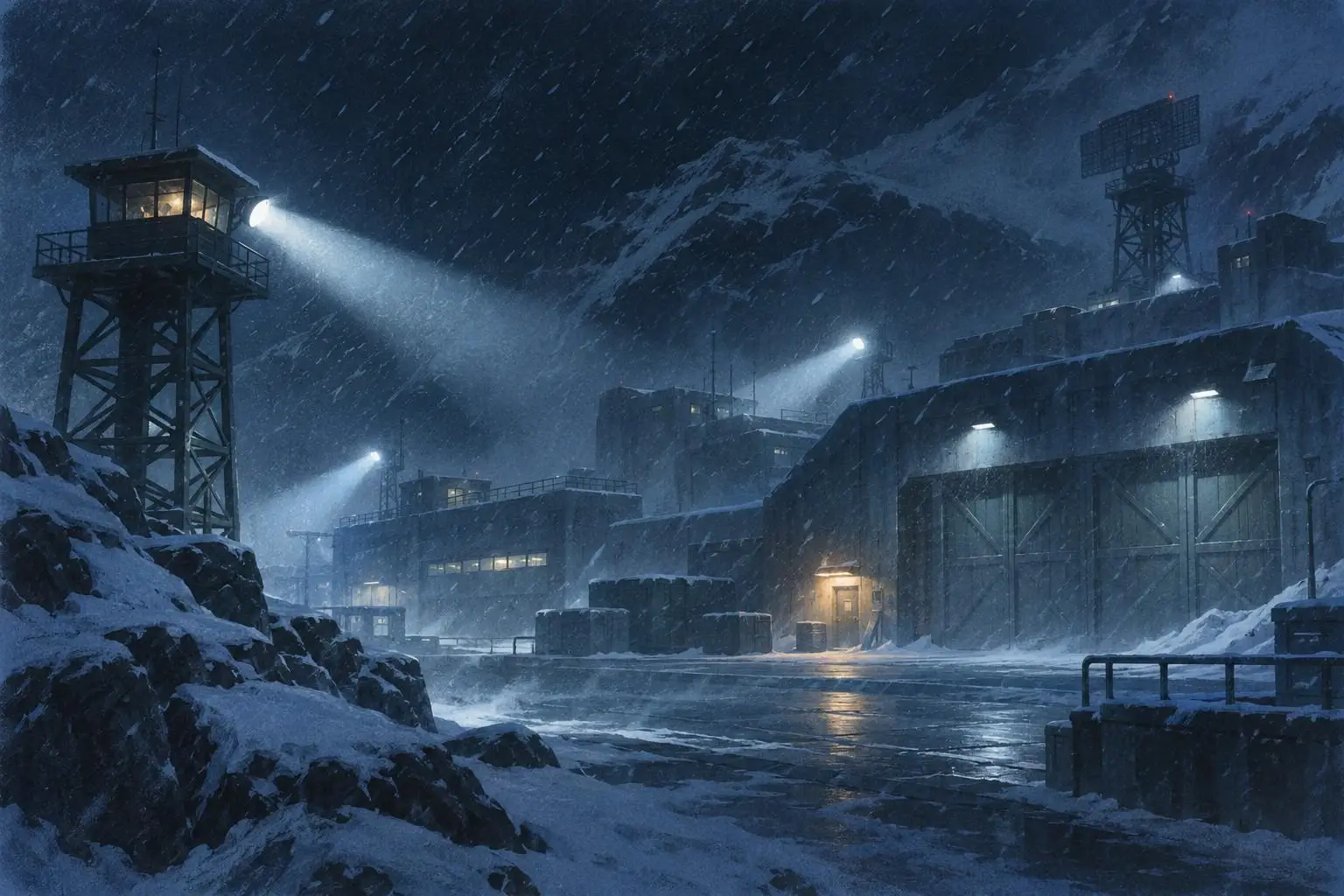
Shadow Moses has a useful quality for stealth: it is not an endless, abstract map, but a confined complex that gradually becomes familiar. The landing zone, hangars, corridors, elevator shafts, and service rooms connect to one another. Players return to previously visited areas with new equipment and notice details they had overlooked. The same door can be an obstacle, a landmark, or a way out of danger.
The move to 3D made working with spaces like these much more complicated. In a 1997 interview with Famitsu, Kojima explained that three-dimensional rooms suddenly required the team to account for the height of furniture, the thickness of columns, and what a character could see around a corner. The team built physical models of buildings from toy blocks and peered inside with a small CCD camera. This account of model-making has been corroborated, though he did not name a specific brand of building blocks. The method helped answer a simple question: would the player be able to see an important door from the right position?

On the surface, Metal Gear Solid retains its kinship with its predecessors. The main view is from above, making the room layout and the guards’ positions easy to read. But at key points, the camera moves closer to a wall, turns around a corner, or lets players look through Snake’s eyes. In ventilation shafts, the perspective deliberately switches to first person. For 1998, this was a precise compromise: the director controlled the player’s attention, while the player could still plan a route.
The Soliton radar complements this approach. Its fields of vision turn enemy movements into a visible puzzle: you can wait for a soldier to turn away, distract them with a noise, or crawl past under observation. But the screen alone is not enough to rely on. Security cameras, footprints in the snow, and audible footsteps remind you that the space follows its own rules. When an alert begins, the familiar plan is no longer safe, and a different game starts: escaping pursuit.
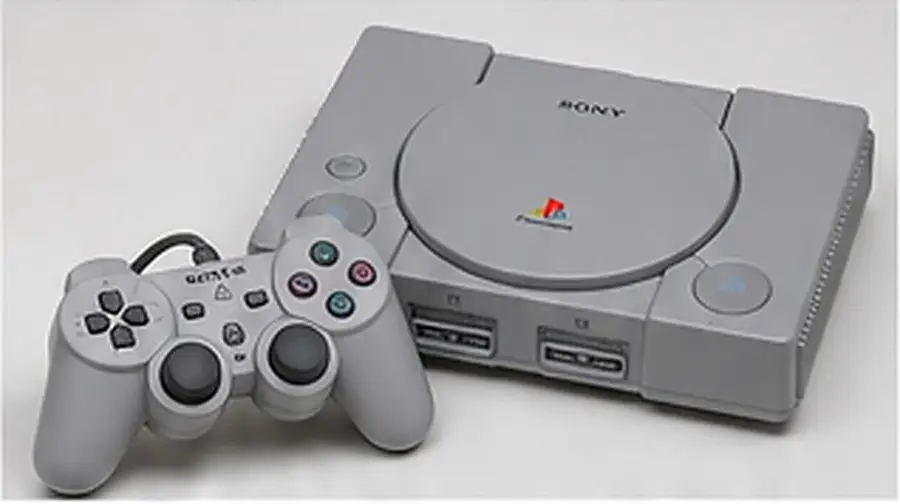
PlayStation provided 3D space and a moving camera, but nowhere near unlimited memory. In an interview for the Official Mission Handbook, animation director So Toyama described how the team had to reduce the number of poses Snake could take while holding weapons: there was not enough room to keep every variation in memory, while loading each one from the CD-ROM whenever the weapon changed was impractical. Hardware limits therefore affected not only the number of polygons, but also the selection of available movements.
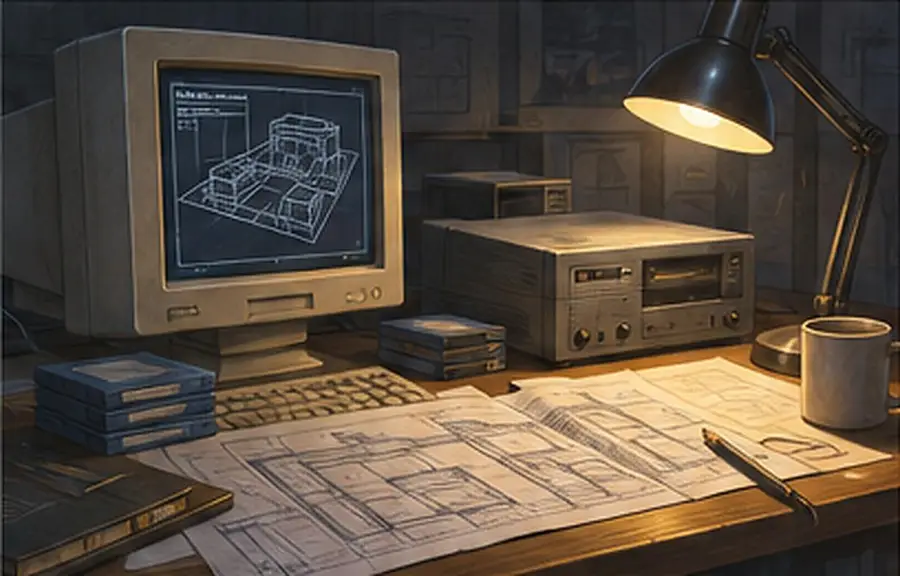
On screen, this becomes a distinctive economy of expression. Dark corridors, large, recognizable shapes, strong light sources, and carefully chosen angles help keep the player’s attention where it matters. Shadow Moses does not try to be a photorealistic military base. It works like a set: realistic enough to navigate, and stylized enough that every entrance, passage, or hiding place has gameplay significance.
Directing with the game engine: cutscenes, angles, lighting, voice acting, and Yoji Shinkawa’s designs
“Interactive movie” is often shorthand for the long conversations and cutscenes in Metal Gear Solid. But the game’s greatest strength is how it connects them to player control. Snake moves carefully through a hangar; then the camera finds the right position, the characters start talking, and it all takes place in a familiar game space. Most story scenes were staged using the game engine rather than as separately pre-rendered movies. The transition between action and drama felt more seamless than in many games of the time.
As early as 1997, Kojima explained that he cared not just about impressive films between missions, but about characters able to “act” inside a polygonal scene, and lighting that supported the meaning of what was happening. He was also wary of drawn-out monologues: in an action game, a pause needs a dramatic reason. In practice, though, Metal Gear Solid still loves lengthy conversations—one of its defining qualities, which both captivated and tired some players.
A good example of its direction is the change of scale. Wide shots show the loneliness of a small figure in front of a huge hangar; a low angle emphasizes the bulk of a war machine; and a static camera in a cramped room lets you feel how hard it is to leave without being seen. The characters on the original PlayStation did not have modern facial animation, so emotion was often conveyed through silhouettes, gestures, pauses in dialogue, and editing. The limitation made the team think carefully about exactly what the audience should see.
Yoji Shinkawa was largely responsible for the game’s visual character. His work is recognizable by its free-flowing, sometimes almost casual brushwork, sharp silhouettes, and blend of military functionality and fantasy. In a 1998 interview, Shinkawa said he did not want to draw heroes according to a typical video-game design template. Kojima, for his part, noted that the artist did more than fulfill commissions: his ideas changed the game’s structure. The cyborg ninja, for example, originated in Shinkawa’s drawings and eventually became an important part of the story.
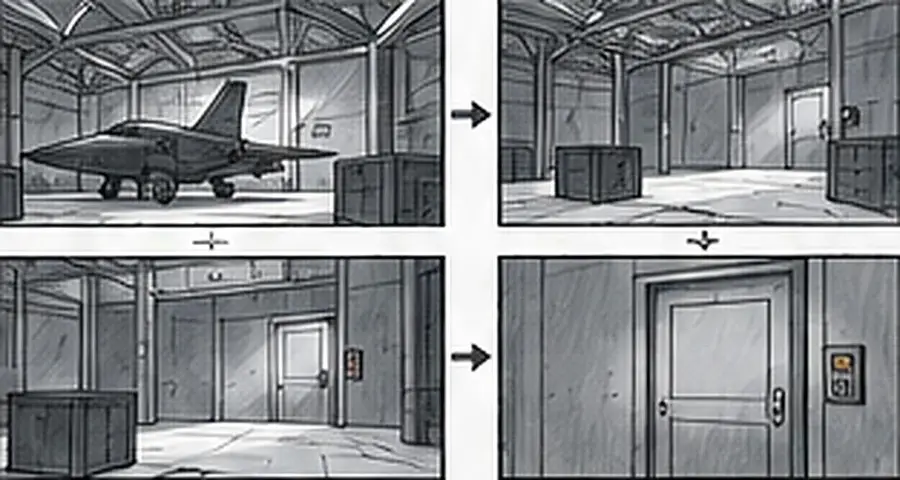
The artist’s sketches were not copied literally onto the screen. The low-polygon models had to be simplified, but they retained their distinctive shapes: broad shoulders, long coats, expressive masks, and weapons. On PlayStation, the tiniest details were lost, but the silhouettes were immediately legible. This combination of illustration and limited 3D graphics still makes the characters recognizable, even in a small screenshot.
Sound provided an equally important part of the game’s cinematic quality. In the Japanese version, Snake was voiced by Akio Otsuka; in the English version, by David Hayter. They were joined by a large cast. Codec conversations reveal allies’ motivations in detail, while music and sound effects shift the emotional rhythm from cautious patrols to chases. According to an interview with So Toyama, the original game’s animation was created by hand, without motion capture. The team first made storyboards, then animators assembled the scene gesture by gesture—almost like a small animated film.
The game that “reads” you: Psycho Mantis, memory cards, controller ports, the codec, and frequencies
One of Metal Gear Solid’s biggest achievements is its ability to surprise not just the protagonist, but the person sitting in front of the TV. The encounter with Psycho Mantis begins like a regular boss fight, but quickly turns into a demonstration that the game seems to know more about the PlayStation’s owner than it should. The character can comment on save data from certain other Konami games on the memory card. This is neither magic nor a universal reading of every save file, but a set of checks for specific data that the game is programmed to recognize; the effect is startling all the same.
The boss fight develops the trick further: Mantis seems to predict the player’s commands and dodge attacks. The best-known way to disrupt this “telepathy” is to physically move the controller plug from the console’s first port to the second. The solution is not in Snake’s inventory or skill list, but right on the console itself. In versions with controller vibration, the scene can heighten the impression that the game is addressing the gamepad, too.
Many players also remember another instruction. To contact Meryl over the codec, you need to find her frequency, but the hint points not to an inventory item, but to the back of the actual game case. The back cover of the original release displays a codec screen with the right number: 140.15. Packaging archives and modern guides to re-releases confirm this detail. For players with a physical copy, finding it literally meant putting down the controller and picking up the case.
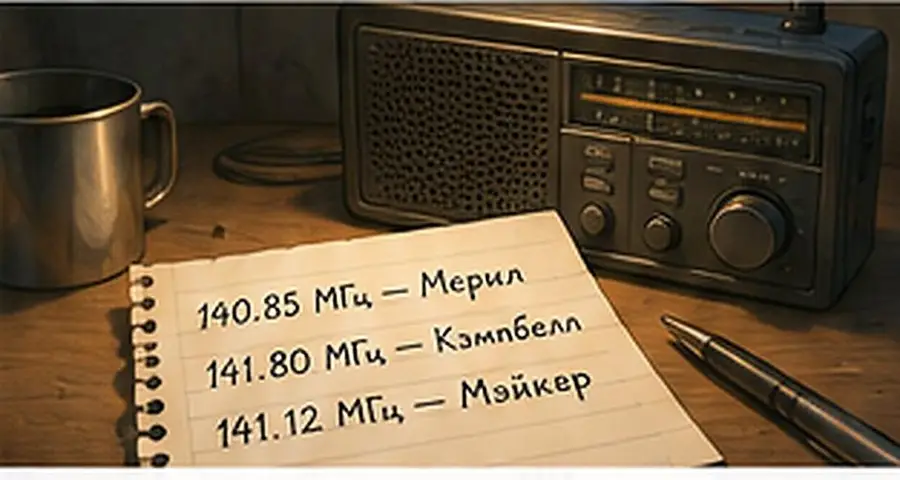
The codec serves several purposes at once. It is a way to contact allies, a reference guide to equipment, and another stage for dramatic scenes that can unfold without fully animating a conversation in a room. Portraits of the speakers appear on a small screen, their dialogue is voiced, and details of the operation gradually come together into a single story. At the same time, players are expected to take an active role: they need to choose whom to contact, sometimes remember a frequency, and sometimes ask for advice precisely when they get stuck.
The tricks involving the case, save data, and controller connections are often called a breaking of the fourth wall, but in Metal Gear Solid they work more precisely as an extension of the game world. The CD-ROM, memory card, and controller are usually invisible to the story; here, they unexpectedly become part of the task. The moment sticks in the memory because it breaks the usual contract: an object in the real room turns out to matter just as much as weapons and keys inside the virtual base.
Legacy: influence on stealth action and storytelling in games
Metal Gear Solid did not invent stealth gameplay from scratch. Its own predecessors had already established the genre’s foundations, and by the end of the 1990s other studios were also exploring ways to turn invisibility, sound, and observation into full-fledged game systems. Konami’s achievement was different: it convincingly showed that stealth could be the basis for a large-scale, mainstream 3D-console adventure.
Two rhythms operate at once. The first is tactical: study the angle of vision, work out a guard’s route, and decide where to go if an alert is raised. The second is dramatic: hear a voice on the codec, pass traces of someone else’s presence, and witness an unexpected plot twist. They do not always align perfectly, but it is their alternation that turns the base from a set of levels into a place where a full military operation seems to be unfolding.
In the years that followed, Splinter Cell, Hitman, and other stealth series offered their own, often very different solutions: sophisticated lighting, social disguises, and freedom of movement. It would be inaccurate to credit Kojima directly with their mechanics. However, Metal Gear Solid helped establish the expectation that invisibility was not an extra mode for firefights, but a distinct form of tension with its own rules and dramatic structure.
Its impact on the presentation of game stories is just as clear. Prominent voice acting, scenes directed in the game engine, attention to editing, and the ability to weave a plot twist into the player’s familiar actions became part of the language of big-budget adventures. In 1998, the combination felt especially cohesive. Even if some conversations seem long today and the guards’ behavior appears rudimentary, their purpose is easy to understand.
The most interesting thing about Metal Gear Solid is not simply its resemblance to Hollywood. Kojima used the language of cinema, but its strongest moments were ones an ordinary film could not reproduce: a scene might require you to wait for a patrol to leave, look from a new position, or move the controller plug. That is why the story of the two CD-ROMs has endured not only as a landmark of the original PlayStation era, but as an example of how technical limitations can help a game find its own language.
At a glance
· Metal Gear (1987) and Metal Gear 2: Solid Snake (1990) were originally released for MSX2.
· Metal Gear Solid was released in Japan for PlayStation on September 3, 1998.
· Developer: Konami Computer Entertainment Japan; director and lead designer: Hideo Kojima.
· The main version of the game was distributed on two CD-ROM game discs.
· Yoji Shinkawa was responsible for the distinctive character and mech designs; Meryl’s codec frequency in the original game is 140.15.