Rebellion Against 3D Polygons
In 1997, the gaming industry was gripped by polygon fever. Following Super Mario 64, major executives considered 2D side-scrollers an obsolete relic of the 16-bit era. Toru Hagihara and Koji Igarashi faced massive skepticism inside Konami to keep Symphony of the Night in lush, hand-drawn two dimensions.
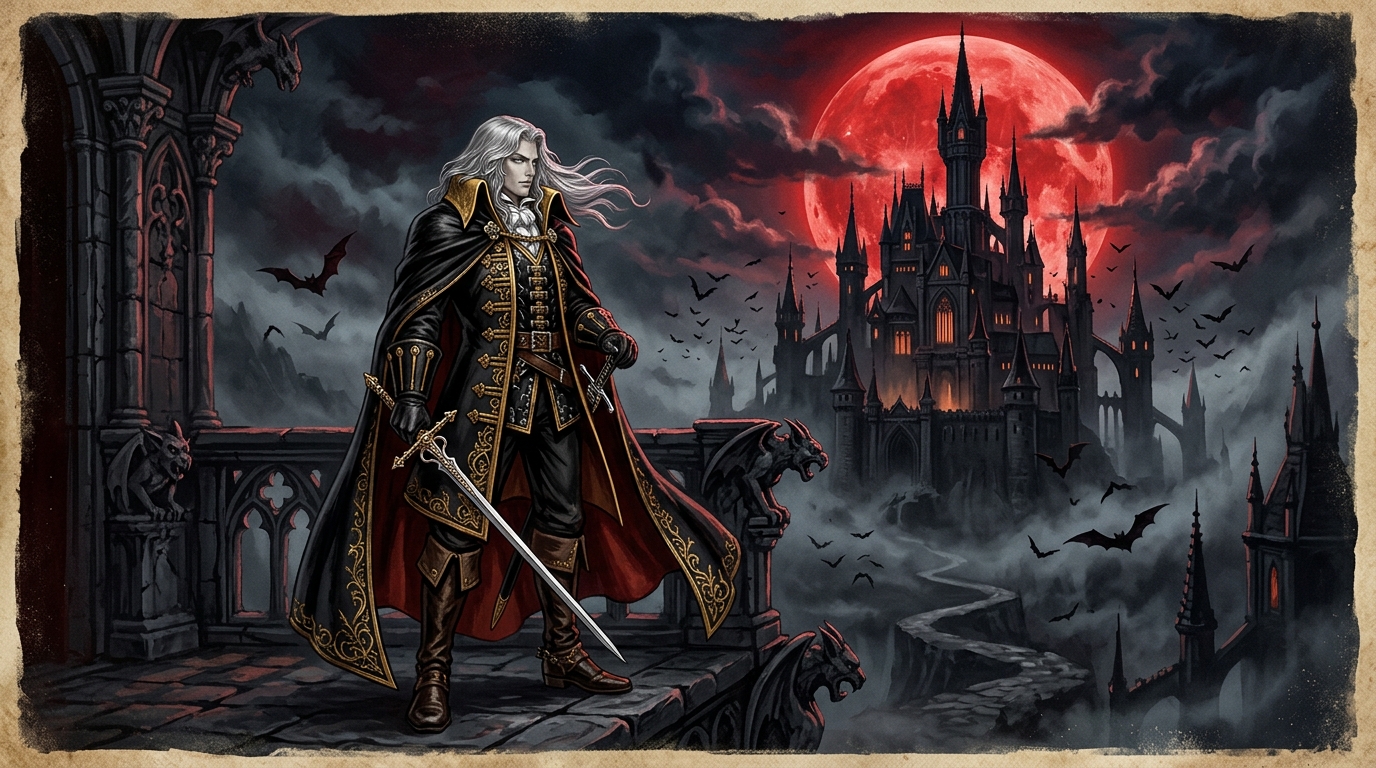
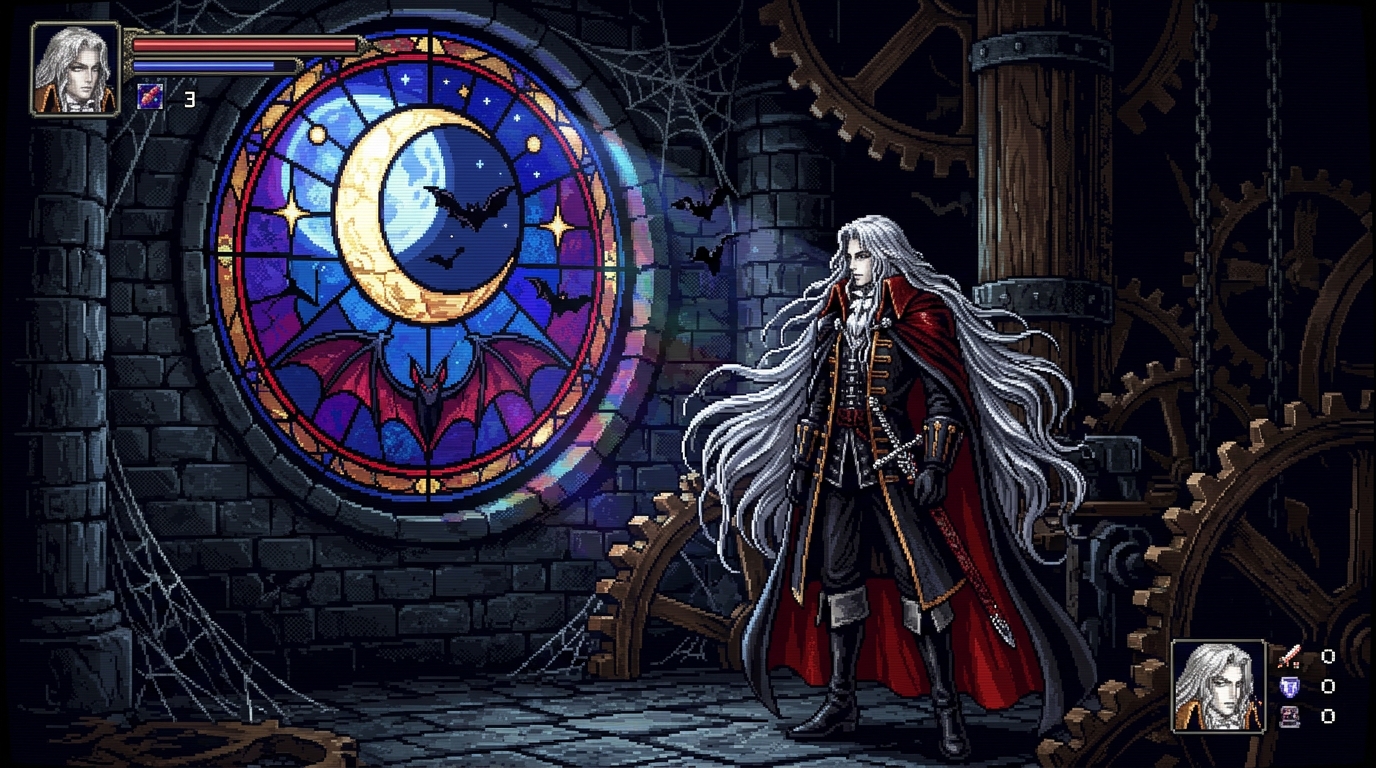
Rather than chasing primitive blocky 3D models, the team harnessed PlayStation's memory and CD storage to build fluid sprite animations. Alucard's trailing silk cape, spectral after-images, and layered multi-plane parallax backgrounds transformed the game into an interactive gothic tapestry.
RPG Elements & Exploration
Drawing heavy inspiration from The Legend of Zelda rather than traditional linear platformers, Igarashi aimed to eliminate punishing artificial game-overs. SOTN introduced comprehensive action-RPG mechanics: leveling stats, shields, swords, spells, and relics that unlocked dynamic movement capabilities like mist and bat transformations.
The greatest masterstroke was Dracula's Castle itself. Rather than isolated stages, it functioned as an interconnected labyrinth. Defeating Richter Belmont with the Holy Glasses unveiled the game's greatest secret: the entire castle flipped upside-down, doubling the quest with brutal enemies and true closure.
'We wanted a game that rewarded curiosity instead of penalizing mistakes. Players needed to feel their power steadily grow.' (— Koji Igarashi, Co-Director and Writer)
The Score of Michiru Yamane
Michiru Yamane's soundtrack elevated Symphony of the Night to legendary status. Freed from chiptune limitations by Red Book CD-Audio, Yamane effortlessly fused baroque harpsichords, cathedral pipe organs, gothic opera, and fiery progressive rock solos.
Tracks like 'Dance of Pales', 'Wood Carving Partita', and 'Lost Painting' created an evocative atmosphere that defined dark fantasy gaming audio for generations.