Doug Glen joined Sega of America just before the Genesis hit its stride. As an executive working closely with president Tom Kalinske, he helped steer special projects, supported Sega’s advertising push and played a key role in bringing the Sega Channel to life.
Before Sega, Glen worked in advertising and game marketing, with experience on campaigns for Atari, Intellivision and Starpath. His first game-development role was at Lucasfilm Games, where the success of Maniac Mansion reinforced his belief that standout games could thrive even in a crowded market.
“Genuinely great products will break through and succeed,” Glen said of the industry’s boom-and-bust cycles.
Building Sega’s strategy and identity
Glen said his move to Sega was partly motivated by the chance to work with a substantial television advertising budget. He helped oversee the agency search that led to Goodby-Silverstein, whose “SEGA!!!” campaign helped the company reach teenage audiences and take on Nintendo.
His Group VP title was created with Kalinske to give him room to manage special projects. That work included the Sega Channel, while he remained involved with the advertising campaign. Glen also said the expensive Star Wars license did not make financial sense for Genesis: Sega was better off investing in games and properties consumers could not find elsewhere.

How the Sega Channel delivered games
The Sega Channel was a partnership between Sega, TCI and Time Warner. Rather than offering modern-style on-demand downloads, it continuously broadcast a rotating stream of game data through cable. A home adapter let players choose from 50 available games and extracted the selected data from the repeating transmission.
Third-party publishers saw the service as a way to give their games visibility and let consumers try them. Glen said that when titles rotated out, players who had enjoyed a game could be more inclined to buy it. He also recalled technical problems: undisclosed quirks in Genesis hardware caused early adapters from Scientific Atlanta and General Instrument to crash.
Glen described the Sega Channel team as “a dream team” and one of the best experiences of his life.
Technical note: the rotating data stream
The Sega Channel did not download a chosen game on demand in the way later broadband services would. Its cable feed repeatedly cycled through game data; the adapter picked out the requested title and loaded it for play.
Why Sega Channel mattered—and what came next
Glen said Sega of Japan’s limited enthusiasm was tied largely to the small number of Japanese homes with cable boxes, which he recalled as below five percent. He was nevertheless proud of the service’s accomplishments and said he would not have changed its strategy or the team behind it.
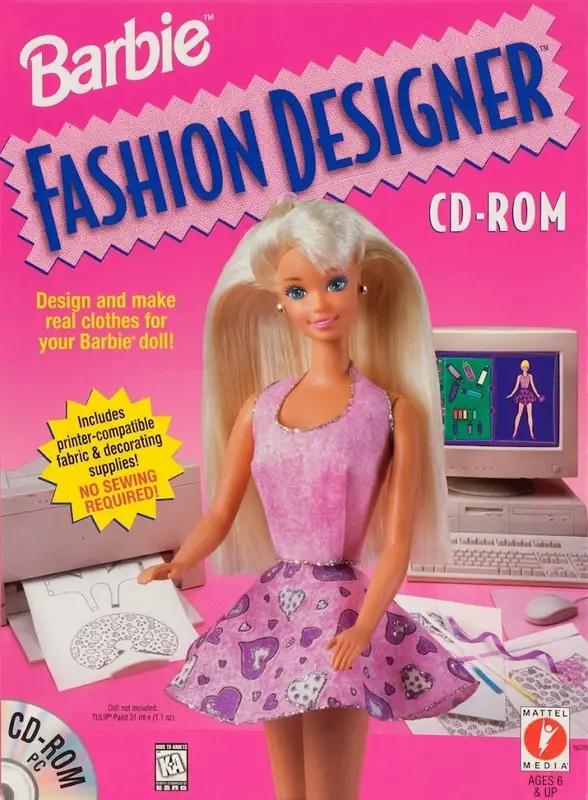
After Sega, Glen joined Mattel as Chief Strategy Officer and President of Mattel Media. He championed games for girls at a time when colleagues questioned whether they could form a mass market. The success of Barbie Fashion Designer, which sold a million units and outperformed top video-game titles in 1996 and 1997, proved his case. Glen also pointed to Sega’s Ecco the Dolphin series as one example of the company’s efforts to appeal to more girl players.
Interview details
• Genre: Interview
• Developer: Sega of America and Sega Channel team
• Released: Sega Channel launched during the Genesis era
Source: Sega-16