The Stamper Brothers and Nintendo's Secret Bet in Twycross
By 1993, Nintendo faced mounting peril. Sega's razor-sharp marketing was bludgeoning the SNES across Western territories, while 32-bit CD consoles loomed menacingly on the horizon. The consensus was clear: cartridge technology was dead.
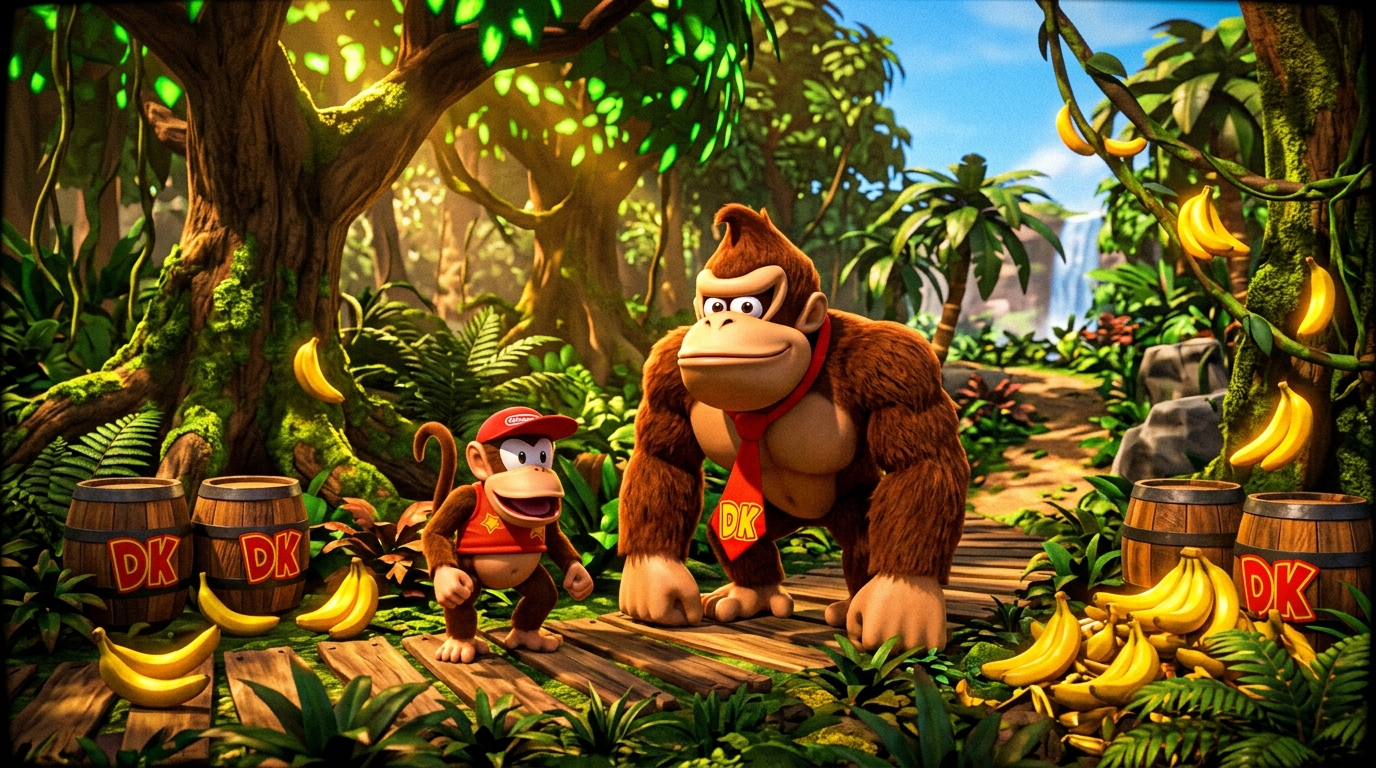
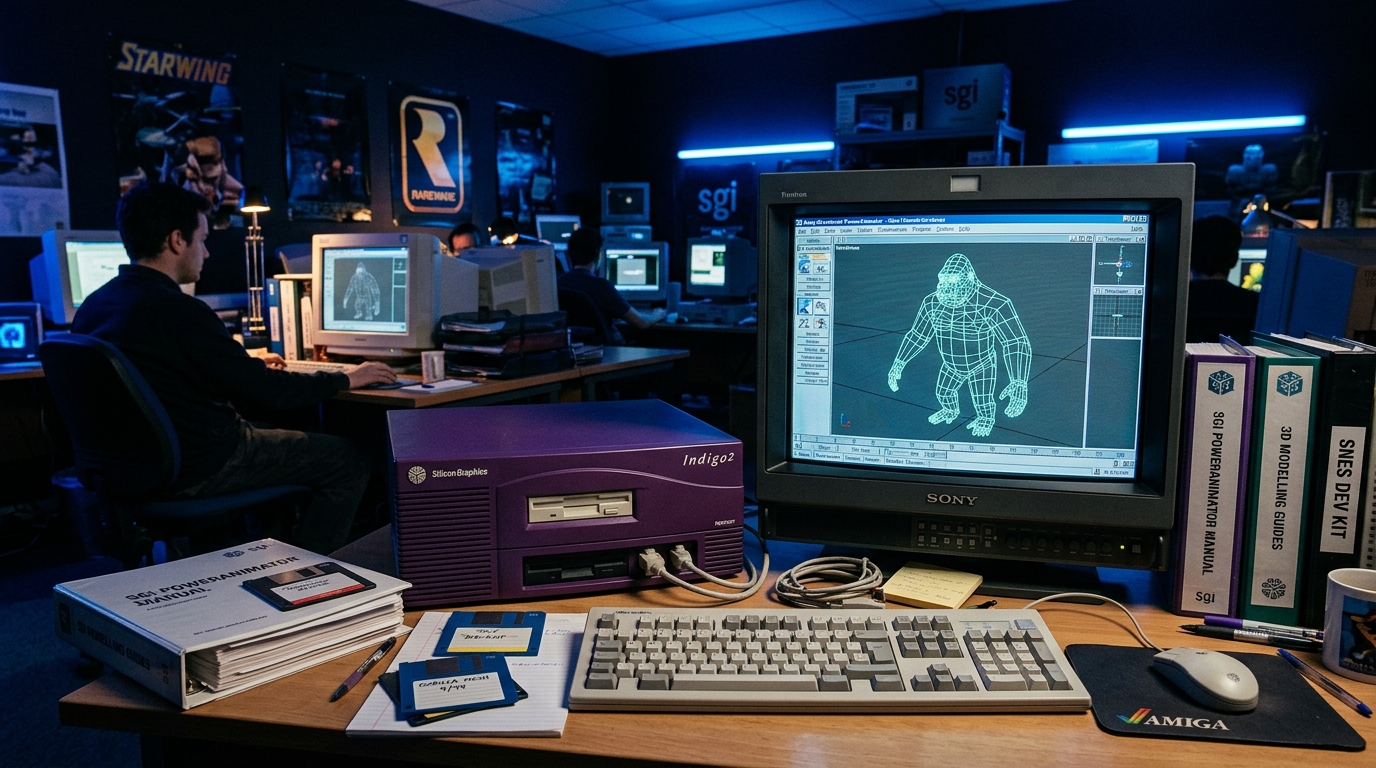
In Twycross, England, Tim and Chris Stamper took out massive mortgages to buy Silicon Graphics supercomputers—the same machines Industrial Light & Magic utilized for Jurassic Park. Dazzled by a smooth 3D boxing demo, Hiroshi Yamauchi acquired a 49% stake in Rare and handed them the keys to Donkey Kong.
«When we rendered that gorilla on the Silicon Graphics workstation, the room went dead silent. Nintendo executives refused to believe it could execute on SNES silicon». (Tim Stamper, Co-Founder of Rareware)
ACM Technology: Compressing SGI Silicon Graphics into 32 Megabits
The magic of Donkey Kong Country was christened Advanced Computer Modeling (ACM). Rather than computing real-time 3D polygons, SGI Challenge servers spent days rendering high-poly models complete with complex lighting and muscle dynamics into hundreds of discrete frames.
Rare's proprietary compression software reduced these rich frames into optimized tile maps, packing breathtaking pseudo-3D animation into a 32-megabit cartridge with zero special coprocessor chips required.
David Wise and the Submerged Genius of Aquatic Ambience
Composer David Wise spent five weeks crafting a single masterpiece: 'Aquatic Ambience'. By masterfully manipulating the Sony SPC700's internal ring modulation and delay loops, he coaxed vast cavernous reverbs out of meager audio RAM.
The resulting soundtrack achieved timeless critical acclaim, turning melodic jungle percussion and submerged ambient synthesizers into standard-bearers of video game music composition.
«I composed Aquatic Ambience while reflecting on subterranean acoustics. The SPC700 coaxed a live symphony from every single byte». (David Wise, Lead Composer at Rare)
Nine Million Cartridges: The 16-Bit Swan Song Against the 32-Bit CD
Debuting in November 1994, Donkey Kong Country became an unstoppable commercial avalanche, selling one million copies per week and eventually topping 9.3 million units globally.
It not only rescued the Super Nintendo's dominance in the holiday war, but proved that visionary artistry and disciplined engineering trump raw hardware specs every time.