The Spector Manifesto: Formulating the Rules of the Dream Game
Warren Spector, veteran of Origin Systems and producer of Ultima Underworld and System Shock, harbored a career-long ambition: crafting an interactive simulation where the game designer abdicates dictatorial authorial control. His manifesto, 'Rules of Roleplaying', strictly barred punishing players for unconventional creativity.
The foundational tenet was emergent gameplay: the game world must consist of interrelated physical, sensory, and logical systems. If a blast door was locked, the player could locate the code, hack the terminal with a multitool, crawl through the ventilation shaft, blast the door with LAM explosives, or bribe a civilian to unlock it from within.
«The paramount commandment of Deus Ex is absolute: the game must never punish the player for concocting a clever, unorthodox solution». (Warren Spector, Project Director Deus Ex)
The Austin Sanctuary: Insulating Genius from Daikatana's Chaos
In 1997, John Romero established Ion Storm atop the 54th floor of Dallas's JPMorgan Chase Tower, burning millions in Eidos publisher capital on lavish glass floors and prolonged Daikatana development delays.
Spector agreed to join solely on the condition that he lead an autonomous satellite studio in Austin, Texas, 200 miles away from Dallas's distractions. Sheltered from boardroom chaos, a focused team led by Harvey Smith methodically architected gaming's ultimate cyberpunk simulation.
Liberty Island: Balancing Stealth, Hacking, and Emergent Systems
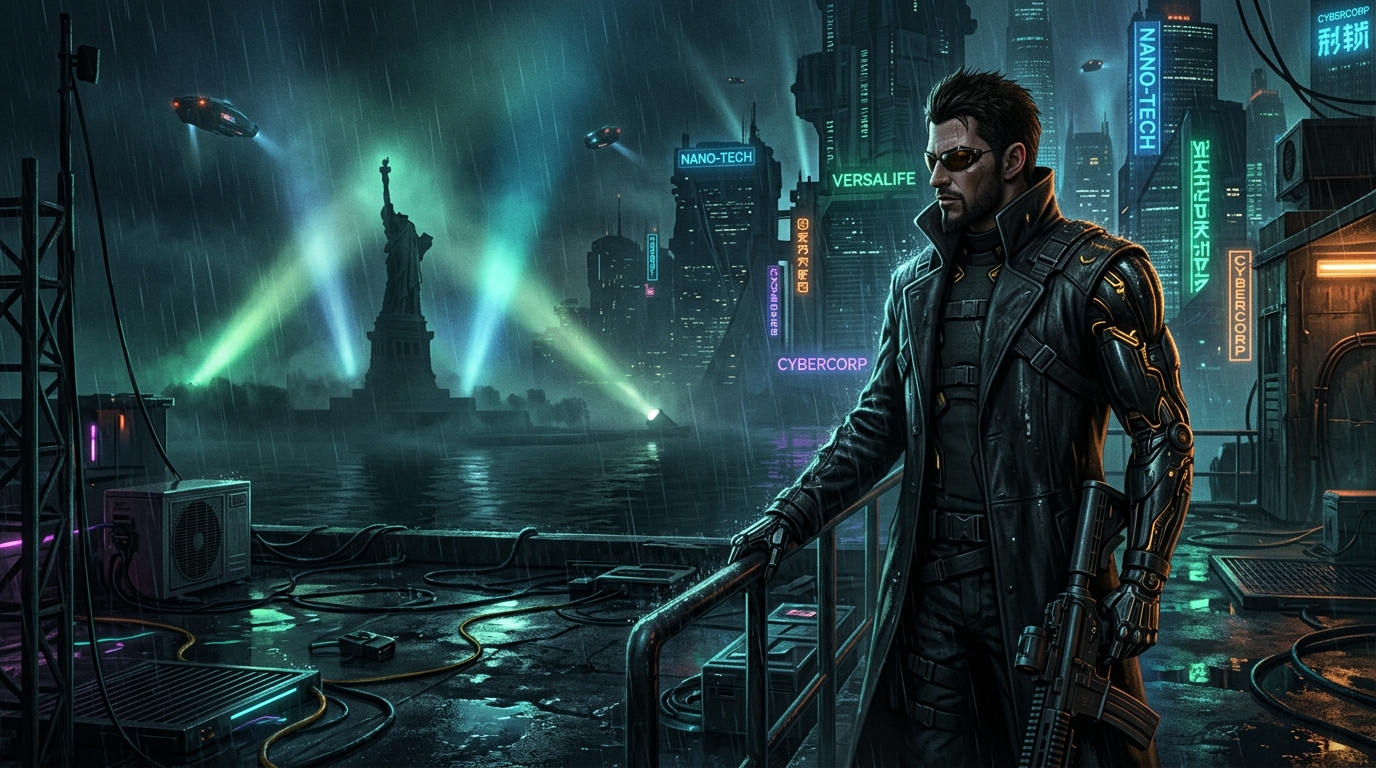
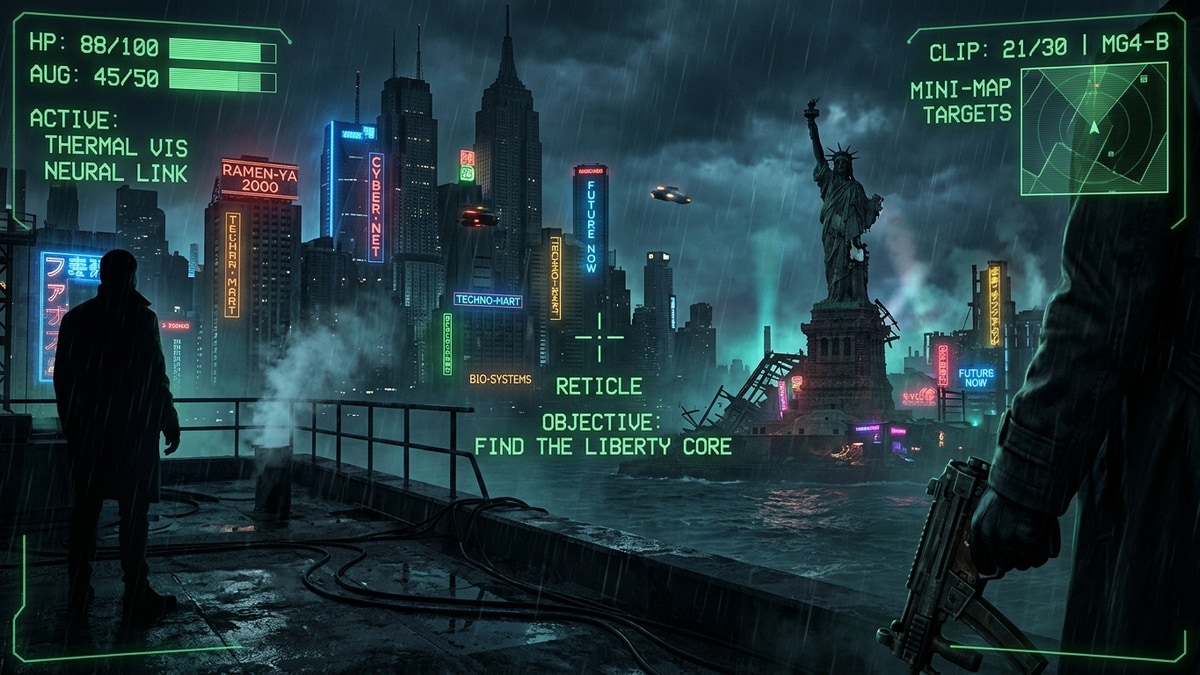
Liberty Island required nearly a year of iterative design. Infiltrating the decapitated Statue of Liberty occupied by NSF insurgents, agent JC Denton possessed complete mechanical agency.
Lead designer Harvey Smith ensured that AI behavior, security cameras, and patrol networks responded dynamically to player style. Sparing insurgents earned praise from brother Paul Denton; bloodbaths triggered chilling psychiatric warnings from UNATCO headquarters.
«We simulated an authentic, responsive ecosystem where laser alarms, guards, and terminals all obey consistent physical rules». (Harvey Smith, Lead Game Designer Deus Ex)
The Prophetic Horizon: Missing Twin Towers and the Surveillance State
Debuting in summer 2000, Deus Ex terrified critics with its eerie philosophical depth. Memory constraints prevented artists from fitting the World Trade Center towers on the Manhattan skybox; the narrative explained their absence as a catastrophic terrorist strike—one year prior to September 11, 2001.
The game similarly foretold synthetic pandemics, NSA Echelon-style digital surveillance, and rogue artificial intelligence merging with statecraft, standing as an enduring monolith of interactive narrative.