British Vanguard: Argonaut & Nintendo
In 1990, young British coder Jez San and his scrappy London studio Argonaut Software reverse-engineered the Game Boy, demonstrating a real-time rotating 3D wireframe cube to stunned Nintendo brass at the Consumer Electronics Show. Shigeru Miyamoto and Nintendo president Hiroshi Yamauchi recognized immediate revolutionary potential.
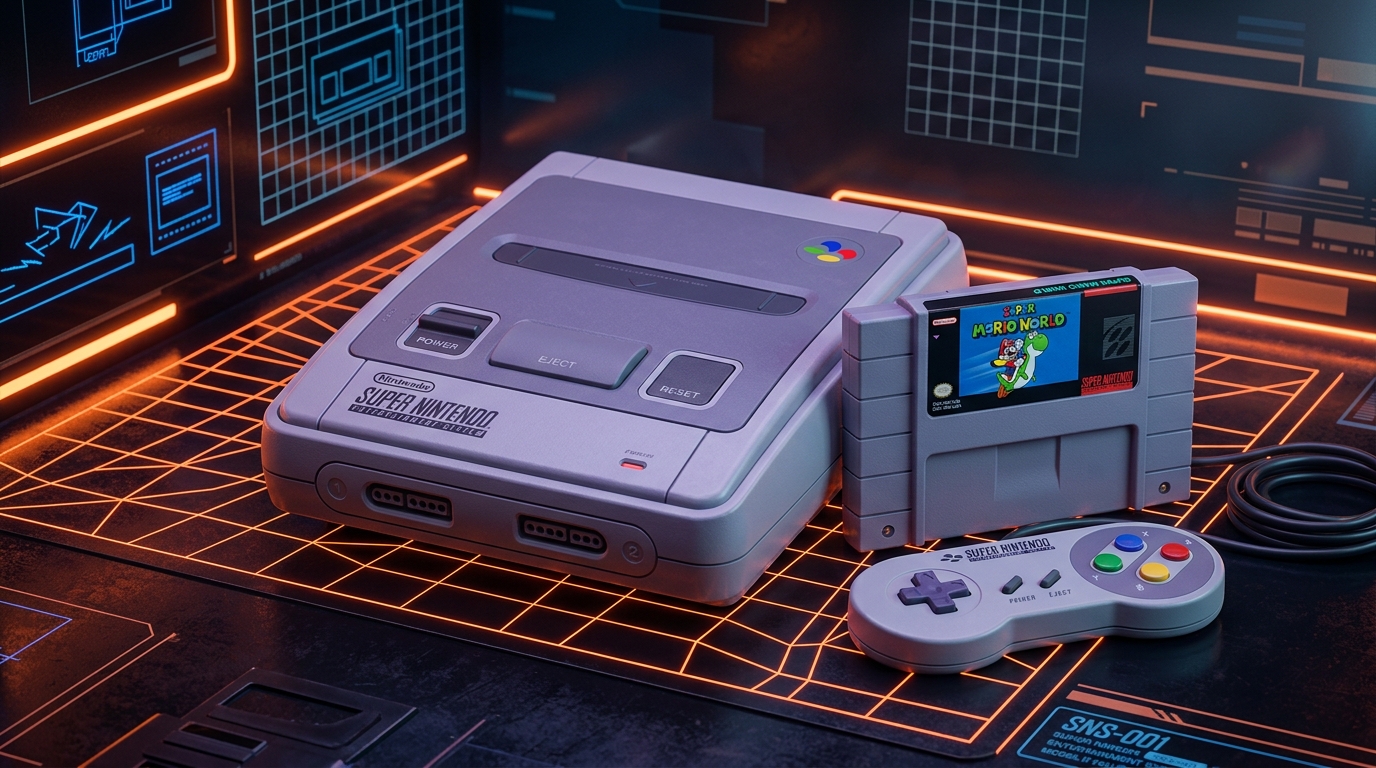
Nintendo funded Argonaut to design custom hardware capable of rendering real-time mathematics on the Super Nintendo. Code-named MARIO (Mathematical, Argonaut, Rotation & I/O), the resulting silicon was christened the Super FX chip.
While Japanese developers focused on character design, the British hardware squad architected a custom 21.4 MHz RISC coprocessor — clocking roughly six times faster than the SNES's native 3.58 MHz Ricoh 5A22 CPU. Embedded directly on the cartridge circuit board, Super FX calculated 3D vectors and piped rendered framebuffers back to console VRAM.
'We told Nintendo: your console is a master of 2D sprites, but 3D is the inevitable future of gaming. We can build an entire 3D graphics computer directly onto your cartridge.' (— Jez San, Argonaut Software Founder)
Genesis of Star Fox & The MARIO Chip
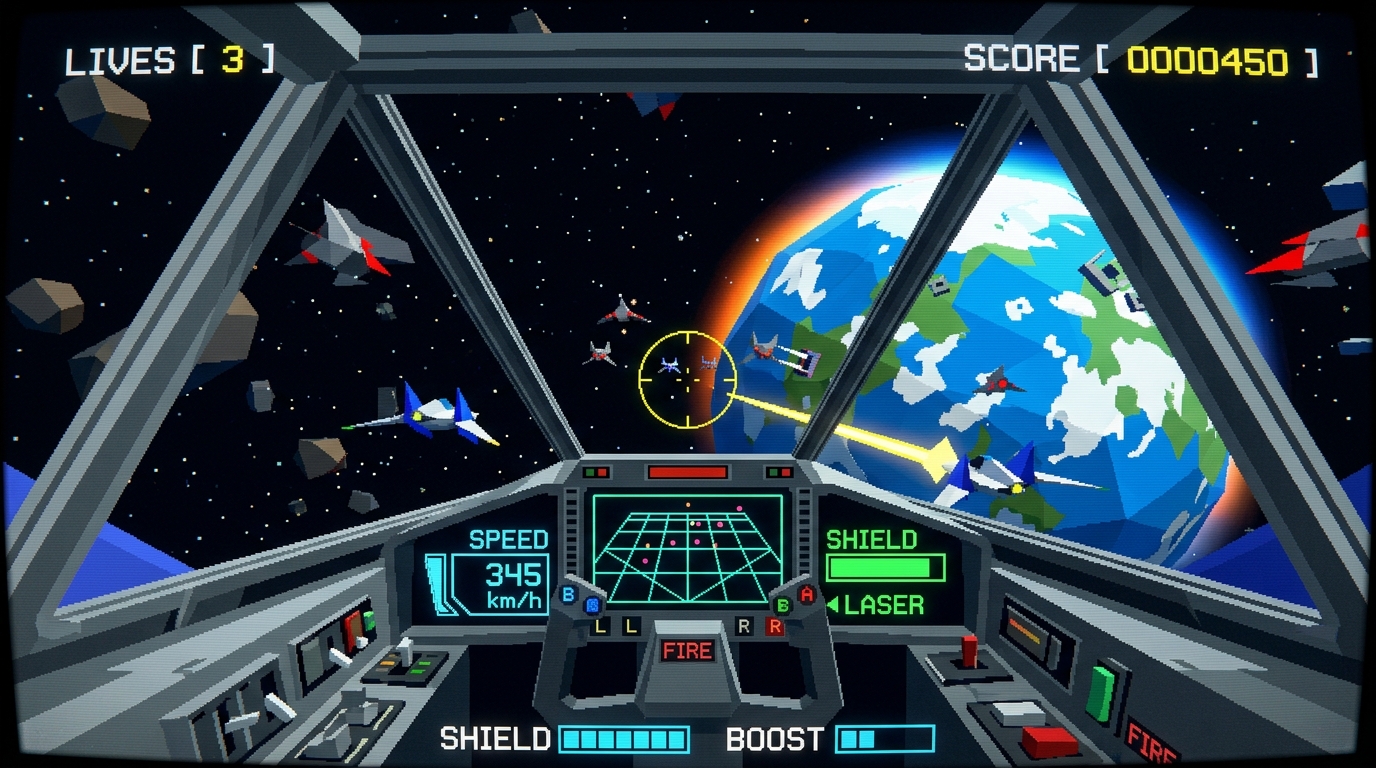
Released in February 1993, Star Fox was an astonishing sensory shock. Players piloted the nimble Arwing fighter craft through frantic dogfights over Planet Corneria, dodging enemy fire and navigating canyon crevices rendered in genuine flat-shaded polygons.
Miyamoto personally conceived the animal squadron — Fox McCloud, Falco Lombardi, Slippy Toad, and Peppy Hare — inspired by the fox statues at Kyoto's Fushimi Inari shrine. Star Fox proved that gripping 3D flight action was viable on living room televisions years before the PlayStation and Nintendo 64.
Super FX 2 Evolution & Legacy
The monumental success of Star Fox led to the Super FX 2 (GSU-2), doubling memory bandwidth and clock capability. This upgraded chip powered Yoshi's Island (Super Mario World 2), manipulating gigantic rotating storybook bosses and squash-and-stretch sprite mechanics.
Super FX 2 also brought an audacious conversion of id Software's DOOM to the SNES cartridge format, cementing the chip as one of the most innovative bridging technologies in the history of interactive entertainment.