Nishikado's Custom Microcomputer: Hardware Built by Hand
Prior to 1978, arcade cabinets operated on rigid, hard-wired transistor-transistor logic (TTL) incapable of processing dozens of autonomous animated enemies. Taito engineer Tomohiro Nishikado realized that rendering an invading alien fleet required a programmable microprocessor.
Because development workstations for the Intel 8080 were virtually nonexistent in Japan, Nishikado designed his own microcomputer mainboard from raw chips, hand-soldered a bitmapped video frame buffer, and hand-coded assembly routines from scratch.
The hardest part was not designing the game itself, but inventing the entire computer architecture so it could draw even a single moving alien sprite.
Tomohiro Nishikado, creator of Space Invaders
The Accidental Dynamic Difficulty Curve
The iconic acceleration of the alien horde was never an intentional design flourish—it was a miraculous byproduct of computational bottlenecks. With all 55 invaders alive, the 8080 CPU struggled to render each frame, resulting in slow, rhythmic advance.
As the player picked off targets, the processing burden decreased, allowing the system to update the display faster. The fewer invaders remained, the more ferocious their velocity became, perfectly synchronizing with an escalating four-note heartbeat soundtrack.
The 100-Yen Cultural Tsunami
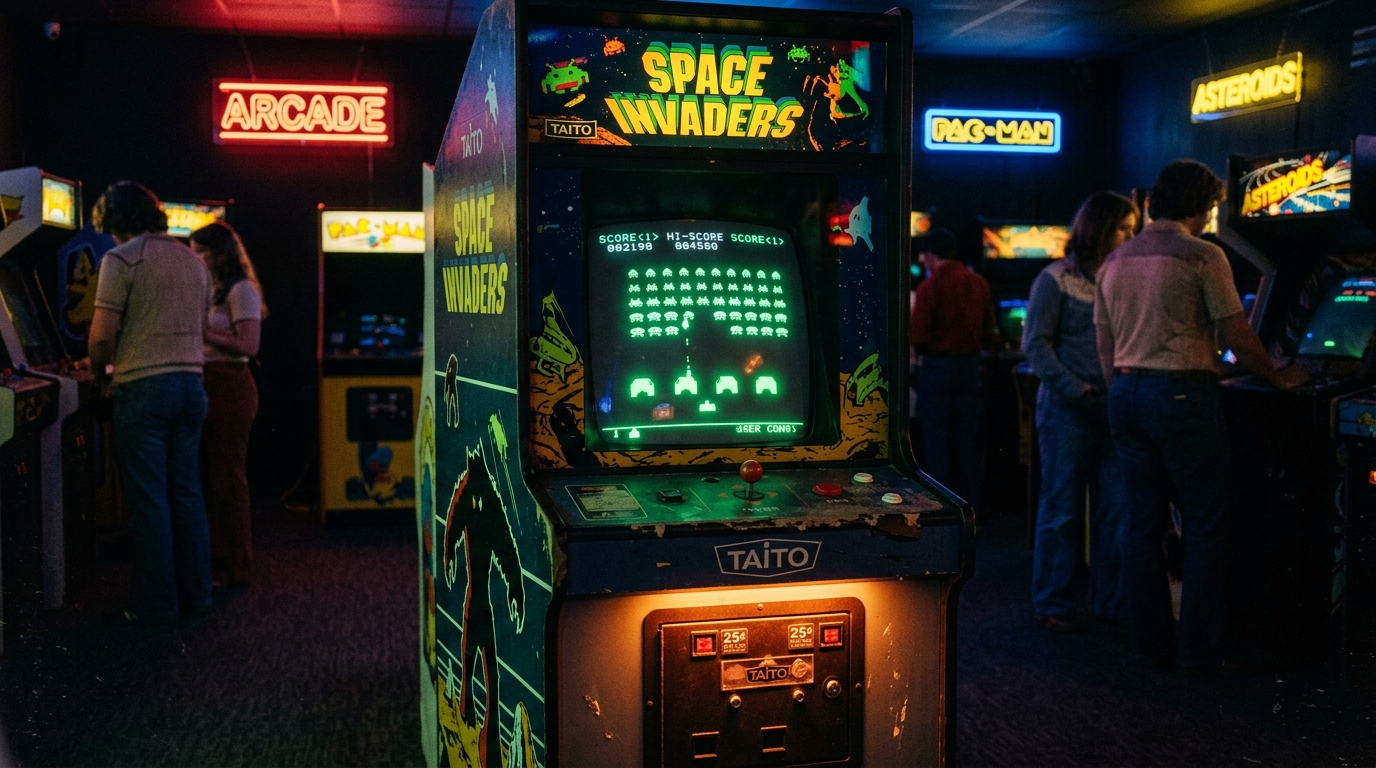
Space Invaders transformed Japan overnight. Dedicated 'Invader Houses' packed with rows of tabletop cocktail cabinets sprang up across Tokyo, causing an unprecedented circulation shortage of 100-yen coins.
Nishikado's breakthrough codified the grammar of video games: high-score chase, destructible defensive bunkers, escalating peril, and an interactive soundtrack that responded directly to on-screen tension.