Motorola 68000 Muscle: Arcade Hardware in the Living Room
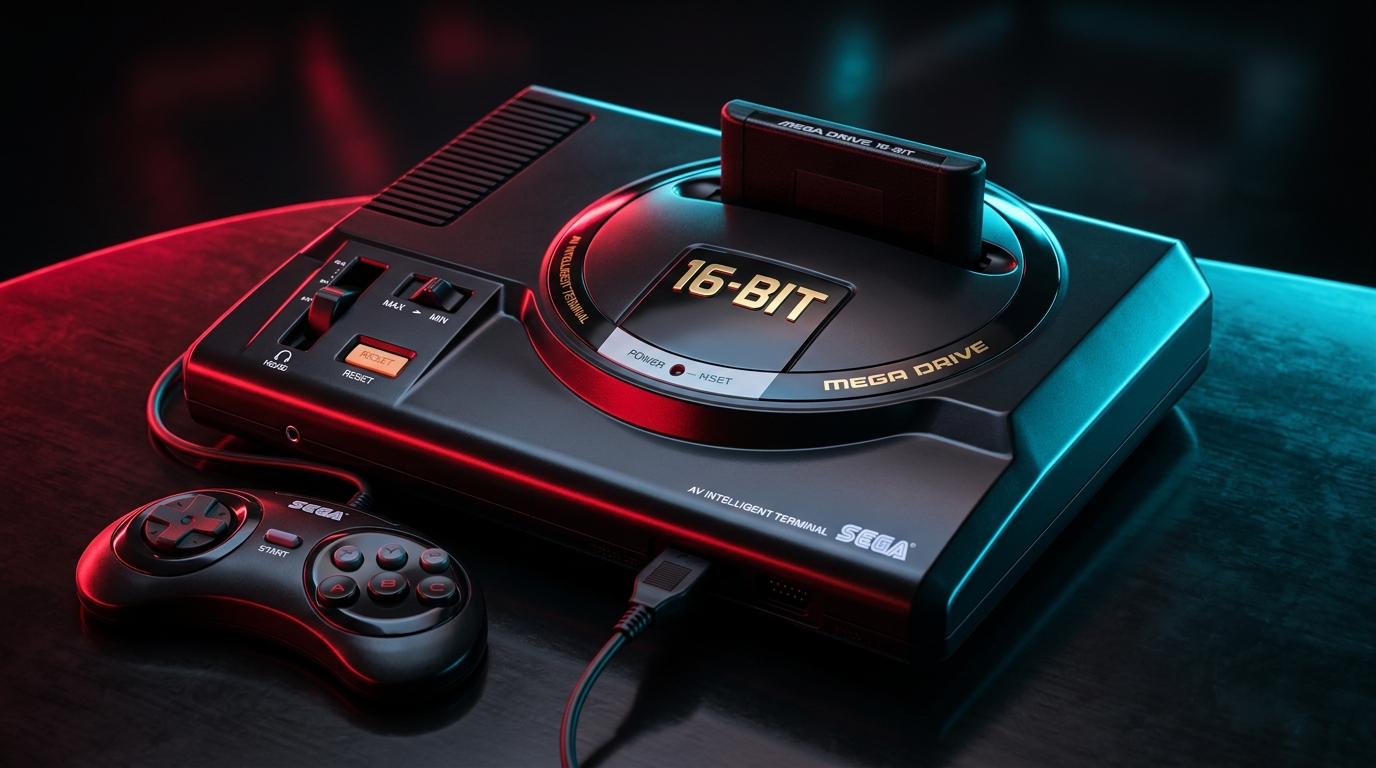
When Sega engineers conceptualized the Mega Drive, president Hayao Nakayama issued a single objective: bring the uncompromised compute power of the Sega System 16 arcade board into living rooms. The console was anchored by the 16/32-bit Motorola 68000 clocked at a blazing 7.67 MHz—nearly four times faster than the Famicom CPU.
Paired with the 6-channel Yamaha YM2612 FM synthesis chip, the hardware produced a crunchy, metallic bass tone that composer Yuzo Koshiro weaponized into the era-defining electronic club soundtracks of Streets of Rage.
We wanted a teenager playing Genesis to feel not like a kid with a toy, but like a rebel driving a high-performance rock-and-roll engine.
Tom Kalinske, president of Sega of America
Genesis Does What Nintendon't: The Marketing Blitzkrieg
In North America, Sega of America president Tom Kalinske discarded conservative tactics in favor of razor-sharp comparative marketing under the unforgettable battle cry: 'Genesis does what Nintendon't.'
Sega locked in athlete endorsements from Joe Montana, lowered the console price, and boldly replaced the Altered Beast pack-in cartridge with a high-velocity mascot engineered to conquer the world.
Sonic the Hedgehog & the Velocity Revolution
On June 23, 1991, Sonic the Hedgehog shattered platformer conventions. Lead programmer Yuji Naka engineered a revolutionary algorithm for momentum physics along curved splines, sending Sonic looping through 360-degree corkscrews at blistering speeds.
By holiday 1991, the Sega Genesis captured 65% of the 16-bit market share in North America, executing the greatest underdog corporate coup in interactive entertainment history.