Ken Kutaragi and the SPC700 Sound Synthesizer
In the late 1980s, ambitious Sony engineer Ken Kutaragi covertly developed a groundbreaking audio coprocessor for Nintendo's 16-bit Super Famicom. Conservative Sony brass dismissed video games as ephemeral toys, yet president Norio Ohga recognized Kutaragi's brilliance and protected the project.
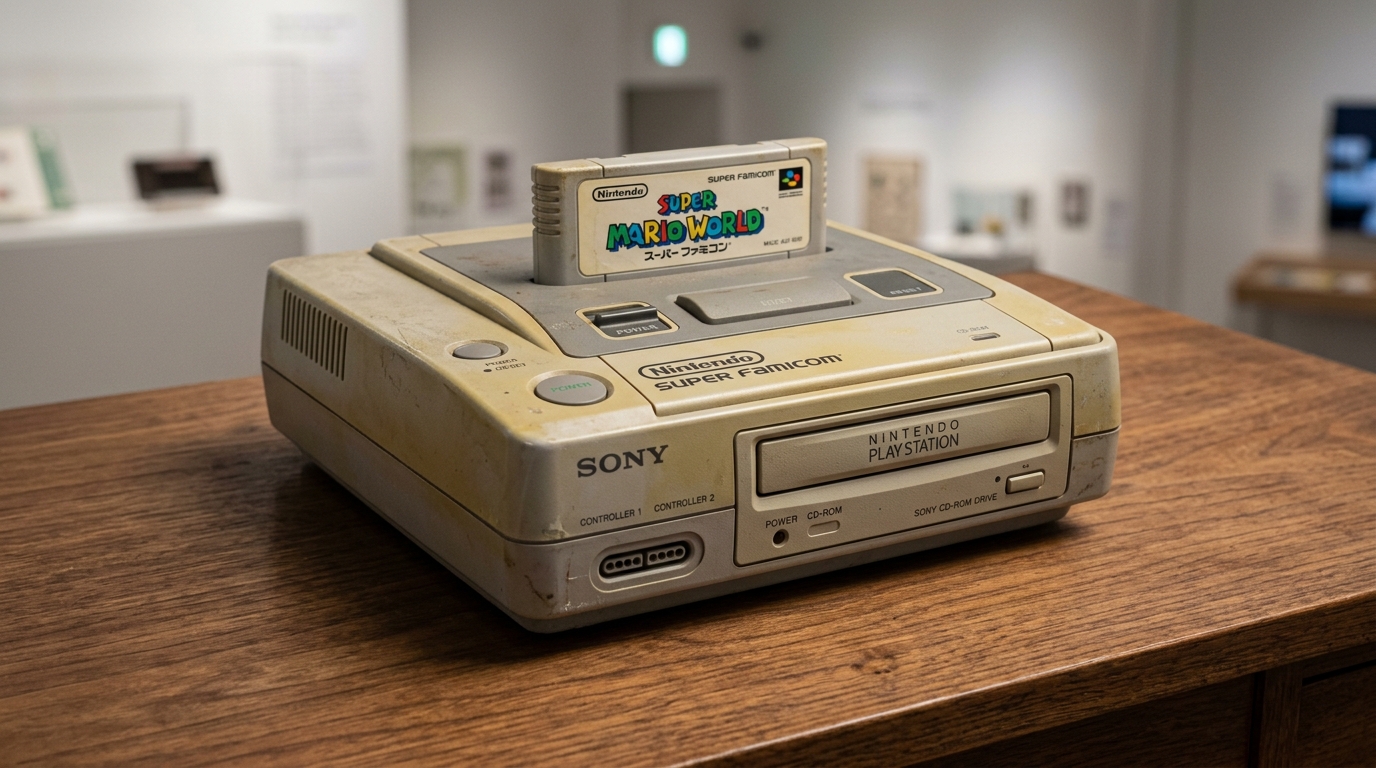
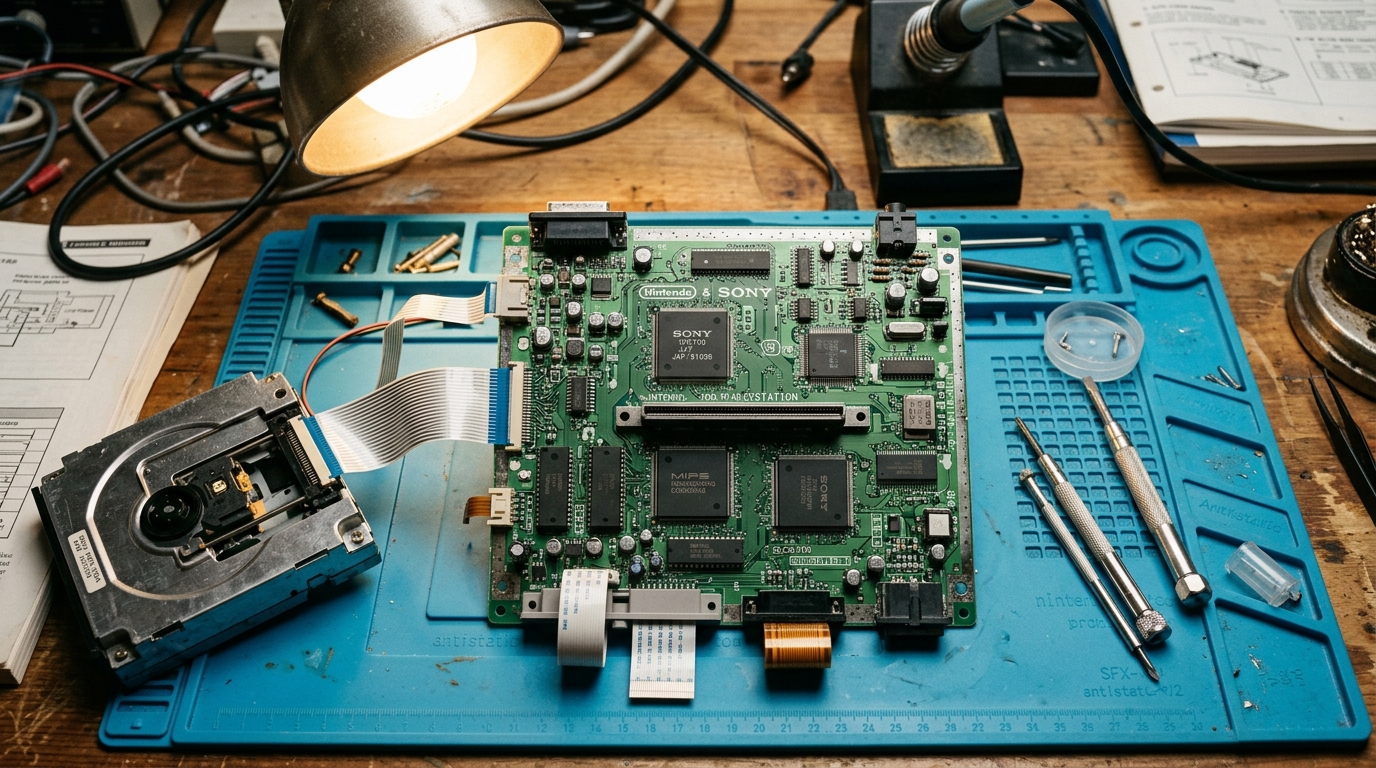
The resulting Sony SPC700 chip granted the Super Nintendo rich, multi-channel orchestral fidelity that eclipsed rival hardware. Electrified by this technical milestone, Hiroshi Yamauchi and Norio Ohga signed a 1988 pact to engineer an optical CD-ROM accessory known internally as the 'Play Station'.
«We never designed this architecture as a mere peripheral, but as the foundational bridge into interactive multimedia». (Ken Kutaragi, Lead Engineer Sony R&D)
Betrayal at CES: The Clandestine Philips Pact
The executed contract granted Sony full proprietary control over publishing and licensing CD-based Super Disc software. Terrified of ceding lucrative cartridge software margins, Nintendo executives Howard Lincoln and Minoru Arakawa orchestrated a ruthless preemptive maneuver.
At the June 1991 Consumer Electronics Show in Chicago, Sony proudly unveiled the hybrid Play Station. Barely twenty-four hours later, Nintendo stunned the industry by staging an emergency conference announcing their partnership with Dutch electronics giant Philips, openly severing ties with Sony.
The Wrath of Norio Ohga: Standalone PlayStation Born
In Japanese corporate culture, such public humiliation was an unpardonable insult. While executive board members demanded an immediate exit from video gaming, Kutaragi stood before Norio Ohga and appealed directly to corporate pride.
Ohga slammed his fist on the boardroom table, declaring Sony would develop an uncompromising 32-bit standalone console to dismantle Nintendo's dominance. That determination birthed the legendary 1994 PlayStation.
«No outside corporation will dictate terms to Nintendo or strip our sovereign licensing authority». (Hiroshi Yamauchi, President of Nintendo)
Discovery of the Century: Restoring the Diebold Prototype
Nearly all 200 prototype units were methodically scrapped following the contract cancellation. However, former Sony Computer Entertainment America head Olaf Olafsson preserved a single working unit that later wound up in a corporate liquidation lot.
Maintenance worker Terry Diebold bought the discarded box for $75 in 2009. Renowned engineer Ben Heck restored the CD-ROM drive mechanism in 2017, and the unit was sold at Heritage Auctions in 2020 for a staggering $360,000.