World After the Apocalypse
In the mid-1990s, programmer Tim Cain began prototyping an isometric role-playing engine after hours. That experimental project transformed into Fallout — a stark and unforgettable marriage between 1950s atomic-age optimism and barren, unforgiving Californian wastelands.
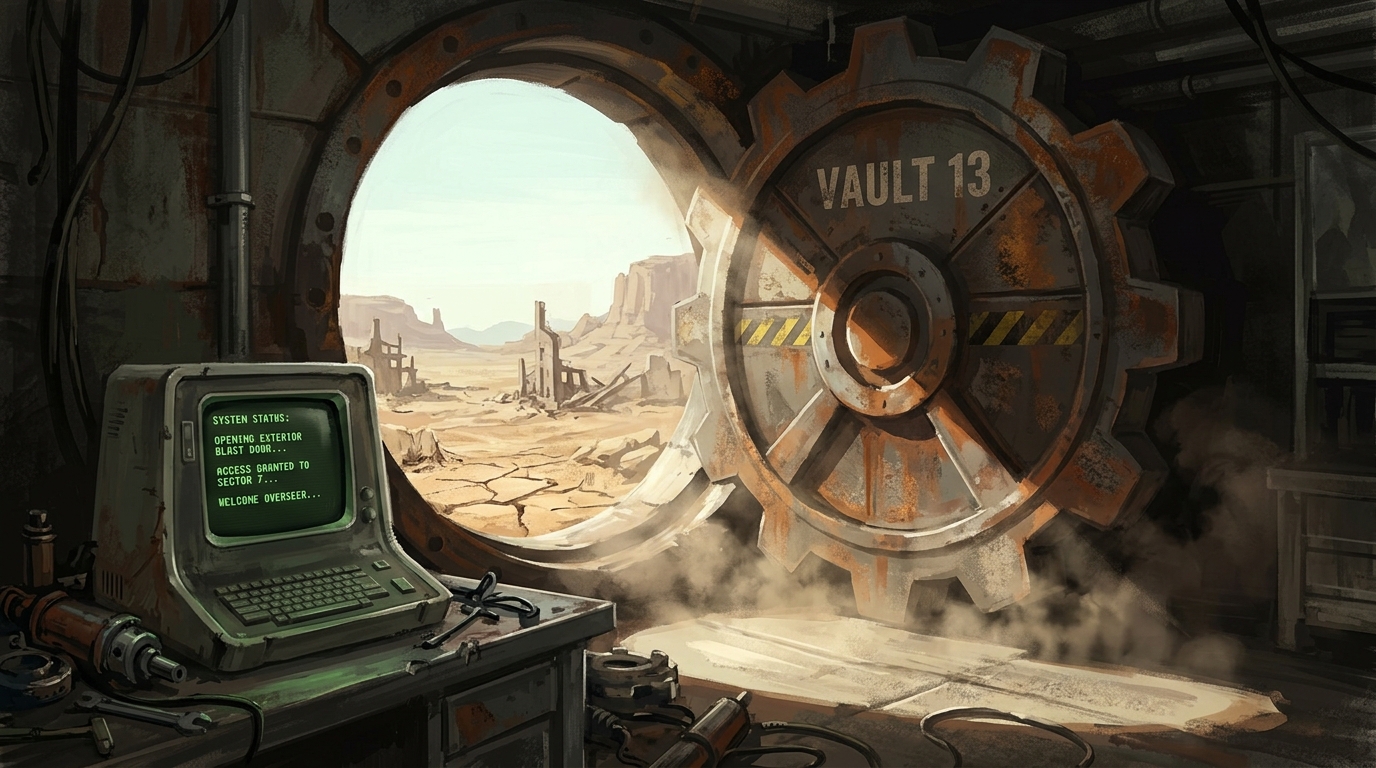
Rather than leaning on conventional swords and sorcery, Fallout immersed players in a decaying retrofuture of rusted Corvega cruisers, Vault-Tec underground fallout shelters, rayguns, and the haunting serenades of The Ink Spots. The grim juxtaposition of happy propaganda posters against flesh-melting radiation forged a legendary setting.
'We wanted a living wasteland where civilization clings to hope, barters for scrap, and rebuilds morality in the dirt.' (— Tim Cain, Lead Programmer and Designer)
From GURPS to the SPECIAL System
Fallout originally ran under the official license of Steve Jackson's GURPS tabletop system. However, upon reviewing an early game build filled with limb-severing combat and dark cynical humor, Jackson pulled the licensing rights immediately.
Facing sudden cancellation, Tim Cain, Chris Taylor, and Leonard Boyarsky banded together and invented an entire bespoke character ruleset in a mere two weeks: Strength, Perception, Endurance, Charisma, Intelligence, Agility, and Luck — giving birth to the iconic S.P.E.C.I.A.L. stat array and flavorful perks like Bloody Mess.
Why Fallout Became Timeless
Fallout's enduring greatness stems from uncompromising player freedom. Quests featured dozens of branching outcomes: stealth infiltration, computer hacking, silver-tongued negotiation, or explosive brute force.
The climactic encounter with The Master stands as one of gaming's greatest achievements: a player with supreme intelligence and scientific autopsy records can logically persuade the monstrous antagonist that his mutant vision is sterile and flawed, prompting him to voluntarily abort the invasion.