Yamaha YM2612: Industrial Grit & Club Beats
The Yamaha YM2612 sound processor powering the Sega Mega Drive was a pure frequency modulation (FM) synthesizer. While untamed FM synthesis could sound harsh, in the hands of visionary prodigies like Yuzo Koshiro, the Genesis roared with the raw energy of underground Detroit techno and London breakbeat.
For Streets of Rage 2, Koshiro programmed a proprietary assembly sound driver, directly feeding club music rhythms into the console. The resulting punchy sub-bass lines, crisp snare hits, and metallic stabs gave Sega's flagship an edgy sonic identity that home consoles had never witnessed.
I spent weekends in Tokyo dance clubs absorbing house music, then went straight to my studio to program those exact frequencies into the Mega Drive.
Yuzo Koshiro, composer of Streets of Rage
Sony SPC700: The 64KB Symphony
Nintendo countered with Sony's SPC700 sound coprocessor, engineered by Ken Kutaragi. Rather than synthesizing waveforms on the fly, the SNES utilized 8 channels of 16-bit ADPCM wavetable samples coupled with a hardware Gaussian interpolator and stereo echo delay.
British composer David Wise achieved audio alchemy in Donkey Kong Country: fitting lush marimbas, acoustic strings, and underwater echoes into a mere 64 kilobytes of audio RAM for 'Aquatic Ambiance'. Meanwhile, Nobuo Uematsu staged an entire simulated opera in Final Fantasy VI, pioneering vocal synthesis through microscopic formant loops.
The Alchemy of Hardware Limits
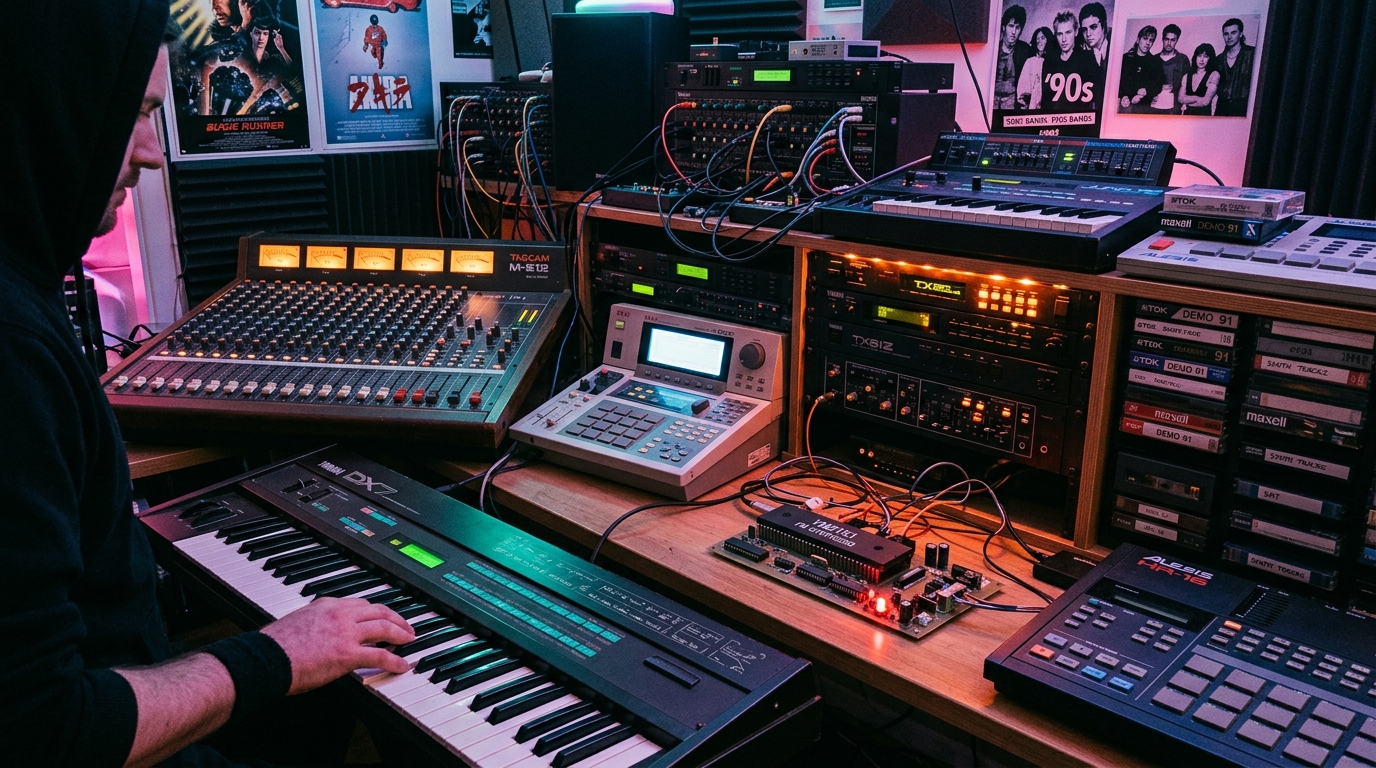
Composing for 16-bit chips resembled mathematical puzzle-solving. If a sound effect like a laser or coin pickup fired, an instrument channel had to be sacrificed for milliseconds without breaking the harmonic structure.
This extreme technical austerity forced composers to write indelible, unforgettable melodic hooks. Stripped of multi-gigabyte modern orchestral sample libraries, 16-bit composers relied on pure melody, rhythm, and acoustic ingenuity.