The 128-Byte RAM Miracle: Racing the Electron Beam
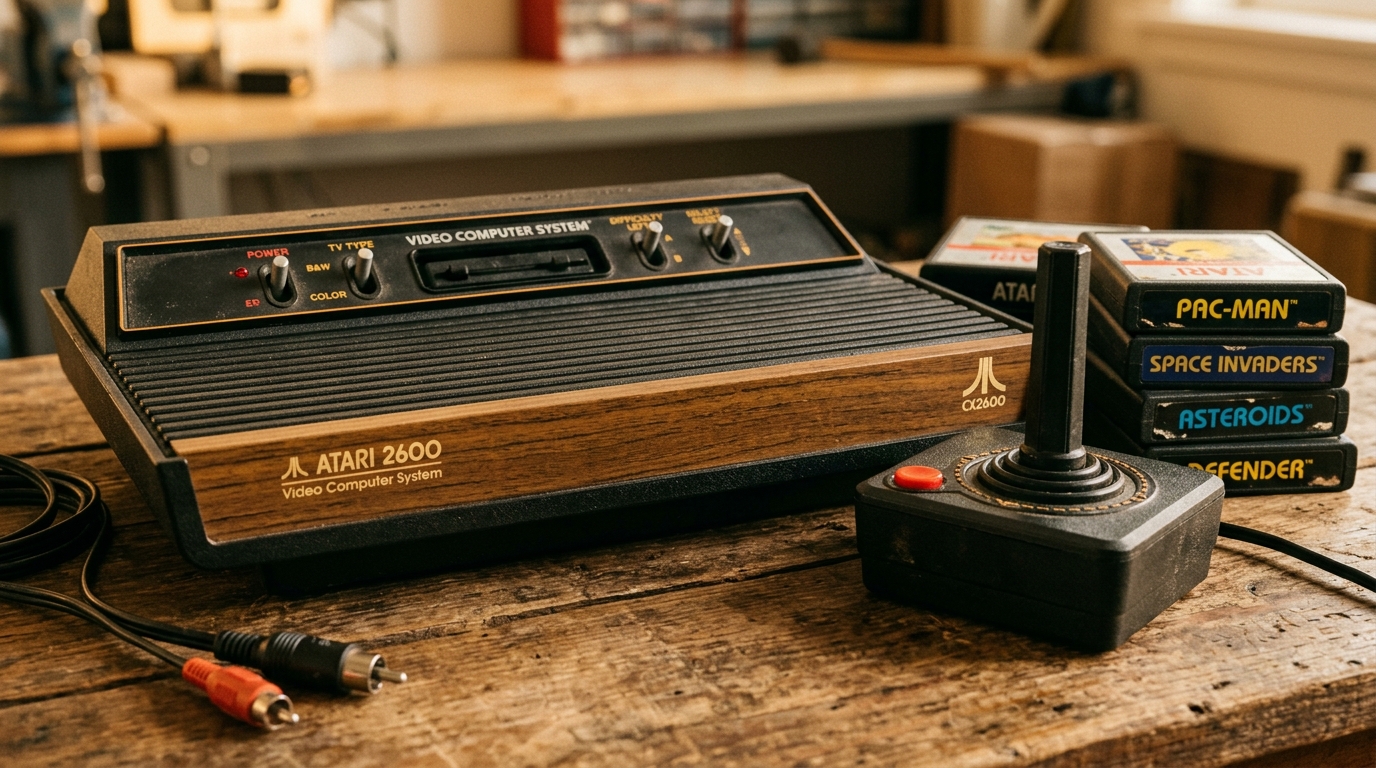
Conceived under project code-name 'Stella' by visionary engineers Jay Miner and Joe Decuir, the Atari VCS 2600 was a marvel of cost-constrained engineering. To hit the $199 consumer target, the system was stripped of a costly video frame buffer.
Endowed with an astonishingly modest 128 bytes of RAM, programmers were forced into 'racing the beam': updating the Television Interface Adaptor's (TIA) sprite registers microsecond by microsecond during the CRT's horizontal blanking interval before the cathode ray scanned the next line of phosphor.
Programming the 2600 felt like juggling flaming torches on a high wire: miss a single machine cycle, and your screen image fractured into visual noise.
David Crane, co-founder of Activision and creator of Pitfall!
Space Invaders: The Genesis of the Killer App
Initial VCS sales were modest until 1980, when Atari executive vice president Ray Kassar secured exclusive home licensing rights to Taito's arcade sensation Space Invaders.
Rick Maurer's faithful conversion became the industry's first true hardware driver. System sales doubled instantly to over two million units in 1980 alone, establishing the swappable ROM cartridge as a staple of global living rooms.
Corporate Hubris, the 1983 Crash & the Alamogordo Landfill
Explosive growth fostered toxic corporate complacency. Atari management flooded distribution pipelines with unchecked shovelware, climaxing in the disastrous six-week crunch adaptation of Steven Spielberg's E.T. and an atrocious Pac-Man port.
Consumer trust collapsed into the catastrophic Video Game Crash of 1983. In September 1983, truckloads of unsold cartridges were famously buried and paved over in concrete at a municipal landfill in Alamogordo, New Mexico.