Genre: Action Developer: Sega Ent. Publisher: Sega Ent. Players: 1 Released: 1987
In the 1980s, Japanese animation found audiences around the world, and studios began bringing their stories and characters into games. Zillion began as an anime from Tatsunoko Productions, which debuted in 1987. Sega released a Master System game that same year. Even if players didn’t know it was based on an anime, the game had plenty to offer on its own.
You play as JJ, a member of the White Knights, infiltrating the Norsa Empire’s underground base. Your mission is to retrieve five floppy disks containing sensitive information, shut down the base’s main computer and rescue your captured teammates, Apple and Champ. JJ’s Zillion laser serves as both weapon and tool: use it to fight guards, clear obstacles and open storage units.
After rescuing Apple and Champ, you can switch between the three operatives. JJ is an all-rounder, Apple moves faster and jumps higher, while Champ is tougher but less agile. Choosing the right character adds a welcome strategic element, particularly as the dangers increase in the later sections.
A maze of rooms and security systems
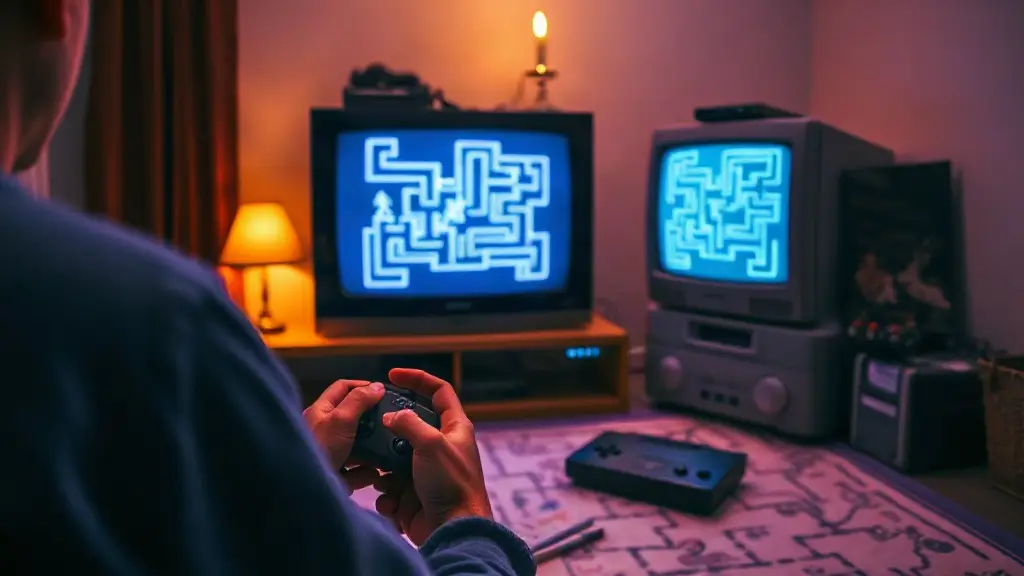
The heart of Zillion is an enormous underground maze, with nearly 50 interconnected rooms. Guards patrol the facility, while moving platforms, security beams, electrified barriers and turrets make each route a potential hazard. Lockers contain upgrades, health, ID cards and clues for working with computer terminals. Entering the right commands can open doors or disable security systems—but rooms usually need to be cleared of enemies first.
The layout can be overwhelming without a map, and the later areas are especially treacherous. Some routes demand better jumping skills or stronger weapons, making the rescues more than a simple side objective. You can also reprogram devices to switch off turrets, lasers and electric fields, giving the exploration a satisfying puzzle-solving layer.
Its own take on exploration
The side-scrolling exploration and gradual upgrades may bring Metroid to mind, but Zillion has a different character. Rather than exploring a planet alone, JJ undertakes a mission in a high-tech installation, eventually joined by his teammates. The guarded rooms and computer puzzles also evoke Impossible Mission. The result is a focused, distinctive take on exploration, built around one sprawling base rather than a whole world.
The game’s presentation holds up well: the graphics are sharp, the controls are smooth and the soundtrack is catchy. Hidden items reward thorough exploration, and the character-switching system gives you extra chances to survive. Its potential is somewhat limited, though, since the teammates function largely as additional lives rather than developing into more complex characters.
A challenging mission with a flat finale
The biggest drawback is the absence of any save or continue feature. With so many doors, items and discoveries to keep track of, completing the game means finishing it in one sitting. A successful run can take a couple of hours, so making a map and learning the layout through practice runs can make a real difference. Save states can ease the burden when playing through emulation, but they don’t change the original cartridge experience.
The ending also falls short of the buildup. After collecting the disks, you begin a timed escape and face a giant mechanical lizard that breathes blue flames. It’s the game’s only boss, and the encounter feels disconnected from the rest of the adventure. Baron Ricks, the Norsa leader, never becomes a proper gameplay opponent, leaving the climax less satisfying than it could have been.
Even with those shortcomings, Zillion is a highly enjoyable challenge. Its atmosphere, traps, secrets and maze-like exploration make it rewarding for patient players, though the lack of a save option keeps it from reaching its full potential. It’s an easy game to recommend if you’re ready to prepare, practice and find your way through the base.
Verdict: A memorable Master System adventure with smart puzzles and satisfying exploration, held back by a demanding no-save format and an underwhelming final encounter.
Score: 7 out of 10
Source: Sega-16