Tomb Raider remains a landmark of the first PlayStation era, not because it has escaped the passage of time, but because its exploration and atmosphere still feel distinctive. Released in 1996 by Eidos Interactive and developed by Core Design, the game helped bring Lara Croft into the mainstream while introducing players to a new kind of three-dimensional adventure.
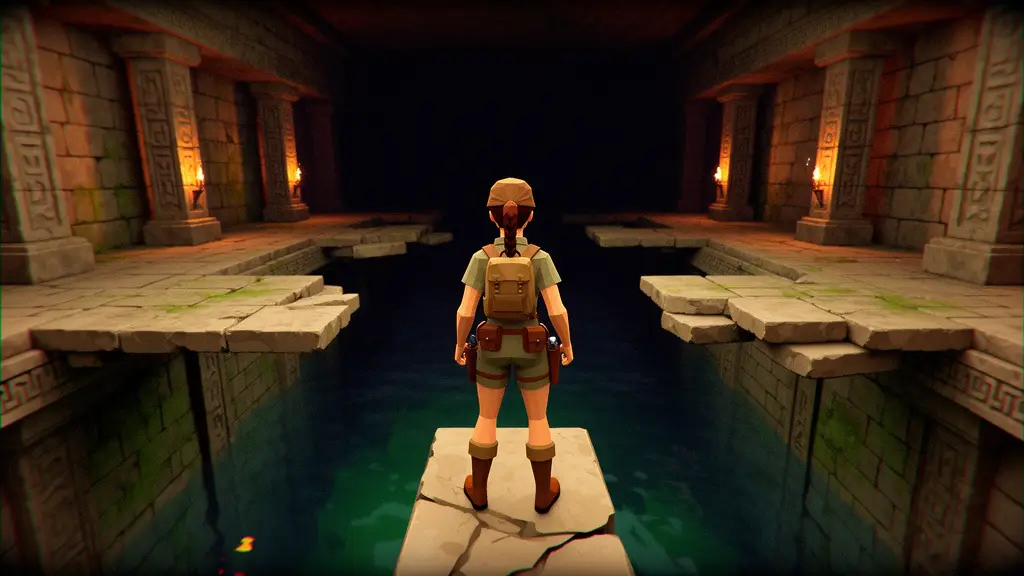
Its defining feature is the way it treats space. Caves, temples, pools, ledges and hidden passages are environments to study rather than corridors to rush through. Players must judge distances, locate routes and work out how levers affect areas elsewhere in a level. Progress depends on observation and spatial awareness as much as on movement.
Exploration in the quiet
The game’s solitude is central to its identity. Music appears selectively, leaving footsteps, environmental sounds and sudden animal cries to build tension. Peru, Greece, Egypt and Atlantis feel like abandoned places to cross carefully. Lara’s polygonal model and the textures are simple, but the scale and mystery of the locations remain effective.
That emphasis also explains why the game’s combat is less successful. Enemies including wolves, bats, bears and dinosaurs create moments of danger, but encounters rely on simple lock-on and lateral movement. Combat can interrupt the exploration without matching the environmental puzzles’ precision.
Rigid controls, purposeful design
Lara’s tank-style controls can feel stiff to players used to modern action games. Jumps often require a sequence of deliberate steps: line up, build momentum, leap and grab a ledge. The system is closely tied to levels built around measured distances and carefully planned movement, though some sections now feel slow or frustrating.
Lara herself became an instantly recognizable character, aided by marketing that made her a pop-culture presence. In the game, however, she is also the means by which players test the environment: she climbs, swims, jumps and falls. The review’s strongest case for the character’s staying power is that her identity is grounded in the game’s movement and exploration.
Verdict
The first Tomb Raider has aged unevenly, but its importance and atmosphere endure. Its rigid controls, straightforward combat and demanding passages are real limitations; when it gives space to solitude, careful observation and environmental puzzles, its appeal remains strong. The game helped teach a generation to navigate and think within 3D spaces, making it more than just the title that launched Lara Croft as an icon.
Final score: 9.0/10
• Graphics: 9.0
• Sound: 8.0
• Gameplay: 8.5
• Longevity: 9.0
Source: Retro-Gamers.it