When the Amiga looked like the future
In 1989, Shadow of the Beast arrived as more than a new game: it was a statement of what the Amiga could do. Its magnetic cover art and premium presentation set expectations before players even reached the title screen.
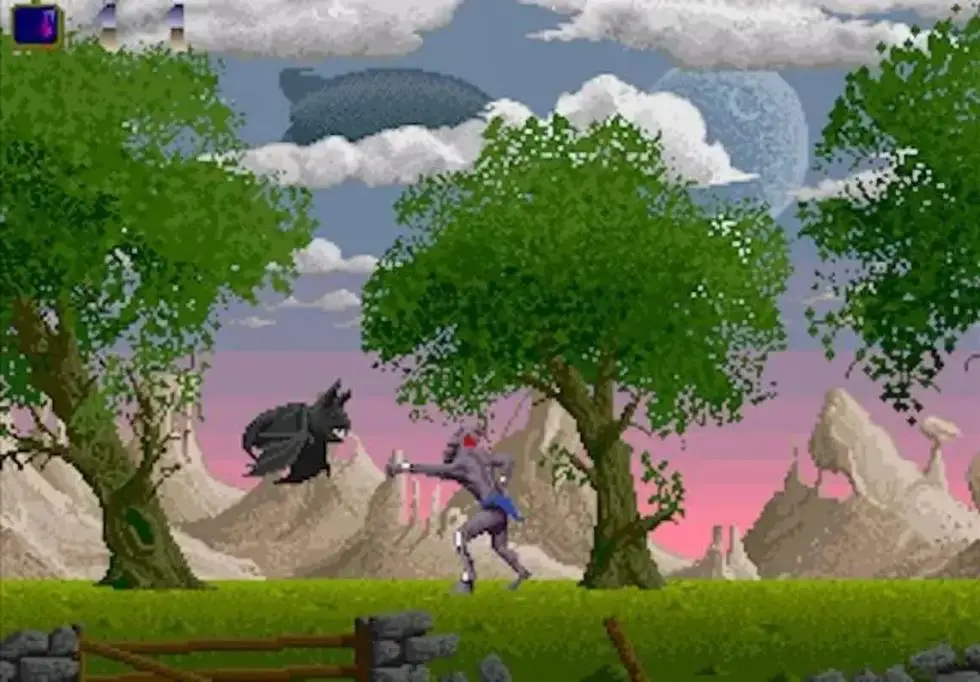
Developed by Reflections and published by Psygnosis, the game became one of the Amiga’s defining symbols. Layered backgrounds, vivid colors, strange creatures and atmospheric music created a dark fantasy world unlike the familiar, cheerful platformers of the era.
“Look what the Amiga can do.” Few games made that case more forcefully.
Aarbron’s dark journey
The protagonist, Aarbron, was kidnapped as a child, transformed into a servant of the Beast Lord and made an instrument of violence. When memories of his former identity return, he rebels and sets out on a journey of revenge and self-recovery.
The game tells this story largely through imagery and atmosphere. Aarbron crosses hostile plains, forests, caverns and alien landscapes, fighting creatures, avoiding traps and searching for items that open the way forward. Its action-platform structure includes exploration, but progress can be cryptic: players must work out where to go, what to collect and which passages to unlock.
A world built to astonish
Roger Dean’s cover art fits Psygnosis’ identity perfectly: fantastic, alien and instantly recognizable. The game carries that visual promise into its levels, where biological nightmares and dreamlike settings create an atmosphere that is strange rather than comforting.
Its greatest technical signature is multi-level parallax. Background layers scroll at different speeds, giving the opening landscapes a depth that was astonishing on a home computer in 1989. More than a decorative effect, parallax became the visual language of the whole game.
In Shadow of the Beast, parallax is not just a trick. It is a signature.
The game’s images still have a distinct identity, even when repetition and structural limitations are easier to notice today. The technical spectacle and art direction work together to create a world that feels unmistakably its own.
Historical note: parallax scrolling
Parallax scrolling creates an illusion of depth by moving background layers at different speeds as the screen scrolls. On the Amiga, Shadow of the Beast turned that technique into a central part of its presentation, helping make the game a celebrated showcase for the computer.
David Whittaker’s unsettling soundtrack
David Whittaker’s music does not simply accompany the action; it establishes the mood. Atmospheric and unsettling, it avoids easy heroic melodies in favor of a sense of ritual and danger. Samples and distinctive timbres make the game feel larger and more alien.
The soundtrack remains one of the main reasons the game is so strongly remembered. It belongs to the world it supports, rather than sitting apart from it.
When spectacle meets the controls
The gulf between presentation and play becomes clear once Aarbron is under the player’s control. He can punch, jump, duck and use attacks or items, but movement lacks the responsiveness of the best platformers and arcade action games. Fights demand rigid timing, and enemies often need to be memorized.
Difficulty is brutal, and death can arrive before it is clear what went wrong. Exploration calls for memory, careful sequencing and a willingness to restart. The game explains little and forgives even less.
That harshness can become part of its fascination once players accept the rules, but it is not the fluid action experience offered by a game such as Lionheart. Here, spectacle inspires awe, then leaves Aarbron in a world that seems determined to reject him.
Versions beyond the Amiga
The game’s fame carried it to a range of platforms. The Mega Drive/Genesis version is the best-known console comparison, but it loses some of the audiovisual magic that feels so natural on Amiga. The Master System adaptation is ambitious, though the technical gap is substantial; it is an interesting conversion rather than the reference version.
• Mega Drive/Genesis: A notable console adaptation, but with less of the original’s audiovisual impact.
• Master System: An ambitious version with inevitable technical limitations.
• Atari Lynx: An impressive handheld curiosity, rather than a true alternative to the Amiga release.
• TurboGrafx-CD / PC Engine CD-ROM²: An interesting interpretation that uses CD audio to strengthen the sound experience.
FM Towns and other home computer versions also appeared. A SNES conversion was shown but never officially released. The game’s identity remains most closely tied to its Amiga debut.
Sequels and a lasting reputation
Two Amiga sequels followed. Shadow of the Beast II leaned further into the series’ dark atmosphere and cryptic difficulty, while Shadow of the Beast III gave more attention to puzzles and a less brutal structure.
The original remains the most iconic: Roger Dean’s cover, Whittaker’s music and the first walk through those layered landscapes fixed its image in players’ memories. Even those who criticize its gameplay can recognize its impact on the Amiga’s reputation.
Final verdict
Judged strictly as an action-platformer, Shadow of the Beast has clear weaknesses: stiff controls, punishing difficulty and progression that can be hard to read. It is not a comfortable game to revisit, and it was never especially generous to players.
As an audiovisual work and a Psygnosis showcase, though, it remains fundamental. It captures a moment when the Amiga seemed determined to astonish the world. The gameplay does not match the graphics and sound, but that does not diminish the game’s place in the history of the European 16-bit era.
A work to admire, discuss and put in context—not to worship without conditions.
Ratings
• Graphics: 10.0
• Sound: 9.5
• Gameplay: 7.0
• Longevity: 7.5
• Total: 8.5
Pros
• Historic visual impact that still feels strong
• Legendary multi-level parallax
• Dark, alien and immediately recognizable atmosphere
Cons
• Stiff gameplay that falls short of the presentation
• Brutal and often punishing difficulty
• Cryptic progression, with unclear items and passages
Source: Retro-Gamers.it