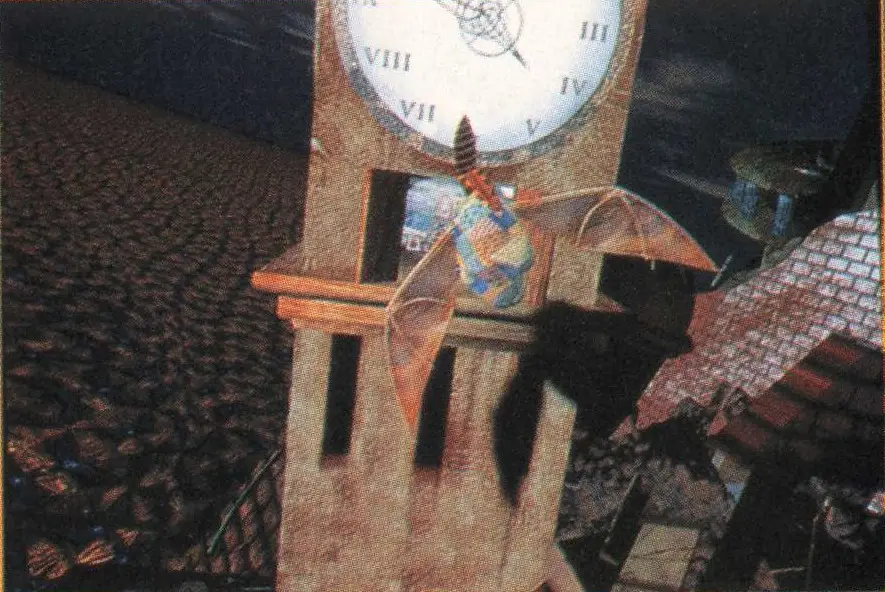
In 1995, Inscape was developing Psychasm, a PC action game that was described as a high-resolution take on Doom. The studio, later known for CD-ROM titles such as The Dark Eye, Drowned God and Bad Day on the Midway, never released it.
Psychasm appeared in an interview with Inscape founder Michael Nash as one of four projects in the newly formed studio’s early slate. The other three—Bad Day on the Midway, Devo Presents: Adventures of the Smart Patrol and The Dark Eye—would reach release. Psychasm did not.
A virus-haunted world
Nash described a world infected by a fictional computer virus. Players would travel through different stages, seeking out and destroying the virus wherever it spread. A single published image appears to be the only known glimpse of the game, while promotional Inscape matchbooks also listed it among the company’s forthcoming releases.
Psychasm was presented as a real part of Inscape’s planned line-up, but its development remains largely undocumented.
There is little public information about who handled the main programming or artwork, how far development progressed, or why the project was abandoned. A later clue came from composer Glenn Scott Lacey’s game credits: he had worked on Psychasm’s music and audio.
Music, voices and a made-up language
Contacted in May 2026, Lacey remembered a creative project featuring small characters. He said he had developed a language for them, describing their voices as “a darker version of a Minion.” The detail hints at a more characterful world than the brief Doom comparison suggests.
The soundtrack was also taking an unexpected route. Lacey recalled writing music with a 1940s feel, including some vocal pieces. He was working as an outside contributor through his recording studio at Class6 Entertainment, rather than as an Inscape employee.
CD-ROM context
In the 1990s, CD-ROM gave PC developers room for high-resolution art, recorded sound and music. Inscape’s early catalogue included several CD-ROM productions, making Psychasm’s audio ambitions a natural fit for the era’s multimedia experiments.
Why did Psychasm disappear?
Lacey remembered the game still being in development when he began work, but thought it did not progress much further during his involvement. He suggested Inscape’s closure may have contributed to the cancellation, while noting that he was not in a position to know the company’s internal circumstances.
The reason for Psychasm’s cancellation is still unconfirmed, and the surviving evidence does not reveal how much of the game was completed.
What can be established is that the game was publicly discussed, promoted alongside Inscape’s planned releases, and far enough along to have a screenshot published. Lacey had also started creating music and audio, including vocals and a language for its characters.
Whether a playable build, artwork, documents or recordings still exist is unknown. For now, Psychasm remains a tantalizing fragment of Inscape’s history—and a reminder of how much can vanish from a game that once seemed destined for release.
Source: Games That Weren't