In 1998, Squaresoft took the role-playing game somewhere unexpected: a wintry New York caught in a biological nightmare. Parasite Eve puts police officer Aya Brea at the centre of an opera-house catastrophe, where spontaneous combustion and grotesque mutations point to a threat already inside the human body.
Inspired by Hideaki Sena’s novel and conceived as a kind of video game sequel, the PlayStation game mixes scientific thriller, horror and RPG systems. It has little in common with the fantasy worlds usually associated with Squaresoft: Aya investigates theatres, streets, parks, laboratories, museums and hospitals as the mystery of Eve tightens around her.
Parasite Eve is an imperfect, elegant and restless cult game with a voice all its own.
Squaresoft outside its comfort zone
The adventure unfolds across a series of days, giving the story the pace of a thriller rather than the breadth of a traditional JRPG. There are statistics, levels, equipment and abilities, but no sprawling party, fantasy overworld or long succession of dungeons. Its linearity can feel restrictive today; in return, the focused structure keeps the tension close to Aya.
Parasite Eve is neither Final Fantasy with biological monsters nor Resident Evil with experience points. Its identity comes from that unusual middle ground, supported by the first PlayStation’s CD-ROM capacity, pre-rendered backgrounds and cinematic presentation.
Combat between action and tactics
Fights blend movement with the ATB system. Aya can reposition within the arena and dodge attacks while waiting for the bar to fill, then shoot, use an item or trigger one of her mitochondrial powers. Reading enemy movements, judging weapon range and choosing the right moment to act give battles a rhythm distinct from both pure action and fully turn-based combat.
Weapons and armour can be modified, with bonuses transferred between items. The system takes time to understand and is not as deep as a major traditional JRPG, but it gives equipment decisions real weight. Combat can feel stiff, yet its mix of tactical positioning and RPG progression still sets the game apart.
A brief technical note: the ATB system
ATB, short for Active Time Battle, puts a timer at the heart of combat. In Parasite Eve, the filled gauge lets Aya take an action while enemies remain a threat, so movement and timing matter alongside character statistics.
Aya Brea and the biological mystery
Aya is a young police officer: determined and vulnerable, but never reduced to a conventional fantasy heroine. As the plot develops, she becomes part of the mystery rather than simply the person assigned to stop a monster. Her body, past and resistance to the unfolding events all become central to the story.
Some dialogue is sparse, the plot occasionally moves quickly, and its scientific language veers into freewheeling science fiction. Still, the serious, nocturnal tone makes the world convincing even when the story reaches for the extraordinary.
PlayStation atmosphere, sound and style
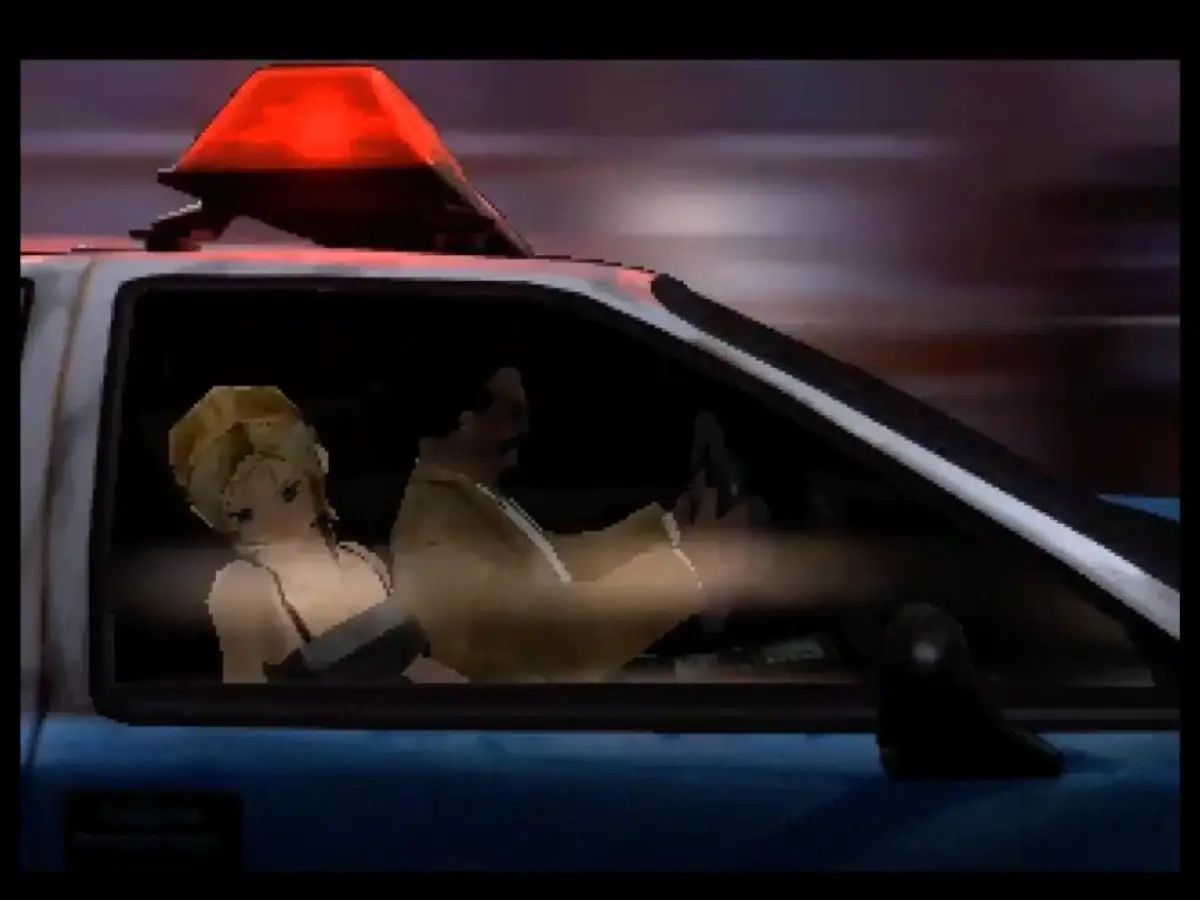
Pre-rendered environments give New York a dark, stylised presence, balancing recognisable urban spaces with a growing biological menace. The 3D models show their age, but detailed settings, grotesque transformations and FMV sequences made the game feel cinematic in its day. Its CG scenes are part of the storytelling, not just visual interludes.
Yoko Shimomura’s soundtrack is another major strength. Electronics, piano and suspended, dramatic passages create an atmosphere that feels cold and clinical rather than conventionally heroic. The music and sound design help distinguish Parasite Eve from other horror games of the period, adding elegance to its unease.
Verdict: a cult game, not a universal classic
Linear progression, uneven sections and occasionally cumbersome combat keep Parasite Eve from being a flawless experience. Exploration lacks the density of the best survival-horror games, and the adventure is relatively short by RPG standards. EX Game mode and additional content offer reasons to return.
Those limitations do not diminish its rare personality. The game remains memorable for its urban setting, tactical battles, disturbing mutations and Aya Brea, all brought together in a distinctly late-1990s mix of RPG, horror and cinema.
Final score: 9.0/10. Graphics: 9.0. Sound: 9.0. Gameplay: 8.5. Longevity: 8.0.
Returning to Parasite Eve means revisiting a moment when the PlayStation seemed to make room for hybrid, ambitious experiences. Not every part has aged equally, but its neon-lit, biological atmosphere remains powerful. It is not the biggest or most celebrated game in the console’s library; it is one that stays with you.
Source: Retro-Gamers.it