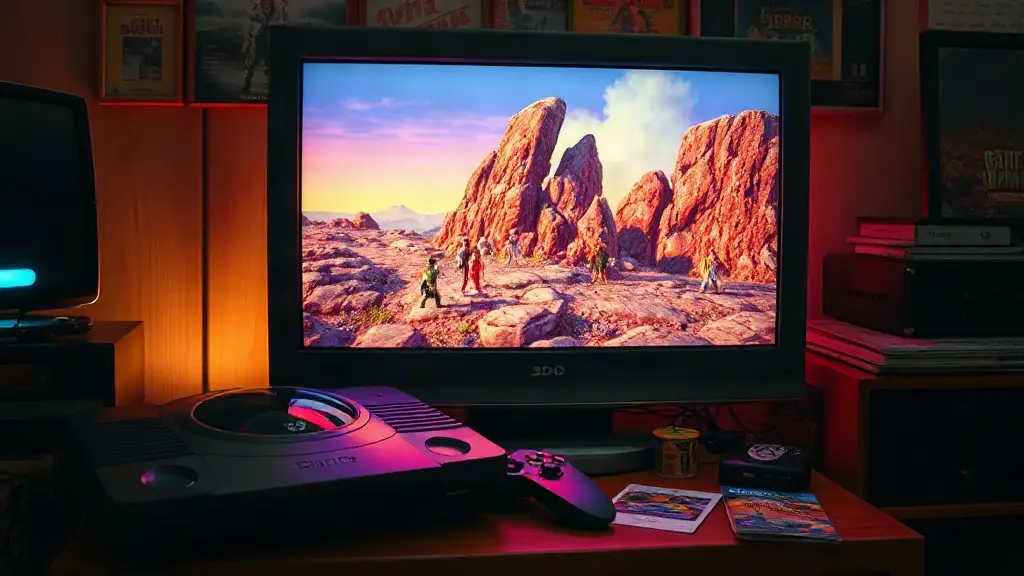
In the mid-1990s, Japanese role-playing games were scarce on newer consoles in the West. The 3DO was struggling to find an audience when Lucienne’s Quest arrived, developed by MicroCabin and published in North America by Panasonic. In Japan, it was known as Sword & Sorcery.
The game has a curious distinction: it is often described as the only traditional Japanese-style RPG localized for the 3DO in the West. Its host system was famously expensive, launching at $700, but the game itself was an inventive, approachable adventure that could easily be missed amid the console’s commercial troubles.
Lucienne’s Quest is a genuinely good RPG whose bold ideas were buried by bad timing and a tiny audience.
A tactical RPG with a rotating 3D world
At first, Lucienne’s Quest resembles a familiar top-down role-playing game. Exploring the world reveals a rotatable 3D camera over tile-based terrain, letting players turn the landscape to spot paths, elevation changes and hidden chests.
The story follows Lucienne, a sharp-tongued teenage apprentice witch, and her mentor, the wizard Kokoll. When a local hero named Ago seeks a cure for a curse that turns him into a werewolf, Lucienne is pulled into a journey across the continent to confront the demon lord Thanatos.
Combat that uses the battlefield
Rather than keeping combatants in fixed rows, battles unfold in an open tactical arena. Positioning and the surrounding landscape matter, and the game’s standout mechanics include:
• Destructible terrain: Spells and attacks can break rocks, burn trees and topple pillars, changing the battlefield and opening new lines of sight.
• Range and elevation: Ranged fighters and spellcasters gain an advantage from higher ground, while melee characters must find routes around obstacles.
• Ago’s transformation: A day-and-night cycle continues during battle. At night, Ago becomes a powerful werewolf, but loses access to items and equipment.
A Japan-only Saturn port
MicroCabin also brought the game to Sega Saturn in Japan in late 1996 under its original title, Sword & Sorcery. That version improved the frame rate, loading times and audio, but never received an official English translation. The North American 3DO release remains the way to play the localized version.
The game’s limited release and 3DO exclusivity have made original English copies prized by collectors. The source article estimates that copies can sell for $500 to more than $1,000, adding another layer to the game’s reputation as a rare RPG stranded on an unsuccessful console.
Why it still stands out
The review’s verdict is warmly positive: the dialogue is light, the pace brisk, and the main story takes roughly 15 to 18 hours. Its blend of tactical movement, terrain destruction and a transformation tied to the passing hours gives the adventure a distinctive identity.
Its obscurity is part of the appeal: this is an ambitious RPG waiting to be rediscovered.
Historical note: The 3DO Interactive Multiplayer launched at $700. While the system struggled commercially, Lucienne’s Quest shows that developers were still experimenting with camera movement, battlefield tactics and environmental interaction on the platform.
The game never became a household name, but the review argues it deserved a broader audience. Its ideas feel strikingly ambitious for the era, and its unusual home has made it both a collector’s trophy and a rewarding discovery for players exploring the 3DO library today.
Source: Old School Gamer Magazine