By 1993, the Amiga was showing its age as consoles and PCs advanced. Thalion answered with Lionheart, a fantasy action platformer that made the Commodore machine feel capable of one more miracle. Its visuals are extraordinary, but the game’s real achievement is how well its spectacle and playability work together.
Released exclusively for Amiga, Lionheart became a defining showcase for the OCS/ECS era. You play as Valdyn, a feline humanoid warrior on a quest to reclaim the ancient Lionheart relic, stolen from the Cat People by thieves serving the villain Norka. The familiar fantasy premise sets up a journey through hostile lands filled with creatures, traps and bosses.
Valdyn runs, jumps and fights with his sword in a traditional action-platform structure, with hack-and-slash elements. The formula is familiar, but Thalion delivers it with confidence and a steady stream of memorable moments.
An Amiga pushed to its limits
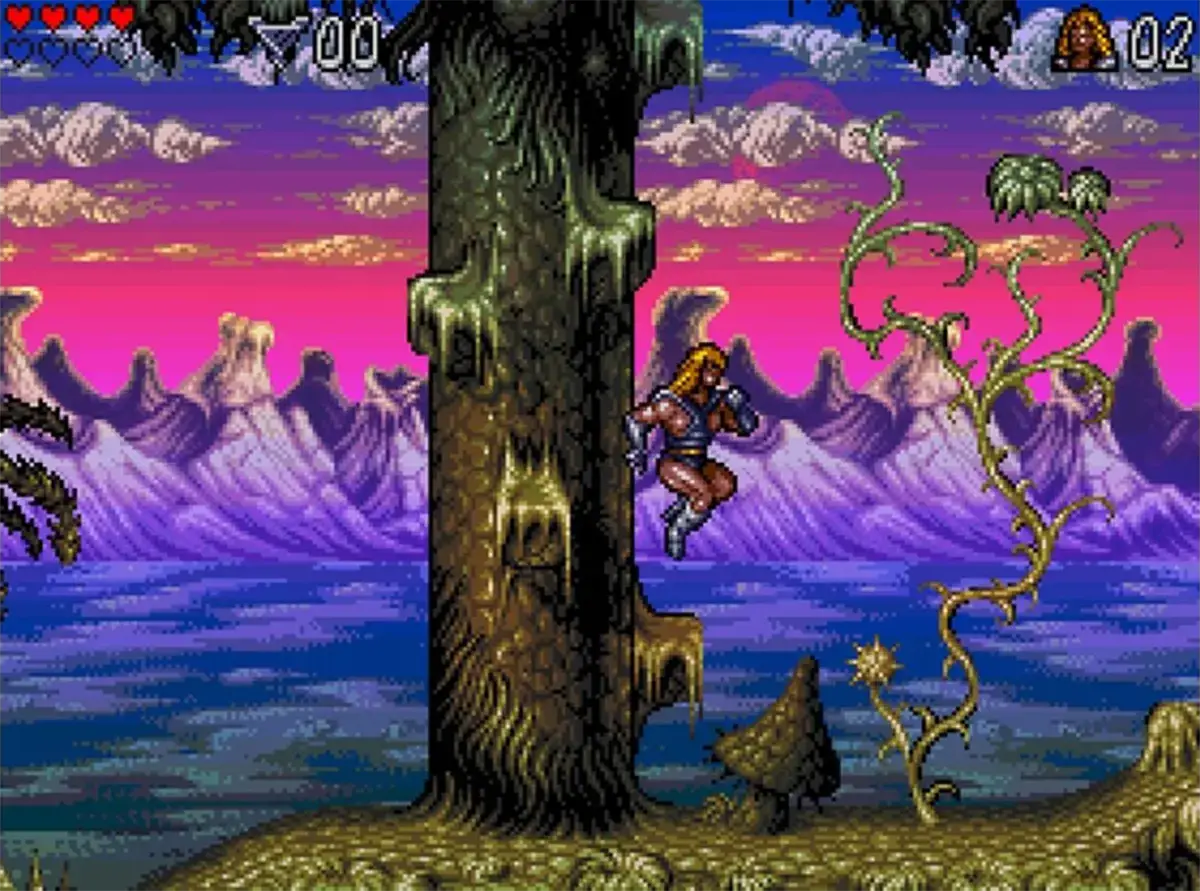
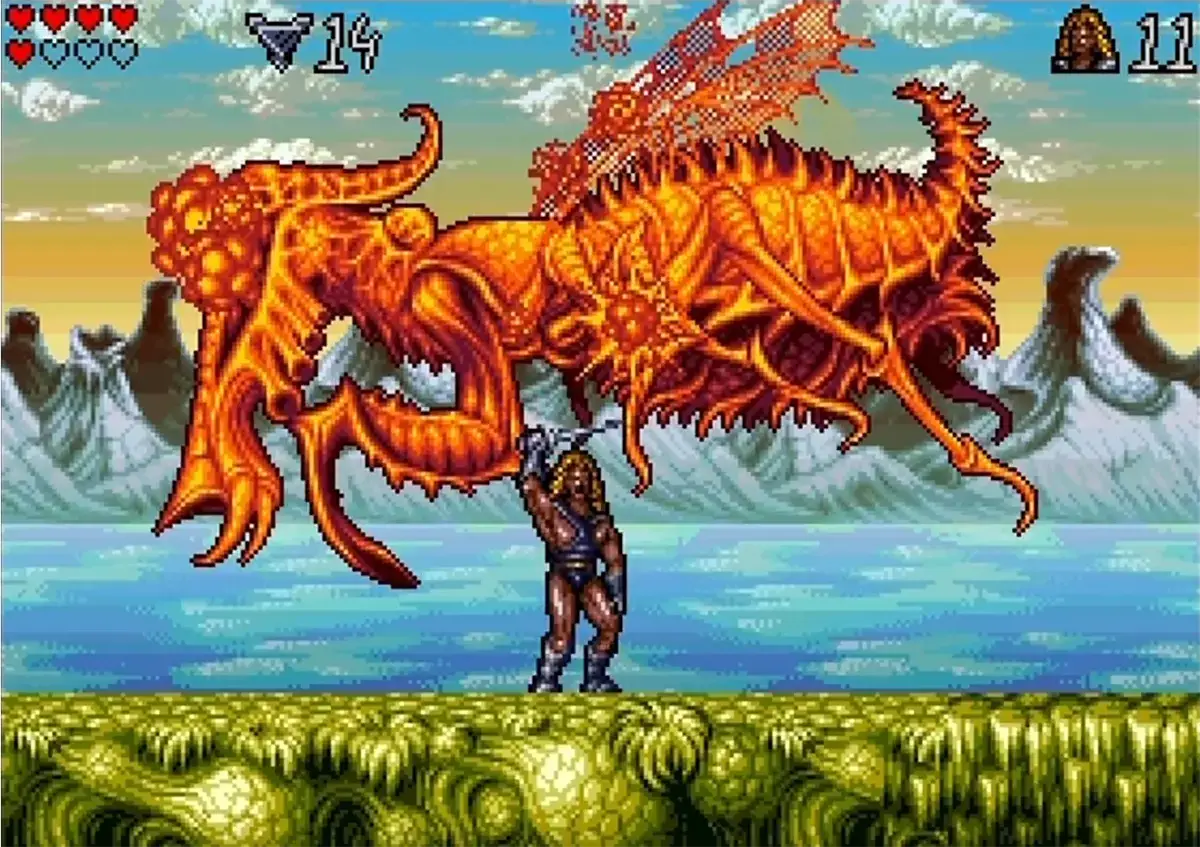
Lionheart remains one of the most impressive games released for OCS/ECS Amiga computers. Its richly layered backgrounds, carefully animated hero and imposing creatures make an immediate impression. Even a short pseudo-3D sequence, leading to an armor chest, feels like a demonstration of how much the hardware could still do.
The opening stage sets the tone with striking perspective parallax and a sense of depth that gives the scenery an almost arcade-like presence. Large, readable sprites move with remarkable fluidity, while the vivid palette helps the fantasy world feel dense and coherent rather than merely decorative.
Lionheart is more than a technical showcase: its visuals, atmosphere and gameplay are built to work as one.
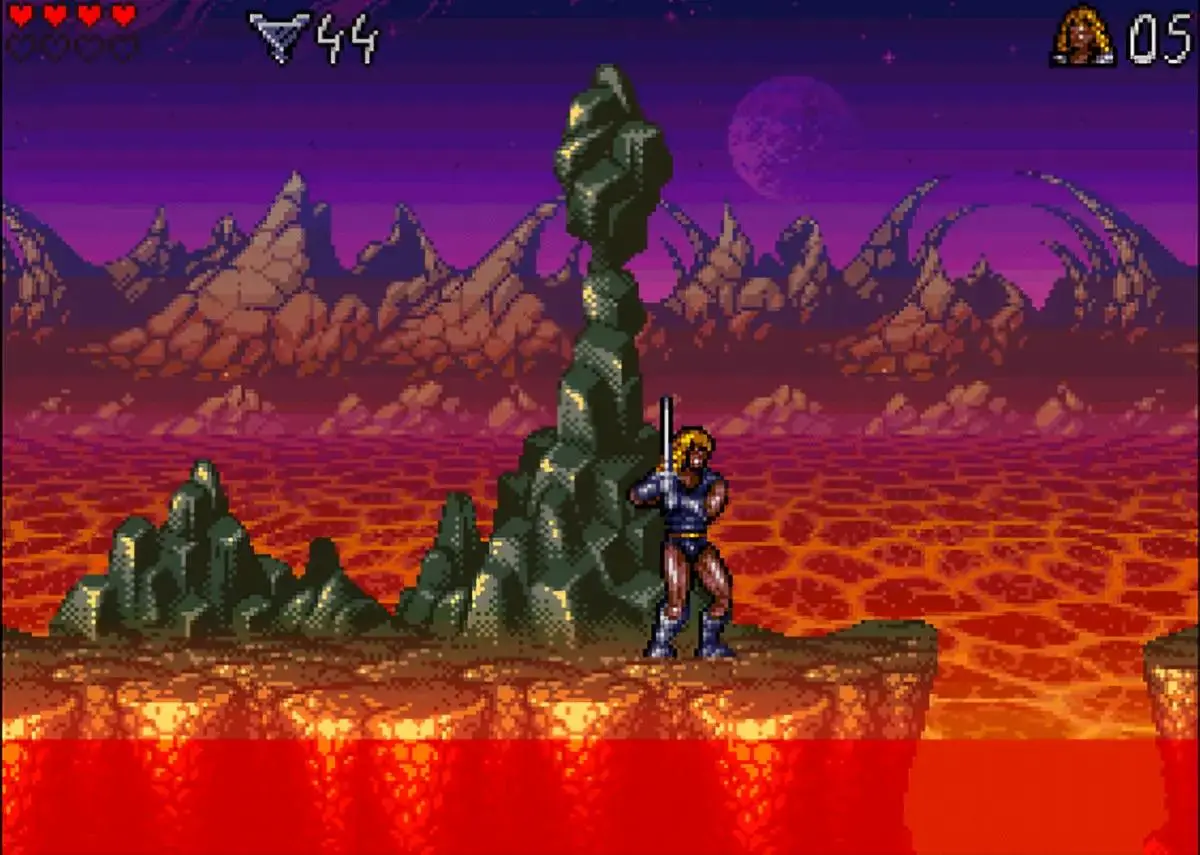
Comparisons with Shadow of the Beast and Jim Power are natural, but Lionheart feels more balanced. Its art does not exist only to impress. Forests, ruins, lava and enormous creatures all contribute to a distinctive world, shaped by Henk Nieborg’s exceptional pixel art.
Development notes from Erik Simon
Thalion co-founder and game designer Erik Simon shared details about how the team approached the game. Before adding visual complexity, the developers spent more than two weeks refining controls on a simple static screen built from 16×16-pixel blocks. They studied console platformers, particularly Mario and Mickey Mouse on Mega Drive, and moved on to the full game only once the vector-force-based controls felt fun.
Simon also explained that levels use different Amiga video modes to suit their setting and gameplay: dual playfield in one section, 16 colors in another, and half-brite mode for caves. The team matched each mode to the character of its level, a distinctive approach that helped make the game’s visual variety possible.
Music, controls and variety
Matthias Steinwachs’ soundtrack is melodic, clear and epic in scale. It gives Valdyn’s journey a sense of breadth without overwhelming the action. The sound effects play a supporting role, but the music and visuals share a strong identity that makes the game feel larger than its genre.
Crucially, Lionheart is as satisfying to play as it is to watch. Valdyn responds precisely, movement feels fluid, and sword combat has a simple, rewarding rhythm. Later sections demand attention, timing and memory, but the challenge is generally strict rather than arbitrary.
• Strengths: superb pixel art, perspective parallax and fluid animation.
• More to see: boss battles and a shoot-’em-up sequence with Valdyn riding a dragon.
• Limitations: a familiar action-platform formula and demanding sections that require precision and memorization.
The two-button controller option is a particularly welcome touch, assigning one button to jumping and the other to sword attacks. It brings the controls closer to the comfort of leading console action platformers of the period. The dragon-riding shoot-’em-up sequence offers a striking change of pace while still fitting the fantasy adventure.
A defining late-period Amiga game
Playing Lionheart today means meeting a game firmly rooted in its era, but its appeal is not just nostalgia. The difficulty can be unforgiving, and its design is conventional, yet the precise controls, variety and extraordinary audiovisual presentation keep the journey compelling.
The game understands the Amiga’s strengths and turns its limitations into style. Parallax, color, animation, music and pacing combine into something distinctly its own—not a console or arcade imitation, but a confident expression of what Commodore’s hardware could achieve.
Lionheart is not only one of the Amiga’s great technical and artistic achievements; it is a fundamental game that still deserves to be played.
Final score: 9.5/10
• Graphics: 10.0
• Sound: 10.0
• Gameplay: 9.0
• Longevity: 8.5
Source: Retro-Gamers.it