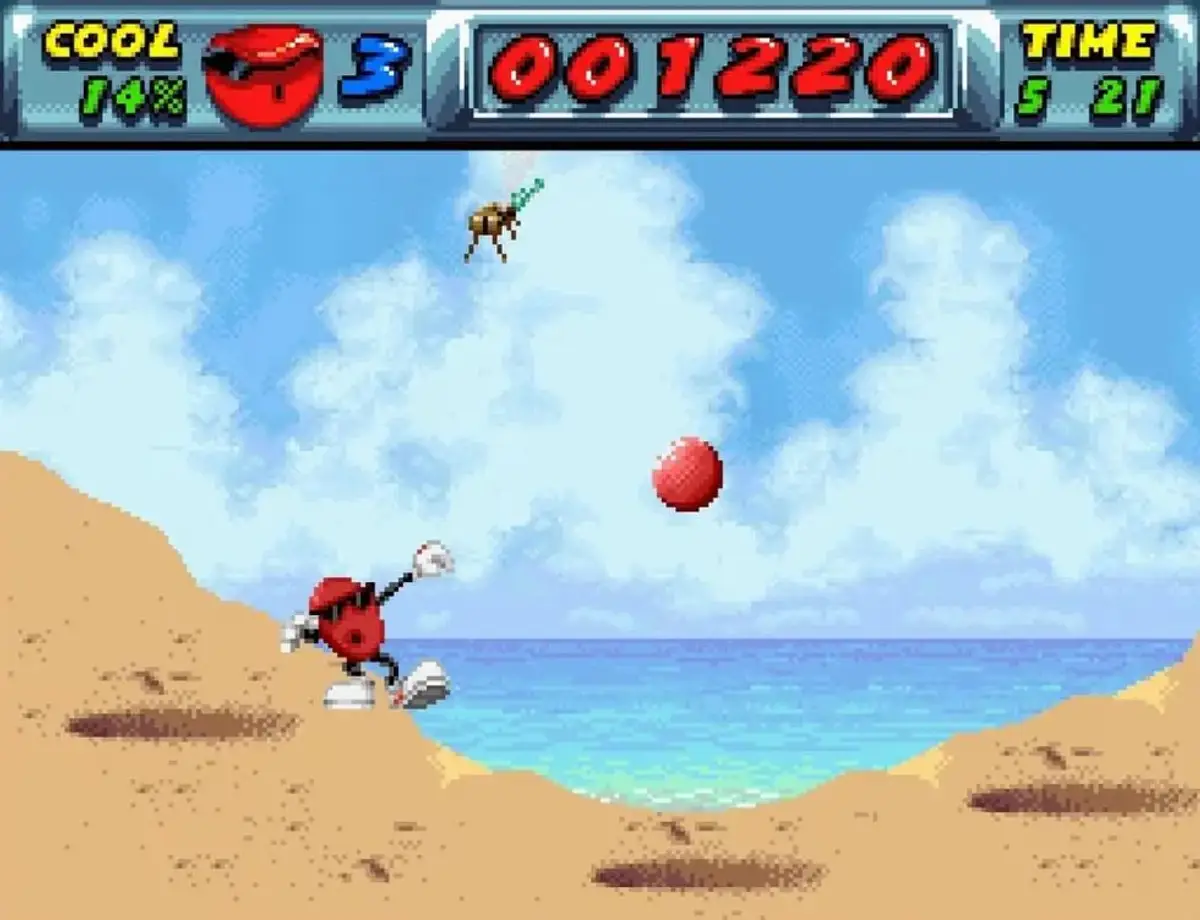
In the 1990s, advertising mascots often became video game heroes. Few of those tie-ins made the leap from marketing gimmick to convincing platformer, but Cool Spot is one of the exceptions. Developed by Virgin Games and released in 1993, it gives 7 Up’s sunglass-wearing mascot a colorful, polished adventure with more personality than its commercial origins suggest.
The Super Nintendo version is especially enjoyable. Spot leaps, throws bubbles, climbs scenery and frees fellow Spots from cages as he explores everyday places transformed into oversized stages. The presentation is bright and animated, and the game rarely seems embarrassed by its unusual hero.
A simple structure with room to explore
Each level asks you to collect a required percentage of spots and rescue a caged companion. Spot can jump, climb certain surfaces, use checkpoint flags and attack by throwing bubbles in several directions. A timer adds pressure, while continues are tied to collecting the letters in “UNCOLA,” 7 Up’s slogan.
The levels encourage exploration without becoming so sprawling that the action loses momentum. Controls are generally reliable, and Spot’s elastic movements give even basic actions a comic touch. The directional bubble attack also feels well integrated rather than tacked on.
Cool Spot may have started as an advertising mascot, but it plays like a platformer made with care.
There are limits. It lacks the invention of Nintendo’s best platformers and the speed and spectacle associated with Sonic. Required collecting can interrupt a straightforward run through a stage, and a few enemy placements or trial-and-error sections are frustrating. The core loop, though, remains fun.
Animation gives Spot a personality
The game’s standout quality is its presentation. Spot walks with swagger, bends, reacts and attacks with expressive animation that makes him feel far more vivid than a logo brought to life. On SNES, colorful stages and clearly defined sprites make for a warm, lively picture that still has considerable charm.
Compared with the Mega Drive edition, the Super Nintendo release favors softer visuals and richer color. It may not feel quite as sharp in motion, but its backgrounds and overall image have an appealing roundness.
How the other versions compare
The Mega Drive version is the closest rival, with polished animation, brisk action and a slightly sharper, more immediate look. The Amiga conversion is a more substantial visual downgrade: its colors are duller and its backgrounds less convincing. Yet it retains pleasant sound, playable controls and much of the original rhythm.
Other releases appeared on Master System, Game Gear, Game Boy and MS-DOS. These versions adapt the game to different hardware, but the central comparison remains SNES versus Mega Drive. The handheld and 8-bit editions necessarily scale back detail, while the PC release is less directly comparable to the console versions.
A light, cohesive soundtrack
The upbeat soundtrack suits the carefree action, while clean sound effects give bubbles and character reactions a little extra rhythm. It is not among the most memorable SNES scores, but it supports the game’s bright identity without overreaching.
Some European versions toned down the 7 Up branding amid issues related to the mascot’s use. That change can make the game feel more like a platform adventure in its own right, even though Spot’s advertising roots remain obvious.
Final verdict
Cool Spot does not rival the finest games in the SNES library, nor does it try to reinvent the genre. Its appeal is more immediate: strong animation, a cheerful presentation, solid controls and a pace that holds up better than expected for a game built around a commercial mascot. The required collecting and occasional irritating sections keep it from greatness, but the SNES version remains one of the more enjoyable Western platformers on the system.
Final score: 8.5/10. A stylish, well-made 1990s platformer that proves a brand mascot can have real game-day charisma.
Ratings
• Graphics: 9.0/10
• Sound: 8.5/10
• Gameplay: 8.5/10
• Longevity: 8.0/10
• Total: 8.5/10
Strengths and drawbacks
• Strengths: Excellent animation and visual personality; colorful, clean SNES graphics; solid controls and a useful directional attack.
• Drawbacks: Less depth than Nintendo’s best platformers; required spot collecting can slow the pace; some enemies and sections are irritating.
Historical note: the “UNCOLA” continue system
Collecting the letters in “UNCOLA” links extra continues to 7 Up’s famous slogan. It is a neat example of how the game folds its advertising origins into a practical part of its platforming rather than relying on branding alone.
Source: Retro-Gamers.it