Buck Bumble is an odd fit among the M64’s launch titles—not because its ideas lack character, but because it is every bit as strange and niche as the Extreme-G games. A cybernetically enhanced bumblebee swoops through English gardens, blasting mutant insects against a backdrop of late-’90s techno style.
A save system at odds with the design
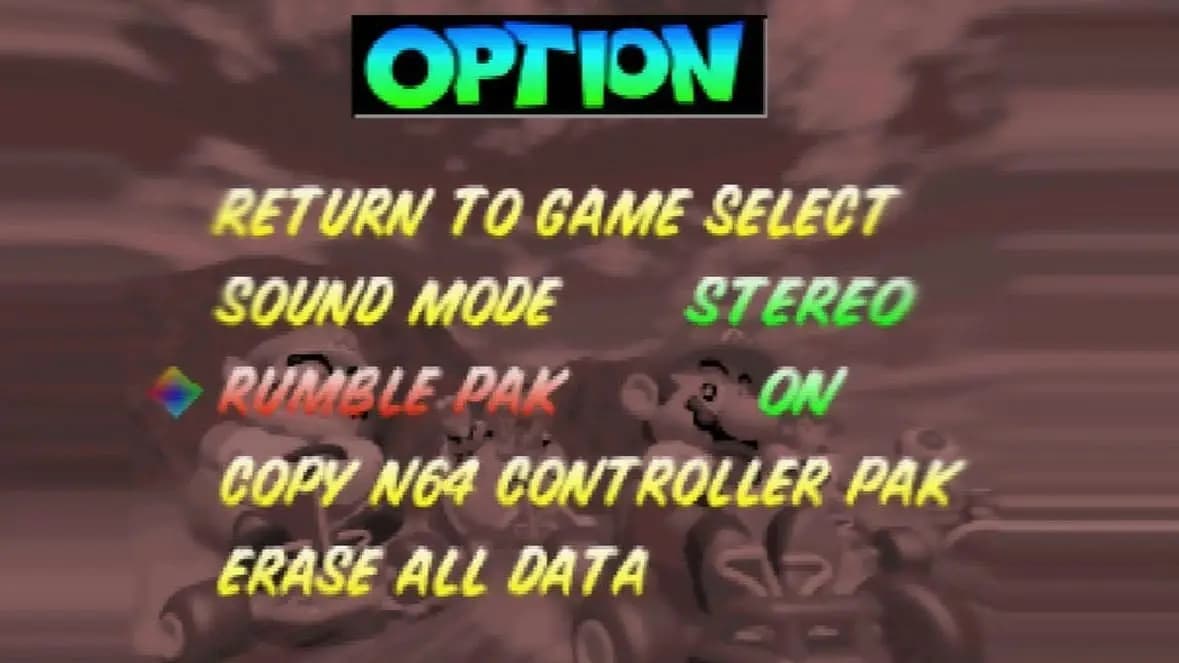
The biggest early obstacle was the Controller Pak. Its features did not work at the M64’s launch, and Buck Bumble only became properly playable with firmware version 1.26.4. The game’s design, meanwhile, seems caught between a high-score shooter meant for a single sitting and a save system that makes preserving a run—and its score—feel less meaningful.
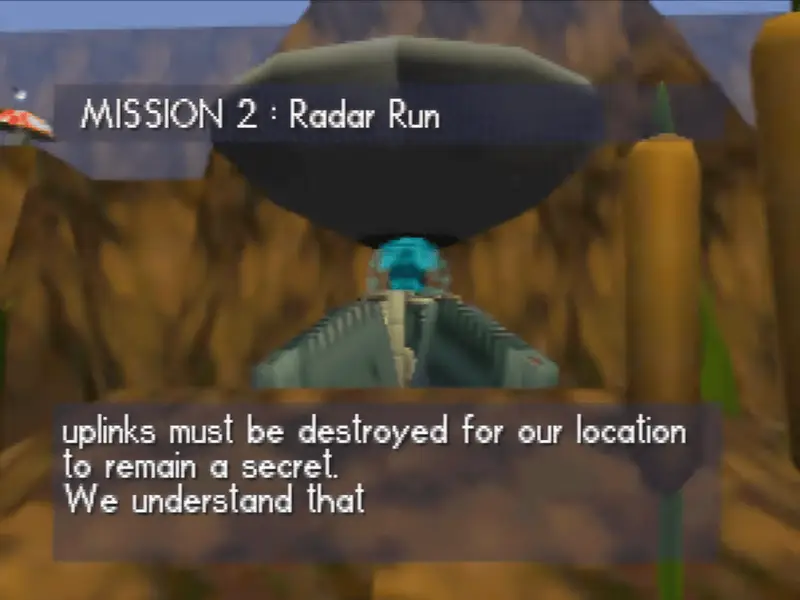
There are no mid-level checkpoints, and restarting a mission means sitting through its briefing again. Since the M64 menu can reset the game remotely, extra lives can feel pointless when reloading a save takes about as long as attempting the game anew.
Important mechanics are easy to miss
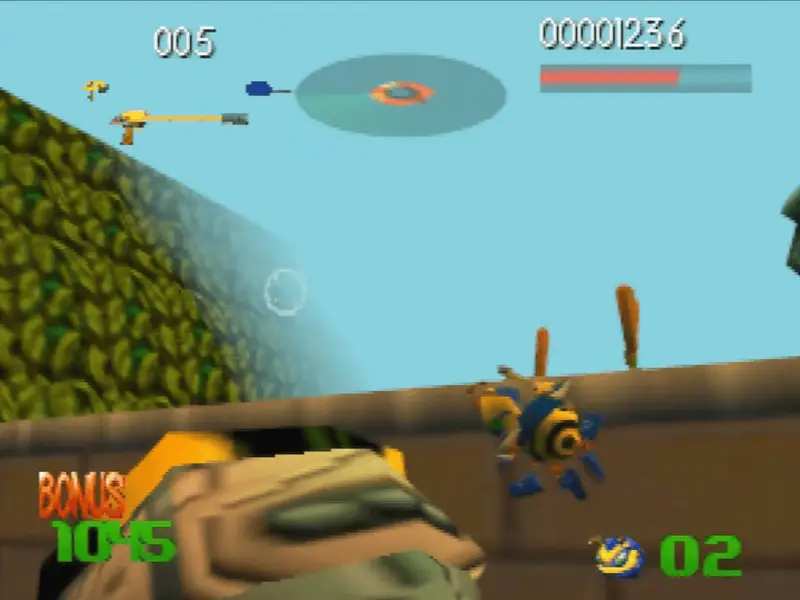
Buck Bumble might work better without saves, but that approach makes its poorly explained mechanics especially important. Weapon pickups are easy to spot, usually floating in the air with a colored glow. Health is another matter: Buck restores it by collecting nectar from flowers, which can look like ordinary background decoration.
The game does little to clarify this in its manual or mission briefings. The reviewer only discovered the nectar mechanic by accident in the third level, just as health restoration became essential. Water is similarly misleading: it does not kill Buck instantly, but escaping requires frantic button-mashing.
Brief technical note: the Controller Pak
The Controller Pak is the M64 memory accessory used by Buck Bumble’s save functions. In this review, its delayed support is central to the game’s early playability—and to the tension between saving progress and the game’s apparent single-sitting design.
Messy hits, memorable dogfights
The difficulty curve is not especially harsh, but hit detection can turn a brief collision into a “ping-pong” trap. Buck may be knocked from one damaging hitbox straight into another, draining his health before the player can react. Forcefields are especially frustrating when a small misjudgment sends him bouncing between them.
Despite those rough edges, Buck Bumble remains a satisfying free-range shooter. Its music and sound effects make the tiny hero’s world feel enormous, and there is real pleasure in bringing down giant insect motherships with a modest blaster. Each weapon has a use; finding the right one means learning how it behaves around the game’s sometimes unreliable collision detection.
Buck Bumble is fun to play, but it is not as intuitive as it should be.
A distinctive game with caveats
The reviewer’s verdict is fond but qualified: Buck Bumble has a joyful core and a memorable style, yet unclear mechanics and unfair hit interactions help explain its niche reputation. The review also reports that the game froze after showing only the first screen of its ending, though the reviewer had already won and found satisfaction in mastering it.
Source: Old School Gamer Magazine